

ByteDance's Anew Labs unveils its inaugural AI-created therapy as the parent company of TikTok joins the competition in drug discovery.
**TL;DR**: ByteDance’s drug discovery division, Anew Labs, showcased its first AI-designed therapy at a significant immunology conference in Boston. The therapy is a generative-AI-designed small molecule that targets IL-17, a protein-protein interaction previously deemed undruggable. The unit also launched AnewOmni, a generative framework trained on 5 million biomolecular complexes, claiming to be the first capable of designing functional molecules across various scales. ByteDance joins the AI drug discovery race alongside Isomorphic Labs, Anthropic, and Insilico Medicine.
The company behind TikTok's recommendation algorithm is now leveraging a similar AI technology to predict molecular behavior within the human body. Anew Labs revealed its first AI-designed therapy at the American Association of Immunologists’ annual meeting in Boston in mid-April, which is a small molecule created by generative AI aimed at inhibiting IL-17, a cytokine related to autoimmune diseases such as psoriasis, rheumatoid arthritis, and ankylosing spondylitis. This molecule targets a protein-protein interaction considered undruggable due to its large, flat binding surfaces. Anew Labs asserts that its AI has found a viable approach.
The Boston presentation marked the initial public display of Anew Labs' developments, with more appearances planned, including at the BIO International Convention in San Diego in June and a presentation at the Free Energy Workshop in Barcelona next week.
**The Unit**
Anew Labs operates out of Shanghai, Singapore, and San Jose, California, with a core team of 36 members listed on its website. Its scientific advisory board features Liu Yongjun, former president of Innovent Biologics; Ji Ma, a former principal scientist at Amgen; and Hua Zou, scientific director of protein chemistry at Takeda California. The advisory board comprises notable figures from leading biologics and immunology firms, targeting areas historically requiring costly injectable antibody therapies, with an aim to develop oral alternatives using generative AI to create small molecules that replicate antibody functions in a pill form.
Chris Li, head of biology, introduced one of Anew Labs’ four pipeline drug candidates in Boston, which is a pan-spectrum IL-17 inhibitor designed to block various forms of IL-17 instead of just one variant. Current IL-17 treatments, like Novartis’s secukinumab and Eli Lilly’s ixekizumab, are injectable antibodies that generate substantial annual revenue by addressing conditions like psoriasis. An oral small molecule demonstrating similar efficacy would disrupt the market significantly, making it cheaper to produce and more convenient for patients.
The challenge lies in IL-17’s interaction with its receptor, as it involves a broad, shallow protein-protein interface that allows small molecules minimal access. The gap between what AI can accomplish in a lab and what it can provide to patients remains a major challenge in healthcare technology, and IL-17 exemplifies the challenge's complexity.
**The Model**
In March, Anew Labs shared a preprint on bioRxiv detailing AnewOmni, a generative AI framework trained on over five million biomolecular complexes. This model is constructed to function across molecular scales, from small compounds to peptides and nanobodies, creating chemically relevant building blocks at an atomic level. The preprint demonstrated that AnewOmni could design functional molecules targeting KRAS G12D, a prime oncology target, and PCSK9, a cholesterol-associated protein, achieving success rates between 23% and 75% with limited laboratory validation. The model utilizes programmable graph prompts, enabling researchers to guide the generation process by specifying chemical, geometric, and topological parameters.
This approach is crucial, aiming to resolve a common limitation in AI drug discovery, where most generative models excel at one molecular scale but struggle across multiple scales. AnewOmni claims to be the first framework to effectively design functional molecules across all scales, which could establish Anew Labs as a versatile platform if validated clinically. Isomorphic Labs, a DeepMind spinoff supported by Eli Lilly and Novartis, introduced its own drug design tool in February that enhanced AlphaFold 3’s accuracy and formed partnership agreements valued up to $3 billion. The competition to create the leading AI drug design platform is global, and ByteDance is entering the arena with a model that, theoretically, addresses limitations that competitors have not yet publicly overcome.
**The Context**
ByteDance is not the inaugural tech company venturing into drug discovery. Anthropic acquired Coefficient Bio for $400 million, bringing fewer than ten people into its biological research efforts. Google’s DeepMind has focused on protein structure prediction since its AlphaFold breakthrough, awarded the 2024 Nobel Prize in Chemistry. Microsoft has invested in biology-focused AI through its collaboration with Paige, a computational pathology firm. Nvidia has developed BioNeMo, a platform for training and deploying biomolecular AI models. This trend shows that companies with advanced AI capabilities are channeling some of that technology
Other articles
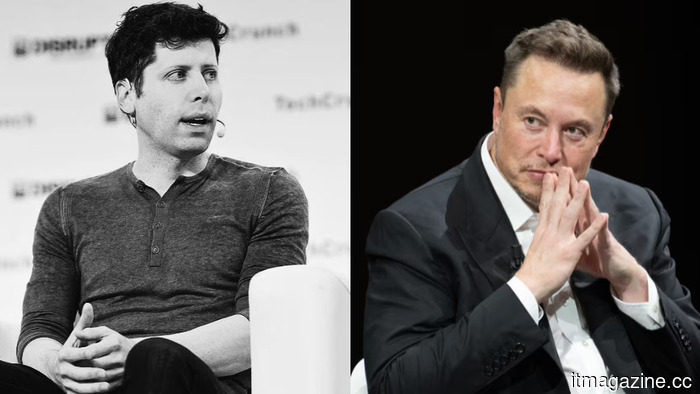 Musk's lawsuit against OpenAI is entering its first week.
La demanda de Elon Musk de $130 mil millones contra OpenAI enfrentó varios obstáculos en su primera semana, incluida su admisión de que xAI se basa en los modelos de OpenAI para su entrenamiento.
Musk's lawsuit against OpenAI is entering its first week.
La demanda de Elon Musk de $130 mil millones contra OpenAI enfrentó varios obstáculos en su primera semana, incluida su admisión de que xAI se basa en los modelos de OpenAI para su entrenamiento.
 Joby operates an electric air taxi service from JFK to Manhattan, completing the journey in seven minutes as it approaches FAA certification.
Joby has successfully conducted the initial eVTOL flights throughout NYC's heliport system. FAA Stage 4 has been approved. The aim for commercial launch is set for late 2026.
Apple's $599 Mac mini is no longer available. The reason? The AI agents.
Apple has phased out the $599 Mac mini and increased the starting price to $799, citing high demand for AI and agentic tools that are putting pressure on its desktop supply.
Joby operates an electric air taxi service from JFK to Manhattan, completing the journey in seven minutes as it approaches FAA certification.
Joby has successfully conducted the initial eVTOL flights throughout NYC's heliport system. FAA Stage 4 has been approved. The aim for commercial launch is set for late 2026.
Apple's $599 Mac mini is no longer available. The reason? The AI agents.
Apple has phased out the $599 Mac mini and increased the starting price to $799, citing high demand for AI and agentic tools that are putting pressure on its desktop supply.
 Why a Canadian bank is attempting to forecast earthquakes using quantum computers.
BMO has submitted a provisional patent for a quantum algorithm designed to predict earthquakes and employs AI to deploy mobile branches in areas affected by wildfires.
Why a Canadian bank is attempting to forecast earthquakes using quantum computers.
BMO has submitted a provisional patent for a quantum algorithm designed to predict earthquakes and employs AI to deploy mobile branches in areas affected by wildfires.
 ByteDance's Anew Labs unveils its inaugural AI-designed therapy as the parent company of TikTok joins the competition in drug discovery.
ByteDance's pharmaceutical division presented an AI-created IL-17 inhibitor at a conference in Boston. This molecule aims at interactions deemed undruggable by the industry. Only clinical trials will provide answers.
The $599 Mac mini from Apple is no longer available. The reason? It’s the fault of the AI agents.
Apple has phased out the $599 Mac mini and increased the starting price to $799, attributing this change to the rising demand for AI and agentic tools that is putting pressure on its desktop supply.
ByteDance's Anew Labs unveils its inaugural AI-designed therapy as the parent company of TikTok joins the competition in drug discovery.
ByteDance's pharmaceutical division presented an AI-created IL-17 inhibitor at a conference in Boston. This molecule aims at interactions deemed undruggable by the industry. Only clinical trials will provide answers.
The $599 Mac mini from Apple is no longer available. The reason? It’s the fault of the AI agents.
Apple has phased out the $599 Mac mini and increased the starting price to $799, attributing this change to the rising demand for AI and agentic tools that is putting pressure on its desktop supply.
ByteDance's Anew Labs unveils its inaugural AI-created therapy as the parent company of TikTok joins the competition in drug discovery.
ByteDance's pharmaceutical division presented an AI-designed IL-17 inhibitor at a conference in Boston. This molecule focuses on interactions that the pharmaceutical industry has labeled as undruggable. Only clinical trials will provide answers.