
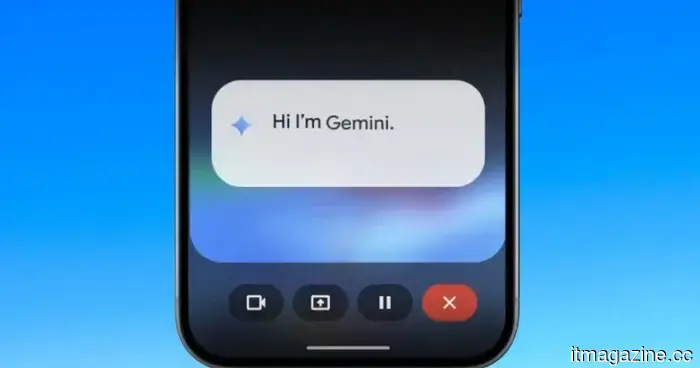
ChatGPT has recently introduced advertisements, and Google is not dismissing the possibility of including ads in the Gemini app.
Gemini might not remain free of advertisements in the era of ChatGPT ads.
OpenAI has recently begun testing advertisements within ChatGPT, and AI companies are exploring the feasibility of incorporating ads into an AI chatbot without frustrating users. Now, Google has indicated that Gemini may not escape this advertising model indefinitely.
During Alphabet's Q1 2026 earnings call, Google’s Chief Business Officer, Philipp Schindler, was directly asked about the presence of ads in the Gemini app. He gave a cautious response, mentioning that Google is currently concentrating on the free tier, subscription options, and AI initiatives, while its priority is to monetize AI Mode in Search first.
Will ads actually be introduced in the Gemini app?
While Schindler did not disclose any current plans regarding ads, he suggested that if Google identifies an effective ad format for AI Mode, a similar approach could eventually be applied to the Gemini app. He also noted that advertisements have previously assisted Google in scaling products to billions of users, provided they are relevant and presented at appropriate times. This argument could be used later if ads are introduced in Gemini, as they can help maintain a free product for a wide user base. Google emphasized that it is not hurrying into this decision.
What is prompting AI companies to consider ads now?
The shift towards advertisements is primarily driven by cost concerns. AI chatbots require significant computing resources each time they generate a response, particularly with hundreds of millions of free users. While subscriptions can contribute, they may not suffice on their own. Ads present another avenue for companies to fund free access without restricting major AI features to paid plans. Although users may not appreciate this trade-off, it clarifies why OpenAI is experimenting with ads and why Google is leaving the door open for Gemini to follow suit.
Why is Google proceeding cautiously?
Google's measured approach is understandable, especially since OpenAI is still grappling with the challenges of incorporating ads into chatbots. A recent report indicated that tracking ad performance in an AI chatbot might be more complex than in traditional Search. For example, a query like “best laptop under $1,000” demonstrates clear intent to buy. However, in AI chatbots, the decision-making process may involve comparisons, follow-up questions, and changes in budget, complicating the ability for advertisers to determine whether an ad effectively led to a click or purchase, or if it merely appeared in the chat without influencing the decision.
Additionally, Google has several reasons to be cautious. Search continues to expand, and AI appears to be aiding that growth. Schindler noted that users are making more queries than ever before. He highlighted the integration of AI through AI Overviews, AI Mode, Lens, Circle to Search, Search Live, and AI-powered search ads as ways Google is incorporating AI into Search while still preserving its core business.






Other articles
 I decided to wait on the MacBook Neo. I hope the next version addresses these 5 minor issues before I spend any money.
I almost purchased the MacBook Neo, but after using it for a few days, I decided against it. Here’s precisely what Apple removed that they shouldn’t have, along with what needs to be improved.
I decided to wait on the MacBook Neo. I hope the next version addresses these 5 minor issues before I spend any money.
I almost purchased the MacBook Neo, but after using it for a few days, I decided against it. Here’s precisely what Apple removed that they shouldn’t have, along with what needs to be improved.
 Amazon's latest AI shopping podcasts are going off track.
Amazon's AI-driven shopping feature now generates audio summaries of products featuring interactive hosts, and initial instances demonstrate how swiftly helpful summaries can evolve into uncomfortable infomercials.
Amazon's latest AI shopping podcasts are going off track.
Amazon's AI-driven shopping feature now generates audio summaries of products featuring interactive hosts, and initial instances demonstrate how swiftly helpful summaries can evolve into uncomfortable infomercials.
 VR headsets can enhance your dancing skills, provided you move beyond just gaming and streaming.
Cornell's DanXeReflect tool transforms dance footage into interactive 3D avatars, providing dancers with a more engaging method for analyzing their movements, practicing modifications, and giving feedback.
VR headsets can enhance your dancing skills, provided you move beyond just gaming and streaming.
Cornell's DanXeReflect tool transforms dance footage into interactive 3D avatars, providing dancers with a more engaging method for analyzing their movements, practicing modifications, and giving feedback.
 VR headsets can improve your dancing skills, provided you can go beyond just gaming and streaming.
Cornell’s DanXeReflect tool transforms dance videos into interactive 3D avatars, providing performers with a more engaging method to analyze their movements, practice modifications, and give feedback.
VR headsets can improve your dancing skills, provided you can go beyond just gaming and streaming.
Cornell’s DanXeReflect tool transforms dance videos into interactive 3D avatars, providing performers with a more engaging method to analyze their movements, practice modifications, and give feedback.
 I decided to hold off on purchasing the MacBook Neo. I hope the next version addresses these five minor issues before I spend my money.
I almost purchased the MacBook Neo, but after using it for a few days, I reconsidered. Here’s precisely what Apple eliminated that it should not have, and what needs to be revised.
I decided to hold off on purchasing the MacBook Neo. I hope the next version addresses these five minor issues before I spend my money.
I almost purchased the MacBook Neo, but after using it for a few days, I reconsidered. Here’s precisely what Apple eliminated that it should not have, and what needs to be revised.
 1X showcases the Neo humanoid robot, which assists humans in creating more robots like itself.
1X is progressing towards mass production of humanoid robots, and its recent demonstration illustrates Neo already contributing on the factory floor.
1X showcases the Neo humanoid robot, which assists humans in creating more robots like itself.
1X is progressing towards mass production of humanoid robots, and its recent demonstration illustrates Neo already contributing on the factory floor.
ChatGPT has recently introduced advertisements, and Google is not dismissing the possibility of including ads in the Gemini app.
Advertisements have begun to appear within ChatGPT, and Google is already making space for Gemini to follow suit. The era of chatbot advertisements could be nearer than users anticipated.