
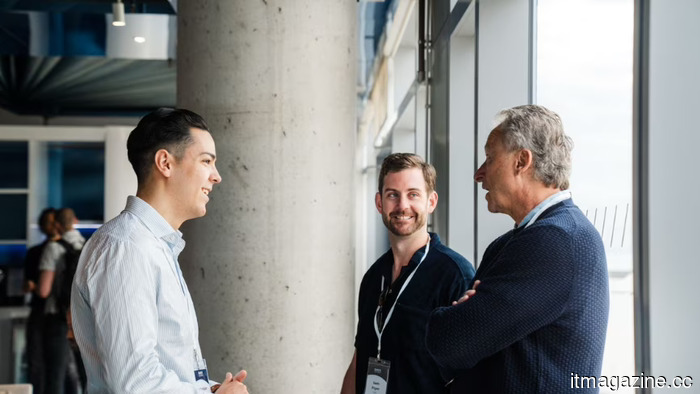
The locations where technology leaders prefer to gather now.
For a long time, technology events focused on scale, where a larger crowd was seen as a sign of success. Attendance figures became a measure of impact, and festivals expanded each year to meet industry expectations. However, this model no longer aligns with how tech leaders operate today.
In recent years, I have engaged in discussions with founders, executives, and operators who bear significant responsibility within their organizations. As a community builder, I often talk to them before they decide to attend events. Their inquiries are straightforward. They want to know who else will be present, how discussions are organized, and if the atmosphere permits open dialogue. Rarely do they ask about the number of attendees.
This is a significant indication. Leaders of companies do not seek visibility—they already possess it. Instead, they seek environments where time spent leads to insights, clarity, and decisions.
As the CEO of Tekpon AI Summit, I have witnessed firsthand how decision-makers prefer to engage today. I've seen what occurs on large stages, as well as what transpires when ten relevant people gather around a table without an audience or a formal agenda, focusing solely on honest conversation.
The difference in outcomes is striking. In smaller settings, individuals speak candidly, sharing challenges they wouldn’t typically publish. They explore partnerships informally and reach decisions more quickly, as trust develops naturally among those who have earned their place in the discussion.
Conversely, in larger environments, the dynamic shifts. Conversations tend to be more guarded, stories become polished, and real questions are often deferred, typically falling victim to busy agendas.
Large conferences still serve a purpose. They introduce fresh voices to the ecosystem, generate excitement, and provide visibility for early-stage founders; this contribution remains significant.
However, they are no longer the venues where serious business is conducted.
Meaningful work that influences companies occurs in settings where focus is preserved and trust is established quickly. These are environments where people can speak authentically, share context, and where participants understand that what is discussed will remain confidential. These conditions are challenging to replicate on a large scale but are naturally found in small, curated settings.
This shift has already changed how senior decision-makers allocate their time. Many are decreasing their attendance at large events and opting for closed discussions, private dinners, and carefully chosen gatherings where every attendee has a purpose for being there. They are not entirely dismissing conferences; rather, they are rejecting formats that do not honor their attention.
The industry has been slow to adapt to this change. Event strategies still prioritize attendance growth, sponsorship levels, and social media engagement, while those influencing companies are quietly altering their actions. They are expressing their preferences through their calendars.
This divide will continue to expand. Events that focus solely on volume will find it increasingly difficult to attract senior leaders. Once you observe this trend closely, it becomes evident. The criteria for selecting meeting venues have transformed—not loudly or publicly, but steadily and consistently.
While some will continue to pursue scale and others will maintain large festivals and broad platforms, there is nothing inherently wrong with that. However, the individuals shaping companies are already making different decisions. They are favoring settings where discussions progress swiftly, trust develops effortlessly, and time is valued.
That is now where tech leaders prefer to convene.
Other articles
 China's $16.5 billion micro-drama sector emerges as the world's first widespread application of AI-generated video.
In just one month, 50,000 AI micro-dramas were launched on Douyin. The cost of production has decreased by 90%. State-funded subsidies support the hubs. China's micro-drama sector represents the initial commercial-scale experiment with AI-generated content.
China's $16.5 billion micro-drama sector emerges as the world's first widespread application of AI-generated video.
In just one month, 50,000 AI micro-dramas were launched on Douyin. The cost of production has decreased by 90%. State-funded subsidies support the hubs. China's micro-drama sector represents the initial commercial-scale experiment with AI-generated content.
 NYBCe and Chan Zuckerberg Biohub are teaming up to develop an iPSC platform utilizing cord blood for regenerative medicine.
NYBCe and CZ Biohub will obtain iPSC lines from the immune cells of cord blood, establishing shared resources that are broadly compatible for cell therapy, disease modeling, and AI-based drug development.
NYBCe and Chan Zuckerberg Biohub are teaming up to develop an iPSC platform utilizing cord blood for regenerative medicine.
NYBCe and CZ Biohub will obtain iPSC lines from the immune cells of cord blood, establishing shared resources that are broadly compatible for cell therapy, disease modeling, and AI-based drug development.
 US debt surpasses 100% of GDP as Big Tech's $690 billion investment in AI competes for the same capital resources.
US debt reaches 100% of GDP for the first time since World War II. Interest payments exceed $1 trillion. Big Tech's capital expenditures on AI surpass $690 billion. Both are funded through debt from the same source.
US debt surpasses 100% of GDP as Big Tech's $690 billion investment in AI competes for the same capital resources.
US debt reaches 100% of GDP for the first time since World War II. Interest payments exceed $1 trillion. Big Tech's capital expenditures on AI surpass $690 billion. Both are funded through debt from the same source.
 The 6,000 mAh battery in the Razr Fold could be a cause for concern for Samsung and Google: here’s the reason.
Samsung and Google have dominated the U.S. foldable market for years, while subtly overlooking its most significant flaw. Now, Motorola has entered the scene and made that flaw difficult to overlook.
The 6,000 mAh battery in the Razr Fold could be a cause for concern for Samsung and Google: here’s the reason.
Samsung and Google have dominated the U.S. foldable market for years, while subtly overlooking its most significant flaw. Now, Motorola has entered the scene and made that flaw difficult to overlook.
 McKinsey's latest AI report claims that the benefits of productivity are genuine but dependent on specific factors.
McKinsey's latest report suggests that the majority of companies are speeding up their current processes instead of restructuring workflows to incorporate AI.
McKinsey's latest AI report claims that the benefits of productivity are genuine but dependent on specific factors.
McKinsey's latest report suggests that the majority of companies are speeding up their current processes instead of restructuring workflows to incorporate AI.
 McKinsey's latest AI report contends that the benefits to productivity are genuine but depend on certain conditions.
McKinsey's recent report suggests that many companies are speeding up their current activities instead of rethinking their workflows to integrate AI.
McKinsey's latest AI report contends that the benefits to productivity are genuine but depend on certain conditions.
McKinsey's recent report suggests that many companies are speeding up their current activities instead of rethinking their workflows to integrate AI.
The locations where technology leaders prefer to gather now.
Technology executives are dedicating less time to large conferences and more to intimate, private meetings where important decisions are made.