
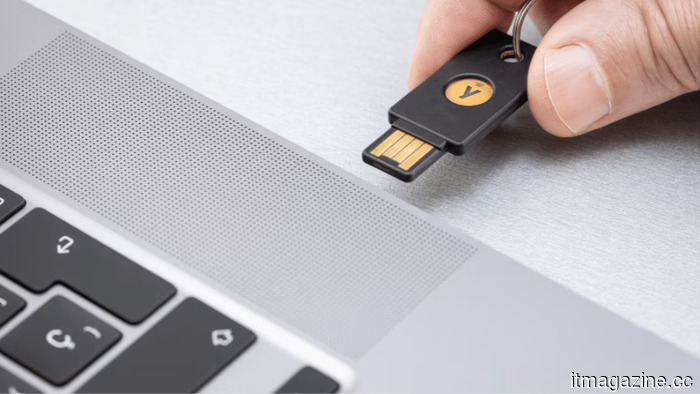
OpenAI introduces hardware security keys for ChatGPT through a partnership with Yubico and has eliminated password login for users identified as high-risk.
TL;DR
OpenAI has introduced an Advanced Account Security feature for ChatGPT and Codex, an opt-in service that replaces traditional passwords with passkeys or hardware security keys, disables email and SMS recovery options, and automatically excludes users from model training. The company has partnered with Yubico to offer co-branded YubiKeys at a reduced price of $68 for a two-pack. This feature is aimed at journalists, dissidents, and officials, and it will become mandatory for members of Trusted Access for Cyber by June 1.
OpenAI has rolled out a security feature for ChatGPT accounts which treats them similarly to online banking systems: utilizing hardware keys, foregoing passwords, avoiding email recovery, and providing no customer support for lost access. This option, known as Advanced Account Security, requires users to verify their identity with two passkeys, two hardware security keys, or a combination of both before logging into ChatGPT or Codex. Once activated, the option to log in via password is permanently removed, and recovering an account via email or SMS is no longer available. OpenAI has collaborated with Yubico, a firm focused on hardware authentication, to sell co-branded YubiKeys packaged for $68, significantly below the retail price of $126. This feature is accessible to all users, including those on the free tier. It is specifically designed for journalists, political dissidents, researchers, and elected officials, acknowledging that ChatGPT accounts now often contain more sensitive information than typical email accounts.
What it does
Advanced Account Security substitutes conventional login and recovery methods with cryptographic authentication. Users who opt-in must register two different credentials, which can be passkeys stored on their devices, YubiKeys, or other FIDO2-compatible hardware tokens, or a mixture of the two. Each credential creates a distinct cryptographic key pair that always remains on the device, eliminating the risk of stolen passwords, intercepted codes, and compromised recovery emails. OpenAI has made it clear that their support team cannot recover access for accounts secured by Advanced Account Security if the user loses both credentials. During setup, a recovery key is provided, and if that key is also lost, account recovery is impossible. The system follows zero-trust principles similar to those used in safeguarding classified government systems and cryptocurrency wallets, applied here to a consumer chatbot.
This feature includes additional protective measures. Sign-in sessions are made shorter to minimize the risk of a stolen session token being exploited. Users are notified of every new login and can monitor and terminate active sessions in their account settings. Furthermore, enabling Advanced Account Security automatically opts users out of model training, ensuring their conversations are not utilized to enhance future ChatGPT versions. This is important as it ties a high level of account protection to enhanced data privacy, creating a category of users whose interactions are both cryptographically secure and excluded from OpenAI’s training processes. For users dealing with sensitive information, this addresses two significant concerns at once.
Why it matters
This security enhancement arises amidst a landscape that highlights its necessity. In 2024, the cybersecurity firm Group-IB revealed over 100,000 stolen ChatGPT credentials found on dark web markets, obtained from devices infected with malware that steals information. The compromised credentials granted buyers complete access to victims' chat histories, which, for many users, encompassed confidential work discussions, personal inquiries, and sensitive information. Additionally, a breach involving Mixpanel, a third-party analytics provider, compromised user names, email addresses, and technical information, which could be exploited for targeted phishing attacks. The broader industry shift towards passwordless authentication reflects the understanding that passwords represent the largest vulnerability in consumer technology: industry research predicts that by 2026, approximately 46% of all successful cyberattacks against small and medium businesses will stem from reused credentials.
ChatGPT's vulnerability is particularly notable due to the sensitive content contained within accounts. An email account stores messages, while a bank account keeps transaction records. However, a ChatGPT account holds unfiltered queries from users who believe their privacy is intact: inquiries about medical issues, legal concerns, relationships, business strategies, proprietary coding, and interactions with an AI that retains context across sessions. OpenAI’s Codex Chronicle feature, which occasionally captures screenshots of a user’s desktop and sends them to OpenAI’s servers, further heightens the stakes for users who choose to participate. The company is simultaneously increasing the volume of sensitive data collected by its products while establishing the necessary security infrastructure to safeguard it. Advanced Account Security represents the protective aspect of this framework.
The Yubico deal
The partnership with Yubico serves both commercial and strategic purposes. The two co-branded products, the YubiKey C NFC and the YubiKey C Nano, share the same physical design as Yubico’s existing offerings but feature OpenAI branding and are sold at a subsidized price through OpenAI's channels. The C NFC model works with USB-C and near-field communication, making it compatible with laptops,
Other articles
 The wealth of Samsung's Lee family has increased to $45.5 billion due to the surge in AI chip demand, while 30,000 employees are demanding a share of the profits and are threatening to go on strike.
Samsung's Lee dynasty increased its wealth to $45.5 billion in just a year due to the demand for AI memory chips. Profits in the first quarter surged eightfold. Currently, 30,000 employees are threatening to go on strike for a share of the earnings.
The wealth of Samsung's Lee family has increased to $45.5 billion due to the surge in AI chip demand, while 30,000 employees are demanding a share of the profits and are threatening to go on strike.
Samsung's Lee dynasty increased its wealth to $45.5 billion in just a year due to the demand for AI memory chips. Profits in the first quarter surged eightfold. Currently, 30,000 employees are threatening to go on strike for a share of the earnings.
 Musk refers to himself as 'a fool' during his testimony for financing OpenAI.
Elon Musk referred to himself as 'a fool' while on the stand and had a heated exchange with OpenAI’s lawyer during a tense cross-examination on the third day of Musk v. Altman.
Musk refers to himself as 'a fool' during his testimony for financing OpenAI.
Elon Musk referred to himself as 'a fool' while on the stand and had a heated exchange with OpenAI’s lawyer during a tense cross-examination on the third day of Musk v. Altman.
 The wealth of Samsung's Lee family has surged to $45.5 billion due to the AI chip boom, while 30,000 employees are calling for a share of the profits and are threatening to strike.
Samsung's Lee dynasty saw its wealth increase to $45.5 billion within a year, fueled by demand for AI memory chips. Profits in Q1 surged eightfold. Currently, 30,000 employees are threatening to strike for a share of the profits.
The wealth of Samsung's Lee family has surged to $45.5 billion due to the AI chip boom, while 30,000 employees are calling for a share of the profits and are threatening to strike.
Samsung's Lee dynasty saw its wealth increase to $45.5 billion within a year, fueled by demand for AI memory chips. Profits in Q1 surged eightfold. Currently, 30,000 employees are threatening to strike for a share of the profits.
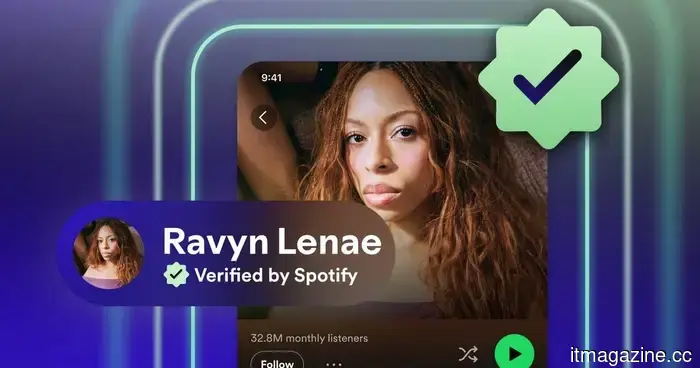 Spotify introduces verified artist badges to ensure that listeners can confirm they are enjoying music from a real person rather than an AI.
Spotify is introducing a new Verified badge along with artist activity insights to help you determine if there's an actual person behind the music you enjoy.
Spotify introduces verified artist badges to ensure that listeners can confirm they are enjoying music from a real person rather than an AI.
Spotify is introducing a new Verified badge along with artist activity insights to help you determine if there's an actual person behind the music you enjoy.
 Blue Owl has multiplied its investment in SpaceX by 10 times and has already divested half of its stake.
The co-CEO of Blue Owl Capital revealed a return of around 10 times on SpaceX, having sold half of the stake at a valuation of $1.25 trillion.
Blue Owl has multiplied its investment in SpaceX by 10 times and has already divested half of its stake.
The co-CEO of Blue Owl Capital revealed a return of around 10 times on SpaceX, having sold half of the stake at a valuation of $1.25 trillion.
 The necessity for startups to engage fractional CFOs for AI-powered financial decision-making.
AI is revolutionizing startup finance, but lacking expert advice can result in poor choices. Here’s why fractional CFOs are increasingly vital.
The necessity for startups to engage fractional CFOs for AI-powered financial decision-making.
AI is revolutionizing startup finance, but lacking expert advice can result in poor choices. Here’s why fractional CFOs are increasingly vital.
OpenAI introduces hardware security keys for ChatGPT through a partnership with Yubico and has eliminated password login for users identified as high-risk.
OpenAI's Advanced Account Security eliminates the need for passwords by using hardware keys and passkeys, disables email recovery options, and excludes users from model training. Co-branded YubiKeys are priced at $68 for a pair.