
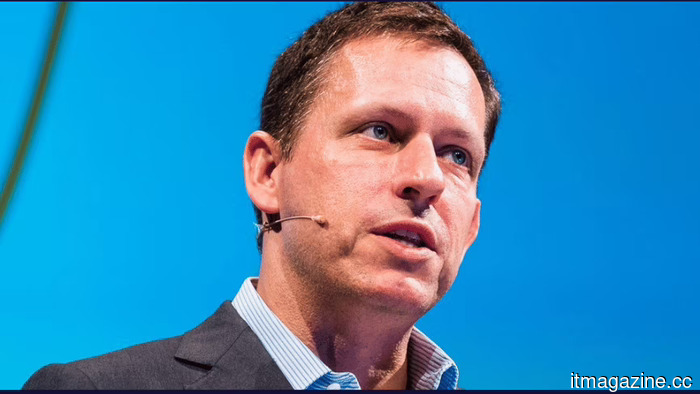
Founders Fund has raised $6 billion after spending $4.6 billion in less than a year on investments in Anthropic, Anduril, and OpenAI.
Founders Fund has launched a $6 billion growth fund, its largest to date, in less than a year after depleting its previous $4.6 billion fund in under twelve months. The earlier fund backed only seven companies with an average investment of $600 million, including significant amounts like $1.25 billion in Anthropic and $1 billion in Anduril. This quick funding cycle illustrates the growing divide in the venture capital sector, which is increasingly characterized by mega-funds vying for a limited number of AI startups, alongside numerous smaller funds.
On May 1, Founders Fund, co-founded by Peter Thiel, finalized its $6 billion growth fund, marking its most substantial financial vehicle to date and its fourth aimed at late-stage investments. Of the total capital, $4.5 billion was supplied by limited partners, predominantly sovereign wealth funds, while $1.5 billion came from the firm's partners and employees, including Thiel. The speed of assembling this fund—under a year—represents a record for the firm, following their prior fund's rapid expenditure. Despite plans to stretch that fund over two to three years, Founders Fund moved quickly, investing in companies before they officially sought funds and averaging about $600 million in checks to seven firms. The new $6 billion fund is anticipated to support about twelve startups, although previous spending patterns suggest it may not last as long as planned.
The previous fund’s investment strategy underscores its rapid pace. Founders Fund allocated $1.25 billion to Anthropic's $30 billion funding round at a $350 billion valuation, marking its initial stake behind Claude. Additionally, the firm invested $1 billion in Anduril Industries, a defense tech company co-founded by Trae Stephens, a general partner at the fund. The fund also financed fintech companies Stripe and Ramp, coding startup Cognition AI, and OpenAI, which Founders Fund has backed multiple times. Seven companies received substantial investments, each larger than the total amount raised by most venture capital funds globally.
The size of these investments highlights a market where top-tier AI companies are raising amounts that render traditional venture capital metrics obsolete. For instance, Anthropic’s funding round totaled $30 billion, making the $1.25 billion investment equate to roughly four percent of the company. Sequoia Capital participated in the same round, with both firms contending against tech giants like Google, Amazon, and various sovereign wealth funds for investment opportunities. When entry costs for a single company escalate to a billion dollars, funds need to operate at the tens of billions to compete effectively.
Founders Fund is among at least four firms that have established mega-funds this year, with Sequoia Capital raising around $7 billion in April, Thrive Capital at $10 billion, and Andreessen Horowitz at $15 billion. In the first quarter of 2026, global startup funding reached $297 billion, marking a 2.5-fold increase compared to the previous quarter and representing the highest venture capital investment recorded in a three-month span. This funding is increasingly concentrated in a select few firms supporting a limited number of companies, nearly all engaged in developing or utilizing artificial intelligence.
The fundamental issue is that AI enterprises are far more costly than historical software companies. Training advanced models incurs hundreds of millions in computational costs, and the necessary infrastructure—data centers, custom silicon, and power supply contracts—costs billions more. In contrast, software companies could launch with basic cloud resources and credit cards. The transition in venture capital from software to deep tech has transformed the economic structures of the industry. A $500 million fund cannot issue a $1.25 billion investment, but a $6 billion fund can. The venture capital ecosystem previously favored low-cost ideas with high potential; it now supports high-cost ideas with similarly high potential, prompting funds to scale accordingly.
Founders Fund’s most significant position remains SpaceX, which filed for the largest IPO in history in April and is anticipated to go public later this year with a valuation nearing $1.75 trillion. The firm was an early investor and continuously increased its stake through various rounds. Blue Owl Capital, a secondary market investor, reported a tenfold return on its SpaceX investment prior to the IPO and has sold off half its stake. Anduril, valued at $30.5 billion following a round led by Founders Fund in June 2025, is reportedly aiming for another raise at roughly double that value. Anthropic's implied valuation in secondary markets has also more than doubled since Founders Fund invested, surpassing $800 billion.
Evaluating the prior fund's valuations indicates exceptional returns if they hold. A $1.25 billion stake in Anthropic, acquired at a $350 billion valuation, could potentially be valued over $2.5 billion based on current market prices. A $1 billion position in Anduril, initially valued at $30.5 billion, might rise to $2 billion if
Other articles
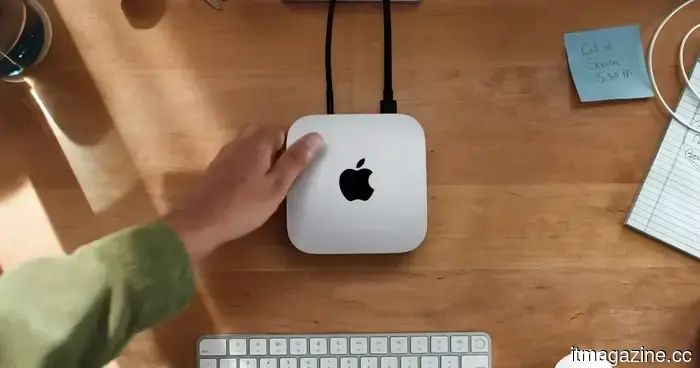 Apple has confirmed that the Mac mini will experience limited availability for the next few months.
Apple indicates that the Mac mini and Mac Studio could face limited supply for several months due to demand being stronger than anticipated, which surprised the company.
Apple has confirmed that the Mac mini will experience limited availability for the next few months.
Apple indicates that the Mac mini and Mac Studio could face limited supply for several months due to demand being stronger than anticipated, which surprised the company.
 Australia invests $22.7 billion in renewable energy following the Hormuz crisis, which highlighted the severe fuel vulnerability of developed countries.
Australia imports 80% of its fuel and has the least reserves among IEA members. The crisis in Hormuz has turned this into a national security issue. The solution requires an investment of $22.7 billion in technology.
Australia invests $22.7 billion in renewable energy following the Hormuz crisis, which highlighted the severe fuel vulnerability of developed countries.
Australia imports 80% of its fuel and has the least reserves among IEA members. The crisis in Hormuz has turned this into a national security issue. The solution requires an investment of $22.7 billion in technology.
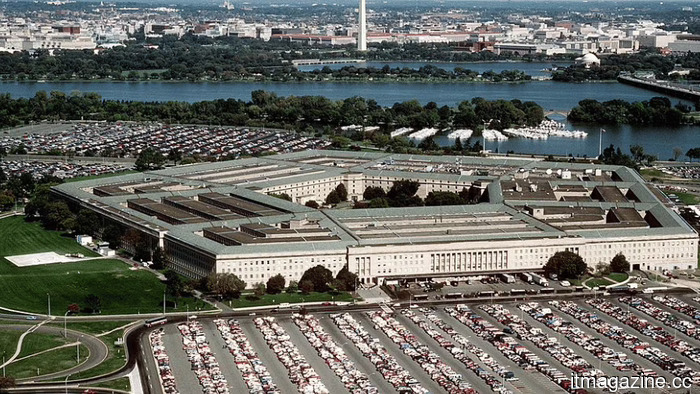 The Pentagon has finalized classified AI agreements with Nvidia, Microsoft, and AWS after removing Anthropic due to safety restrictions.
Currently, seven companies are utilizing AI on classified Pentagon networks under the conditions of "lawful operational use." Anthropic, which declined to eliminate its safety restrictions, has been substituted.
The Pentagon has finalized classified AI agreements with Nvidia, Microsoft, and AWS after removing Anthropic due to safety restrictions.
Currently, seven companies are utilizing AI on classified Pentagon networks under the conditions of "lawful operational use." Anthropic, which declined to eliminate its safety restrictions, has been substituted.
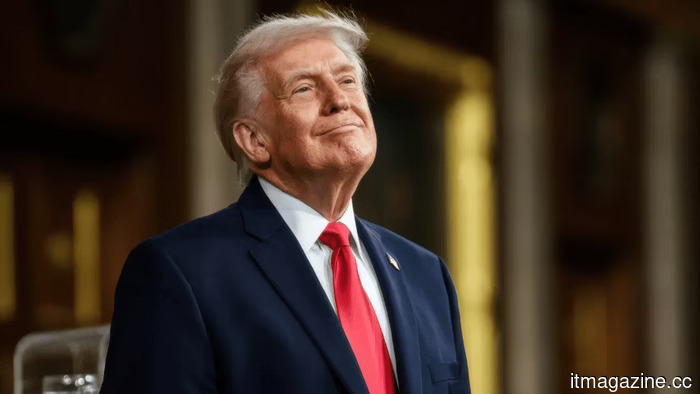 Trump's 25% tariff on EU automobiles violates the Turnberry Agreement, which includes provisions for semiconductors and digital trade as well.
Next week, Trump plans to increase EU car tariffs to 25%, which will violate the Turnberry deal. This agreement also includes provisions for chips and AI. The vehicles will serve as the initial test.
Trump's 25% tariff on EU automobiles violates the Turnberry Agreement, which includes provisions for semiconductors and digital trade as well.
Next week, Trump plans to increase EU car tariffs to 25%, which will violate the Turnberry deal. This agreement also includes provisions for chips and AI. The vehicles will serve as the initial test.
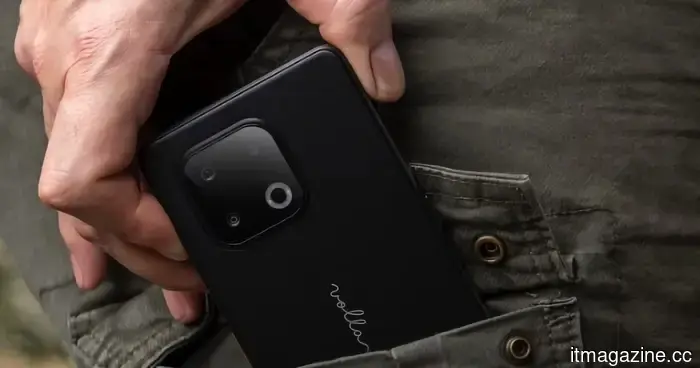 The Volla Phone operates on Linux within a durable casing and demonstrates that replaceable batteries are still a viable option.
Volla's latest Plinius is a durable Android smartphone that operates without Google, features a replaceable battery, boasts an IP68 rating, and has a clear OLED display, with prices beginning at €598.
The Volla Phone operates on Linux within a durable casing and demonstrates that replaceable batteries are still a viable option.
Volla's latest Plinius is a durable Android smartphone that operates without Google, features a replaceable battery, boasts an IP68 rating, and has a clear OLED display, with prices beginning at €598.
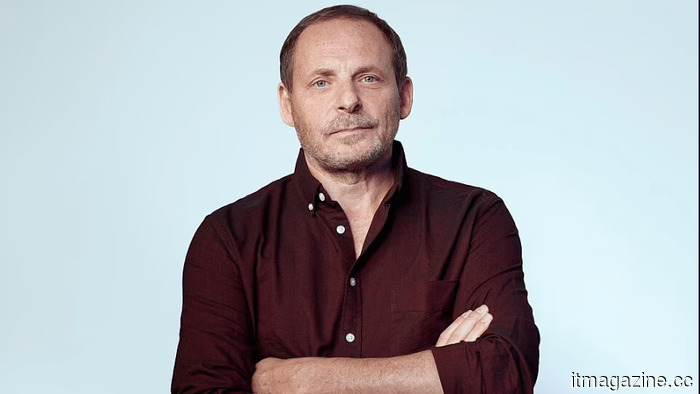 Nebius has purchased Eigen AI, a company with 20 employees, for $643 million as inference optimization emerges as the most crucial component of AI infrastructure.
Nebius has acquired Eigen AI, a 20-person MIT spinout that optimizes tokens per GPU, for $643 million. In the neocloud competition, inference optimization provides a significant advantage.
Nebius has purchased Eigen AI, a company with 20 employees, for $643 million as inference optimization emerges as the most crucial component of AI infrastructure.
Nebius has acquired Eigen AI, a 20-person MIT spinout that optimizes tokens per GPU, for $643 million. In the neocloud competition, inference optimization provides a significant advantage.
Founders Fund has raised $6 billion after spending $4.6 billion in less than a year on investments in Anthropic, Anduril, and OpenAI.
Founders Fund's new $6 billion fund takes the place of a $4.6 billion predecessor that was utilized in less than a year. The average investment amount is $600 million. Portfolio includes Anthropic, Anduril, SpaceX, and OpenAI.