
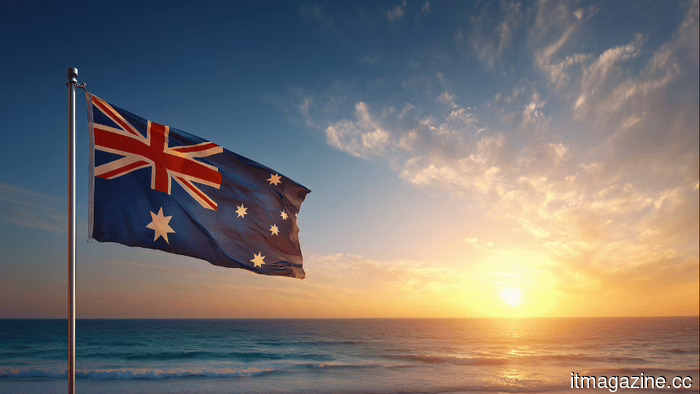
Australia invests $22.7 billion in renewable energy following the Hormuz crisis, which highlighted the severe fuel vulnerability of developed countries.
Australia, which relies on the import of 80 percent of its refined fuel and has the lowest reserves among any member of the International Energy Agency (IEA), was highlighted as the most fuel-vulnerable developed economy in the world due to the closure of the Strait of Hormuz in March 2026. The Albanese government’s $22.7 billion "Future Made in Australia" initiative, aiming for 80 percent renewable electricity by 2030, is now viewed as a national security program as much as a climate initiative. The technologies propelling this transition—solar energy in a third of households, a 33.2 GW battery pipeline utilizing grid-forming inverters, and A$14 billion in green hydrogen incentives—are being implemented at a speed dictated by geopolitical urgency rather than environmental goals.
When Iran shut the Strait of Hormuz on March 27, following weeks of air strikes from the US and Israel, Brent crude prices soared to $126 a barrel, while the World Bank projected a 24 percent surge in energy prices, the most significant rise since the 2022 Russia-Ukraine conflict. While most oil-importing nations faced economic issues, Australia was confronted with existential risks. The country imports about 80 percent of its refined fuel and possesses the lowest fuel reserves of any IEA member: just 36 days of petrol, 29 days of jet fuel, and 32 days of diesel, all significantly below the IEA’s 90-day standard. Alongside New Zealand, it is the only major developed economy without a government strategic petroleum reserve, with domestic production meeting merely 5.6 percent of demand and local refining covering only 17 percent. The balance of fuel flows through supply chains that frequently navigate the very chokepoint that had just closed. The Hormuz crisis did not create Australia's fuel vulnerability; it merely underscored its legitimacy and highlighted the need for a technological solution.
The figures are striking, even by the standards of other import-reliant economies. Australia is the world’s largest net importer of refined petroleum products, depending on refineries in Singapore, South Korea, and Japan that rely on Middle Eastern crude oil. The supply chain that sustains Australia is a network of dependencies, each element vulnerable to similar geopolitical threats. The IEA has repeatedly urged Australia to boost its reserves to meet the 90-day minimum maintained by other member countries, yet successive administrations have opted against building a strategic petroleum reserve, favoring “ticketing” arrangements that attribute fuel stored abroad toward Australia’s obligations. When the Strait of Hormuz was closed, some fuel counted towards Australia’s IEA reserves was physically located in countries whose own supplies were also disrupted.
Energy economists have characterized temporary fuel tax cuts as “sugar hits,” addressing only the price symptoms but not the underlying vulnerability. The structural solution, which the Albanese government has been pursuing since 2022 and which the Hormuz crisis rendered politically urgent, involves reducing Australia’s dependence on imported fuel by electrifying the economy through domestically sourced renewable energy.
The centerpiece of this initiative is the $22.7 billion “Future Made in Australia” package, which serves as an industrial policy framework funneling public funds into renewable energy, critical minerals processing, and green hydrogen production. The government's objective is to achieve 80 percent renewable electricity by 2030, with specific allocations including A$14 billion for green hydrogen production incentives, A$5.1 billion for the Australian Renewable Energy Agency, A$2.3 billion in home battery subsidies, and A$750 million for processing green metals. Since 2022, the government has green-lit 123 large-scale renewable energy projects, and approximately 7 gigawatts of new renewable capacity was added in 2025 alone. While Europe boasts twice as many climate technology startups as the United States, funding is at a fraction of the rate; Australia’s strategy entirely bypasses the venture model, directly employing government subsidies to construct infrastructure at a pace commensurate with national security needs.
The rationale is clear. Each kilowatt hour produced by a solar panel or wind turbine reduces dependence on a refinery in Singapore that processes crude oil from the Strait of Hormuz. Each electric vehicle powered by rooftop solar eliminates the need for imported petrol. Every green hydrogen electrolyzer run on renewable electricity generates fuel that never traveled by tanker. Consequently, the climate objectives and energy security aims have merged into a singular program due to the Hormuz crisis.
Australia benefits from one structural advantage that many oil-dependent nations lack: it is among the sunniest inhabited regions globally. Currently, solar panels are installed on one in three Australian homes, translating to 26.8 gigawatts of rooftop capacity, the highest per-capita solar penetration of any major economy. The challenge lies not in generation but in storage. Solar energy is generated during daylight, whereas Australia’s electricity demand peaks at night. The gap between production and demand is what batteries can resolve, and Australia’s battery storage pipeline has
Other articles
 Meta purchases Assured Robot Intelligence to develop the Android for humanoid robots.
Meta acquired ARI, a robotics AI startup, and integrated it into Superintelligence Labs. The aim is to become the essential platform for all humanoid manufacturers.
Meta purchases Assured Robot Intelligence to develop the Android for humanoid robots.
Meta acquired ARI, a robotics AI startup, and integrated it into Superintelligence Labs. The aim is to become the essential platform for all humanoid manufacturers.
 You can now secure your ChatGPT account using a unique USB key.
OpenAI's latest Advanced Account Security feature allows you to eliminate passwords completely and secure your ChatGPT account using a physical USB key — and it is available immediately.
You can now secure your ChatGPT account using a unique USB key.
OpenAI's latest Advanced Account Security feature allows you to eliminate passwords completely and secure your ChatGPT account using a physical USB key — and it is available immediately.
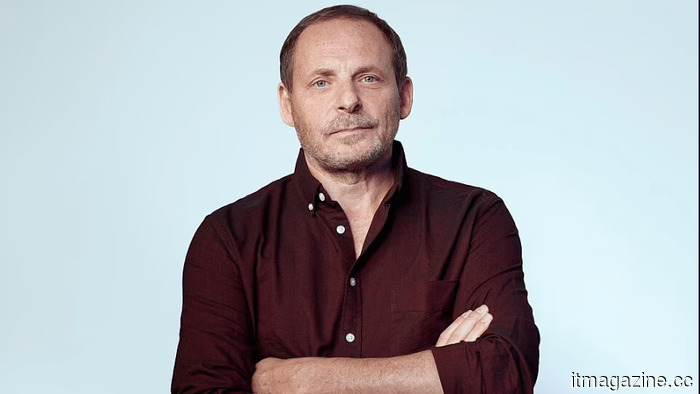 Nebius has purchased Eigen AI, a company with 20 employees, for $643 million as inference optimization emerges as the most crucial component of AI infrastructure.
Nebius has acquired Eigen AI, a 20-person MIT spinout that optimizes tokens per GPU, for $643 million. In the neocloud competition, inference optimization provides a significant advantage.
Nebius has purchased Eigen AI, a company with 20 employees, for $643 million as inference optimization emerges as the most crucial component of AI infrastructure.
Nebius has acquired Eigen AI, a 20-person MIT spinout that optimizes tokens per GPU, for $643 million. In the neocloud competition, inference optimization provides a significant advantage.
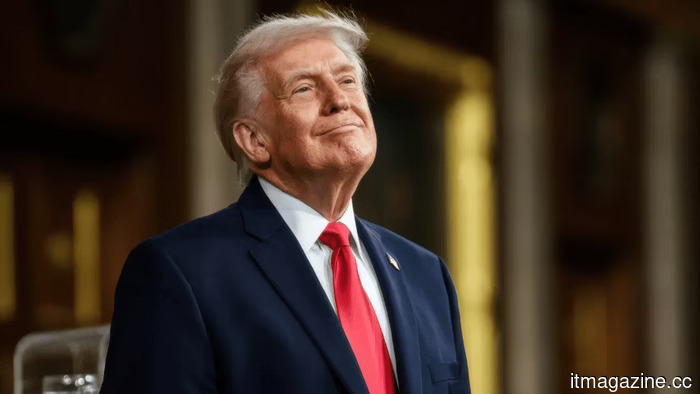 Trump's 25% tariff on EU automobiles violates the Turnberry Agreement, which includes provisions for semiconductors and digital trade as well.
Next week, Trump plans to increase EU car tariffs to 25%, which will violate the Turnberry deal. This agreement also includes provisions for chips and AI. The vehicles will serve as the initial test.
Trump's 25% tariff on EU automobiles violates the Turnberry Agreement, which includes provisions for semiconductors and digital trade as well.
Next week, Trump plans to increase EU car tariffs to 25%, which will violate the Turnberry deal. This agreement also includes provisions for chips and AI. The vehicles will serve as the initial test.
 Meta purchases Assured Robot Intelligence to develop the Android of humanoid robots.
Meta acquired ARI, a robotics AI startup, and integrated it into Superintelligence Labs. The aim is to become the essential platform for all humanoid manufacturers.
Meta purchases Assured Robot Intelligence to develop the Android of humanoid robots.
Meta acquired ARI, a robotics AI startup, and integrated it into Superintelligence Labs. The aim is to become the essential platform for all humanoid manufacturers.
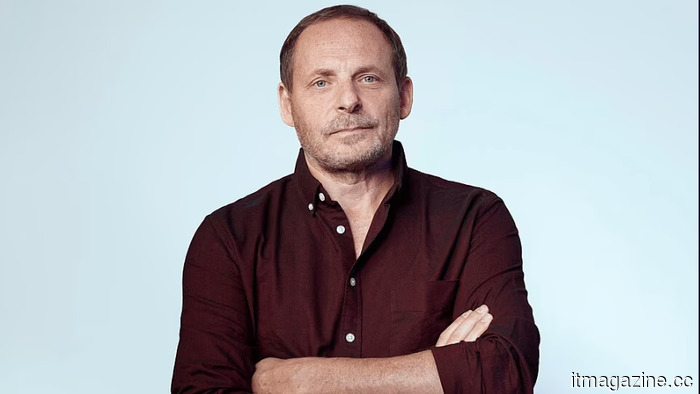 Nebius purchases Eigen AI, comprising 20 employees, for $643 million as inference optimization emerges as the most crucial component of AI infrastructure.
Nebius acquires Eigen AI, a 20-person spinout from MIT, for $643 million. This company specializes in maximizing tokens per GPU. In the neocloud competition, optimizing inference is the key advantage.
Nebius purchases Eigen AI, comprising 20 employees, for $643 million as inference optimization emerges as the most crucial component of AI infrastructure.
Nebius acquires Eigen AI, a 20-person spinout from MIT, for $643 million. This company specializes in maximizing tokens per GPU. In the neocloud competition, optimizing inference is the key advantage.
Australia invests $22.7 billion in renewable energy following the Hormuz crisis, which highlighted the severe fuel vulnerability of developed countries.
Australia imports 80% of its fuel and has the least reserves among IEA members. The crisis in Hormuz has turned this into a national security issue. The solution requires an investment of $22.7 billion in technology.