
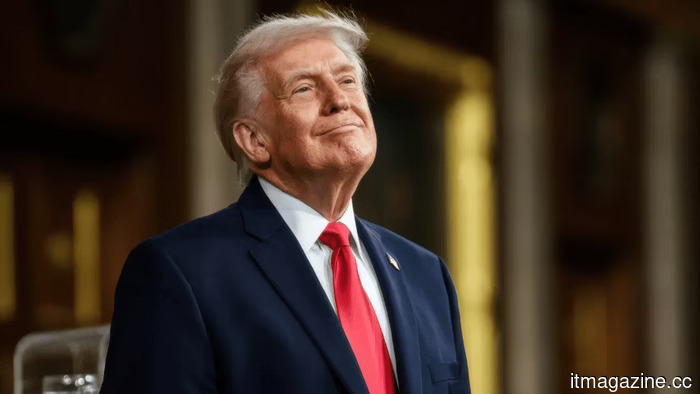
Trump's 25% tariff on EU automobiles violates the Turnberry Agreement, which includes provisions for semiconductors and digital trade as well.
**Summary**: Trump declared his intention to increase tariffs on EU vehicles to 25% next week, alleging that the EU is not adhering to the Turnberry Agreement without providing details on the alleged violations. Signed in July 2025, this deal also pertains to semiconductors, AI chips, and digital trade, and Trump's decision to breach its auto provisions sets a dangerous precedent for the entire tech trade relationship between the US and EU.
The Turnberry Agreement, designed to establish a baseline for trade, was signed at Trump’s golf resort in Scotland in July and imposed a maximum 15% tariff on nearly all EU imports to the US, including vehicles and tech products. In return, the EU committed to eliminate tariffs on US industrial goods and invest substantial sums in the US economy by 2028. Despite acknowledging the agreement's asymmetry, EU leaders supported it to avoid a more severe trade war. However, Trump has now stated that he will reinstate higher tariffs, citing EU non-compliance without offering specifics. The European tech sector previously warned that these tariffs would adversely affect both hardware and software industries, leading to concerns over the impact on future trade relationships.
The Turnberry Agreement, formally known as the Agreement on Reciprocal, Fair, and Balanced Trade, was announced on 27 July 2025 and solidified on 21 August. This deal established a 15% cap on US tariffs for EU goods, including zero tariffs for certain strategic categories and enhanced cooperation on supply chain security and technological trade. The EU agreed to remove tariffs on all US industrial products and guaranteed preferential treatment for American agricultural exports. Although European leaders criticized the deal's unequal nature, they viewed it as better than engaging in a full-blown trade conflict. The European Parliament approved the agreement in March 2026, with provisions allowing the EU to reinstate tariffs if the US breaches the terms.
A significant legal shift occurred on 20 February 2026, when the US Supreme Court ruled that the president does not have the authority to implement broad tariffs under the International Emergency Economic Powers Act. Following this, the White House imposed a 10% blanket import surcharge under a different trade law, altering the legal framework for administering tariffs and raising questions about which terms of the agreement remain enforceable. Consequently, the EU paused its ratification process in February, seeking clarification regarding the agreement's viability. By March, the US Trade Representative initiated investigations into 16 economies, including the EU, focusing on various sectors such as steel and high-tech products.
In his latest announcement, Trump specifically targeted cars and trucks. The tariff will increase from the current 10% to 25%. He mentioned that European manufacturers producing in the US would not incur any tariff, aiming to incentivize local manufacturing. Trump claimed there is over $100 billion in investments in US auto manufacturing, although fact-checkers indicated that many of the cited investments are merely reallocations at existing plants. The immediate market response was subdued, with the S&P 500 stabilizing while European automakers like Stellantis and Ferrari saw declines. The EU previously estimated that the Turnberry deal saved European car makers substantial amounts compared to earlier tariff rates. A tariff hike to 25% would significantly negate those savings.
The Turnberry Agreement extends beyond the automotive sector, featuring zero-tariff arrangements for semiconductor equipment and collaboration on AI and digital trade, critical for European technology firms. Trump's tariff decision has already rekindled Europe's pursuit of digital sovereignty, prompting investments in local alternatives to US digital services. While the auto tariff itself may not directly impact technology, it sets a concerning precedent. If Trump can violate the agreement concerning vehicles, the same could be done for other categories under the deal.
The Section 301 investigations initiated in March also encompass high-tech goods. Trump previously proposed a 100% tariff on semiconductors, a matter still under discussion. Although Apple committed $100 billion to bolster US manufacturing partly to avoid chip tariffs, European counterparts lack similar assurances. The risk of Europe compromising its tech industry to US platforms raises vital concerns, especially if the safeguards around semiconductor and digital trade provisions face collapse alongside the automotive terms.
Trump’s approach to tariffs follows a consistent method: a social media announcement makes a threat without clear violation details, leading to a proposed tariff increase, while local production serves as a loophole. This strategy has been enacted against multiple trade partners, including the EU. The auto tariff isn’t the first sign of pressure on the Turnberry Agreement; its ratification faced delays due to the Supreme Court ruling, and ongoing investigations indicated a preparation for broader tariff measures. The recent auto tariff increase marks the first overt breach of the Turnberry framework by the US.
The EU is now investing in independent alternatives, having already committed funds towards domestic semiconductor production, with growing geopolitical tensions exacerbating operational expenses in Europe's digital economy. The tariff threat further complicates the situation, leaving companies that rely on US markets and cloud services in a precarious position as the trade framework they
Other articles
 Meta's $145 billion AI initiative eclipses the child safety lawsuits that may incur greater expenses.
Meta suffered a defeat in its initial addiction trial and is confronted with over 40 lawsuits from state attorneys general, while bans are on the rise. During Zuckerberg's earnings call, the focus was on AI, with no investors raising questions about children.
Meta's $145 billion AI initiative eclipses the child safety lawsuits that may incur greater expenses.
Meta suffered a defeat in its initial addiction trial and is confronted with over 40 lawsuits from state attorneys general, while bans are on the rise. During Zuckerberg's earnings call, the focus was on AI, with no investors raising questions about children.
 Meta has acquired Assured Robot Intelligence to develop the Android for humanoid robots.
Meta acquired ARI, a robotics AI startup, and integrated it into Superintelligence Labs. The objective is to become the essential platform for all humanoid manufacturers.
Meta has acquired Assured Robot Intelligence to develop the Android for humanoid robots.
Meta acquired ARI, a robotics AI startup, and integrated it into Superintelligence Labs. The objective is to become the essential platform for all humanoid manufacturers.
 Nebius purchases Eigen AI, comprising 20 employees, for $643 million as inference optimization emerges as the most crucial component of AI infrastructure.
Nebius acquires Eigen AI, a 20-person spinout from MIT, for $643 million. This company specializes in maximizing tokens per GPU. In the neocloud competition, optimizing inference is the key advantage.
Nebius purchases Eigen AI, comprising 20 employees, for $643 million as inference optimization emerges as the most crucial component of AI infrastructure.
Nebius acquires Eigen AI, a 20-person spinout from MIT, for $643 million. This company specializes in maximizing tokens per GPU. In the neocloud competition, optimizing inference is the key advantage.
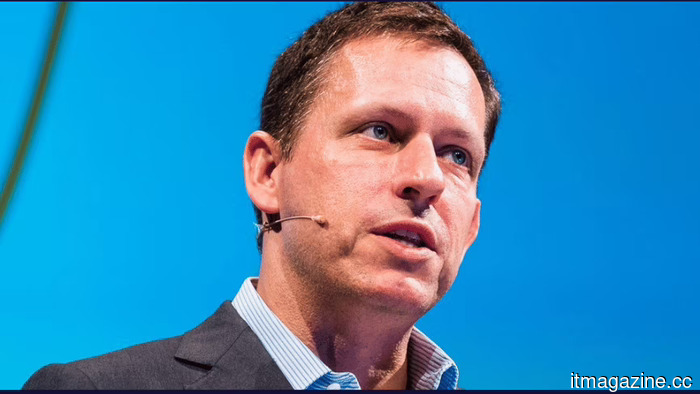 Founders Fund has raised $6 billion after spending $4.6 billion in less than a year on investments in Anthropic, Anduril, and OpenAI.
Founders Fund's new $6 billion fund takes the place of a $4.6 billion predecessor that was utilized in less than a year. The average investment amount is $600 million. Portfolio includes Anthropic, Anduril, SpaceX, and OpenAI.
Founders Fund has raised $6 billion after spending $4.6 billion in less than a year on investments in Anthropic, Anduril, and OpenAI.
Founders Fund's new $6 billion fund takes the place of a $4.6 billion predecessor that was utilized in less than a year. The average investment amount is $600 million. Portfolio includes Anthropic, Anduril, SpaceX, and OpenAI.
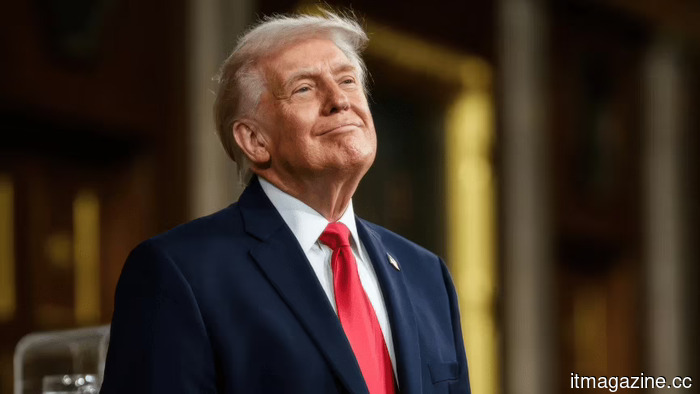 Trump's 25% tariff on EU automobiles violates the Turnberry Agreement, which also encompasses semiconductors and digital commerce.
Next week, Trump will increase EU car tariffs to 25%, violating the Turnberry agreement. This deal also includes provisions for chips and AI. The cars will serve as a test case.
Trump's 25% tariff on EU automobiles violates the Turnberry Agreement, which also encompasses semiconductors and digital commerce.
Next week, Trump will increase EU car tariffs to 25%, violating the Turnberry agreement. This deal also includes provisions for chips and AI. The cars will serve as a test case.
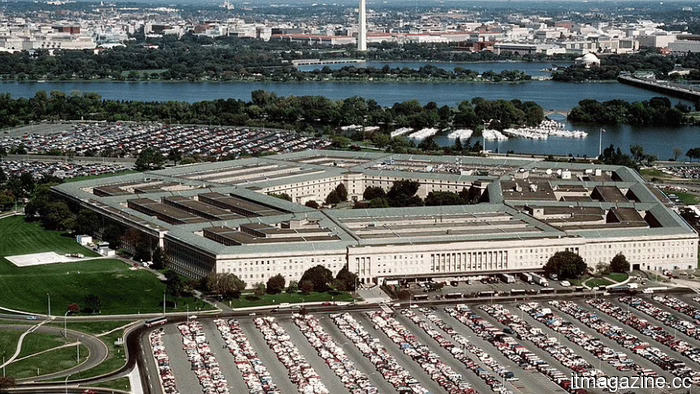 The Pentagon has finalized classified AI agreements with Nvidia, Microsoft, and AWS following the removal of Anthropic due to safety constraints.
Seven companies currently manage AI on classified Pentagon networks under the terms of "lawful operational use." Anthropic, which did not remove its safety constraints, has been substituted.
The Pentagon has finalized classified AI agreements with Nvidia, Microsoft, and AWS following the removal of Anthropic due to safety constraints.
Seven companies currently manage AI on classified Pentagon networks under the terms of "lawful operational use." Anthropic, which did not remove its safety constraints, has been substituted.
Trump's 25% tariff on EU automobiles violates the Turnberry Agreement, which includes provisions for semiconductors and digital trade as well.
Next week, Trump plans to increase EU car tariffs to 25%, which will violate the Turnberry deal. This agreement also includes provisions for chips and AI. The vehicles will serve as the initial test.