
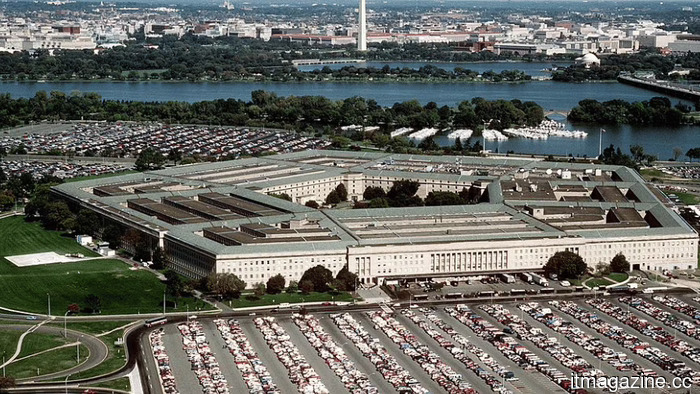
The Pentagon has finalized classified AI agreements with Nvidia, Microsoft, and AWS after removing Anthropic due to safety restrictions.
**TL;DR** The Pentagon has secured classified agreements with Nvidia, Microsoft, Amazon Web Services (AWS), and Reflection AI, increasing the total number of companies involved in secret military networks to seven, which also includes SpaceX, OpenAI, and Google. These agreements operate under "lawful operational use," intentionally replacing the safety restrictions that led to Anthropic's exclusion from Pentagon contracts. The message is clear: AI firms that impose limits on military usage will be replaced by those willing to comply without restrictions.
On May 1, the Pentagon announced that it has formed agreements with Nvidia, Microsoft, AWS, and Reflection AI to enhance the use of advanced artificial intelligence within classified military networks. This brings the total number of companies under such arrangements to seven, following similar contracts with SpaceX, OpenAI, and Google, which also entered into a classified AI agreement recently. All agreements allow for "lawful operational use," a phrase the Defense Department interprets as facilitating the transition of the U.S. military into an AI-first combat force. This choice of wording is significant, deliberately avoiding the safety restrictions that Anthropic, the creator of Claude, aimed to implement. Anthropic's insistence on those restrictions resulted in its removal from the Pentagon supply chain. The seven remaining companies have accepted terms that Anthropic would not agree to.
**The Terms**
This distinction is crucial since it specifies what "classified military AI" implies in practice. Before the Pentagon classified it as a supply chain risk in February, Anthropic maintained that its models could not be utilized for mass domestic surveillance or fully autonomous weapon systems. These were firm principles, codified as contractual limitations that Anthropic demanded be included in its Pentagon agreement, valued at $200 million and awarded in July 2025. The Pentagon rejected these limitations during renegotiations in late 2025 and early 2026. When Anthropic refused to concede, the Defense Department opted to remove the company and replace it with competitors willing to accept broader terms.
Thus, "lawful operational use" emerged as a broad concept, allowing for functions like targeting assistance, intelligence integration, and operational planning on secret and top-secret networks, without the specific prohibitions Anthropic sought. According to defense officials briefed on the situation, the new agreements provide the Pentagon with "wide leeway" to potentially utilize advanced AI technologies for covert combat operations, including aiding in targeting. The Pentagon negotiated its agreement with AWS late Thursday, indicating a sense of urgency in finalizing the complete set of contracts. An AWS spokesperson referred to the Defense Department as “the Department of War,” its name prior to 1947, and remarked that AWS "looks forward to continuing to support" its modernization efforts.
**The Companies**
The seven companies currently engaged with classified Pentagon networks cover almost the entirety of the American AI industry's backbone. Nvidia supplies the chips, while Microsoft and AWS offer cloud infrastructure. Google contributes Gemini, OpenAI supplies GPT, and SpaceX offers satellite communications. Following its acquisition of xAI, SpaceX also provides AI models trained on data from X. While smaller, defense-oriented AI firms are developing solutions for sovereign military applications, the Pentagon is clearly prioritizing the largest providers. Reflection AI, although lesser-known among the seven, specializes in AI for classified and intelligence community uses.
The extensive scope of this arrangement is significant. Defense officials have expressed their aim to ensure the U.S. military "avoids depending on any one single company or set of limitations," a reference to the aftermath with Anthropic. The Pentagon seeks to prevent a scenario where a single AI company's ethical boundaries could hamper military operations. The answer lies in diversifying across seven providers, all of whom have agreed to terms devoid of the restrictions Anthropic insisted upon. The envisioned "AI-first fighting force" requires AI to be available for any lawful military purpose defined by the Pentagon, without constraints placed by the companies that develop it.
**The Exile**
The situation concerning Anthropic is distinctly different. The company was classed as a supply chain risk, a label typically applied to Chinese firms like Huawei and ZTE. Its $200 million Pentagon deal was effectively nullified. Senior defense officials voiced public criticism of the company, and the Trump administration has widened the dispute to include opposition to Anthropic’s Mythos model and limitations on its deployment in government systems. So far, the commercial fallout has been minimal. Anthropic's valuation has soared to about $900 billion, up from $380 billion in February. Its largest computing deal, with Google and Broadcom, far exceeds the Pentagon contract it lost, and the company reports a revenue run rate of around $30 billion. Being removed from the Pentagon's classified networks has not adversely affected Anthropic's business in the short term.
However, it has set a precedent. Any AI company that imposes specific limits on military use of its technology will be supplanted by one that does not. The Pentagon's message, articulated through seven concurrent agreements with
Other articles
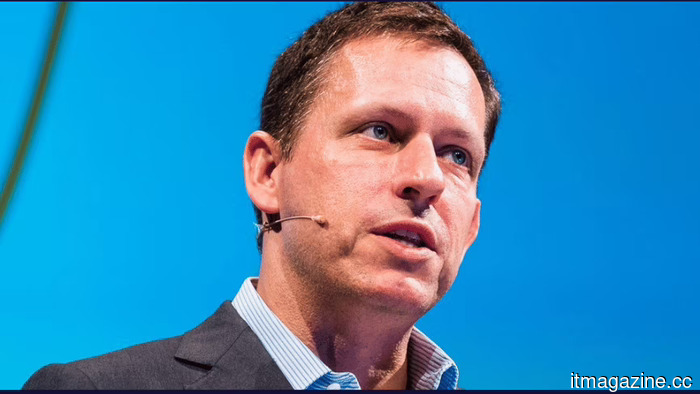 Founders Fund has raised $6 billion after spending $4.6 billion in less than a year on investments in Anthropic, Anduril, and OpenAI.
Founders Fund's new $6 billion fund takes the place of a $4.6 billion predecessor that was utilized in less than a year. The average investment amount is $600 million. Portfolio includes Anthropic, Anduril, SpaceX, and OpenAI.
Founders Fund has raised $6 billion after spending $4.6 billion in less than a year on investments in Anthropic, Anduril, and OpenAI.
Founders Fund's new $6 billion fund takes the place of a $4.6 billion predecessor that was utilized in less than a year. The average investment amount is $600 million. Portfolio includes Anthropic, Anduril, SpaceX, and OpenAI.
 The Volla Phone operates on Linux within a durable casing and demonstrates that replaceable batteries are still a viable option.
Volla's latest Plinius is a durable, Google-free Android smartphone that features a replaceable battery, an IP68 rating, and a pristine OLED screen, with a starting price of €598.
The Volla Phone operates on Linux within a durable casing and demonstrates that replaceable batteries are still a viable option.
Volla's latest Plinius is a durable, Google-free Android smartphone that features a replaceable battery, an IP68 rating, and a pristine OLED screen, with a starting price of €598.
 Meta's $145 billion AI initiative eclipses the child safety lawsuits that may incur greater expenses.
Meta suffered a defeat in its initial addiction trial and is confronted with over 40 lawsuits from state attorneys general, while bans are on the rise. During Zuckerberg's earnings call, the focus was on AI, with no investors raising questions about children.
Meta's $145 billion AI initiative eclipses the child safety lawsuits that may incur greater expenses.
Meta suffered a defeat in its initial addiction trial and is confronted with over 40 lawsuits from state attorneys general, while bans are on the rise. During Zuckerberg's earnings call, the focus was on AI, with no investors raising questions about children.
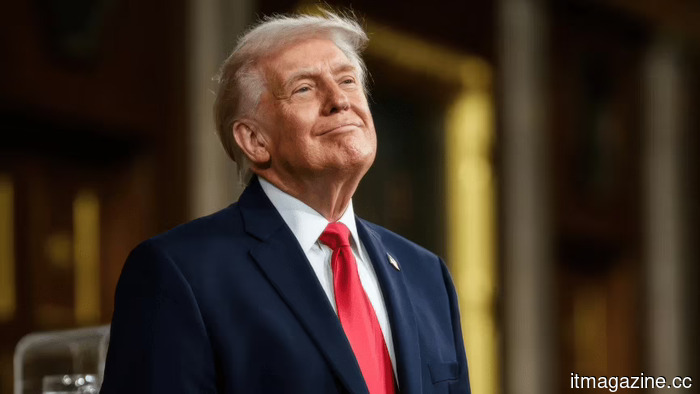 Trump's 25% tariff on EU automobiles violates the Turnberry Agreement, which also includes provisions related to semiconductors and digital trade.
Next week, Trump will increase EU car tariffs to 25%, violating the Turnberry agreement. This deal also includes provisions for chips and AI. The cars will serve as the proving ground.
Trump's 25% tariff on EU automobiles violates the Turnberry Agreement, which also includes provisions related to semiconductors and digital trade.
Next week, Trump will increase EU car tariffs to 25%, violating the Turnberry agreement. This deal also includes provisions for chips and AI. The cars will serve as the proving ground.
 Meta's $145 billion AI initiative eclipses the child safety lawsuits that may incur even higher costs.
Meta faced its first loss in an addiction trial, is dealing with over 40 lawsuits from state attorneys general, and is experiencing a rise in bans. During Zuckerberg's earnings call, the focus was on AI, with no investors inquiring about issues related to children.
Meta's $145 billion AI initiative eclipses the child safety lawsuits that may incur even higher costs.
Meta faced its first loss in an addiction trial, is dealing with over 40 lawsuits from state attorneys general, and is experiencing a rise in bans. During Zuckerberg's earnings call, the focus was on AI, with no investors inquiring about issues related to children.
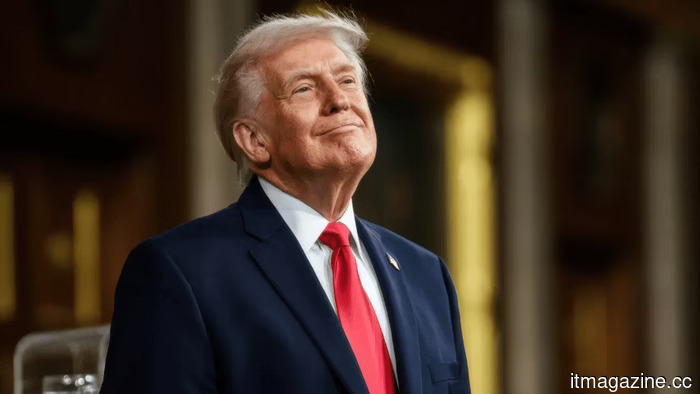 Trump's 25% tariff on EU automobiles violates the Turnberry Agreement, which includes provisions for semiconductors and digital trade as well.
Next week, Trump plans to increase EU car tariffs to 25%, which will violate the Turnberry deal. This agreement also includes provisions for chips and AI. The vehicles will serve as the initial test.
Trump's 25% tariff on EU automobiles violates the Turnberry Agreement, which includes provisions for semiconductors and digital trade as well.
Next week, Trump plans to increase EU car tariffs to 25%, which will violate the Turnberry deal. This agreement also includes provisions for chips and AI. The vehicles will serve as the initial test.
The Pentagon has finalized classified AI agreements with Nvidia, Microsoft, and AWS after removing Anthropic due to safety restrictions.
Currently, seven companies are utilizing AI on classified Pentagon networks under the conditions of "lawful operational use." Anthropic, which declined to eliminate its safety restrictions, has been substituted.