

Meta purchases Assured Robot Intelligence to develop the Android of humanoid robots.
Meta has acquired Assured Robot Intelligence, a startup founded by former Fauna Robotics co-founder Lerrel Pinto and ex-Nvidia researcher Xiaolong Wang, to enhance its strategy for humanoid robotics. This acquisition, which incorporates whole-body robot control models and tactile sensor technology into Meta Superintelligence Labs, demonstrates Meta's ambition to become the Android equivalent in the humanoid space: offering the intelligence layer while allowing others to construct the machines.
Lerrel Pinto co-founded Fauna Robotics, which developed a user-friendly bipedal robot called Sprout, before leaving the company in 2025. In March, Amazon acquired Fauna, including its 50 employees and a $50,000, three-and-a-half-foot-tall dancing humanoid, to break into the consumer robotics sector. Pinto then launched Assured Robot Intelligence with Xiaolong Wang, a former Nvidia researcher and associate professor at UC San Diego, who received the MLSys 2024 Best Paper Award for his work on AI model optimization. On Friday, Meta completed the acquisition of ARI, with both founders joining Meta Superintelligence Labs the same day, though the financial details remain undisclosed. The key question is not the purchase price for a startup with employees mainly in San Diego and New York, but rather Meta's plans for the technology and what that reveals about their vision for the humanoid market's evolution.
Meta aims to replicate the impact that Google’s Android system and Qualcomm's chips had on the smartphone industry by creating a foundation for others to build upon. The company launched Meta Robotics Studio last year, appointed former Cruise CEO Marc Whitten to lead the initiative, and began hiring around 100 engineers to develop in-house humanoid hardware alongside the AI models that will drive it. CTO Andrew Bosworth has described humanoid robots as Meta's next substantial investment, akin to augmented reality, a sector in which Meta has already invested tens of billions through its Reality Labs division. The ARI acquisition enhances this project with robot control models that allow humanoids to interpret, anticipate, and adapt to human behavior in unpredictable environments.
Meta's platform strategy is clear. The company plans to create sensors, software, and AI models for robots that will be accessible to the wider industry, allowing manufacturers unaffiliated with Meta to utilize the technology. This mirrors the Android model applied to physical devices. Similar to how Google provided its operating system to harness value via search, advertising, and the Play Store ecosystem, Meta aims to offer the intelligence layer and derive value from data, model ecosystems, and integration with its existing platforms used by 3.3 billion daily users. Meta has aggressively recruited AI talent, including five founding members of Thinking Machines Lab, with reports of one researcher's six-year package reaching $1.5 billion. The ARI acquisition aligns with this pattern: a small team with leading-edge capabilities, quickly integrated into the Superintelligence Labs research division.
ARI's technology centers on what the company describes as “robotic intelligence designed to enable robots to understand, predict, and adapt to human behaviors in complex and dynamic environments.” In practical terms, this includes AI models for entire-body humanoid control, which involves coordinating a robot’s limbs, balance, and movement based on real-time sensory feedback from an unpredictable physical environment. Wang’s award-winning contributions concerning activation-aware weight quantization, which recently played a significant role in Nebius’s $643 million purchase of Eigen AI, are relevant as they pertain to optimizing AI models for efficient operation within a robot's limited computational resources instead of relying on a distant data center.
The company has also created e-Flesh, a tactile sensor that captures deformations in 3D-printable microstructures using magnets and magnetometers. Tactile sensing remains a critical challenge in humanoid robotics. A robot equipped with cameras and lidar can perceive its environment but lacks the ability to differentiate between holding an egg and a tennis ball without tactile input. The disparity between how robots learn in simulations and their performance in the real world remains a major hurdle to large-scale implementation. ARI’s focus on self-learning for robot control, combined with its sensor technologies, addresses both sides of this gap: improved models and enhanced sensory data.
The humanoid robotics market has shifted from speculative interest to a competitive landscape in just 18 months. Tesla plans to commence large-scale production of its Optimus V3 humanoid by July or August, targeting annual production of one million units by late 2026, priced between $20,000 and $30,000. 1X Technologies has established a factory in Hayward, California, aiming to manufacture 10,000 NEO humanoid robots in the first year, selling out initial production within five days of preorders. Apptronik has secured $520 million at a $5 billion valuation, partnering with Google DeepMind and its Gemini Robotics models. Amazon has made two robotics acquisitions in one month. Unitree aims for 20,000 humanoid shipments by 202
Other articles
 You can now secure your ChatGPT account using a unique USB key.
OpenAI's latest Advanced Account Security feature allows you to eliminate passwords completely and secure your ChatGPT account using a physical USB key — and it is available immediately.
You can now secure your ChatGPT account using a unique USB key.
OpenAI's latest Advanced Account Security feature allows you to eliminate passwords completely and secure your ChatGPT account using a physical USB key — and it is available immediately.
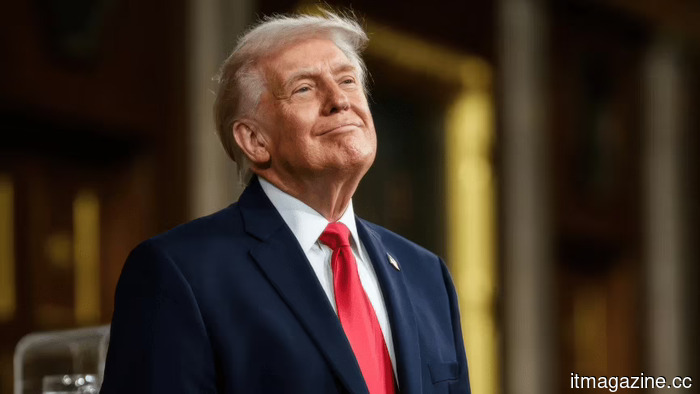 Trump's 25% tariff on EU automobiles violates the Turnberry Agreement, which also includes provisions related to semiconductors and digital trade.
Next week, Trump will increase EU car tariffs to 25%, violating the Turnberry agreement. This deal also includes provisions for chips and AI. The cars will serve as the proving ground.
Trump's 25% tariff on EU automobiles violates the Turnberry Agreement, which also includes provisions related to semiconductors and digital trade.
Next week, Trump will increase EU car tariffs to 25%, violating the Turnberry agreement. This deal also includes provisions for chips and AI. The cars will serve as the proving ground.
 The Pentagon has finalized classified AI agreements with Nvidia, Microsoft, and AWS after removing Anthropic due to safety restrictions.
Currently, seven companies are utilizing AI on classified Pentagon networks under the conditions of "lawful operational use." Anthropic, which declined to eliminate its safety restrictions, has been substituted.
The Pentagon has finalized classified AI agreements with Nvidia, Microsoft, and AWS after removing Anthropic due to safety restrictions.
Currently, seven companies are utilizing AI on classified Pentagon networks under the conditions of "lawful operational use." Anthropic, which declined to eliminate its safety restrictions, has been substituted.
 Apple has confirmed that the Mac mini will be in limited supply for the next few months.
Apple indicates that the Mac mini and Mac Studio might continue to experience supply constraints for several months due to demand that was higher than anticipated, surprising the company.
Apple has confirmed that the Mac mini will be in limited supply for the next few months.
Apple indicates that the Mac mini and Mac Studio might continue to experience supply constraints for several months due to demand that was higher than anticipated, surprising the company.
 Meta's $145 billion AI initiative eclipses the child safety lawsuits that could potentially incur higher costs.
Meta experienced a defeat in its initial addiction trial, is confronted with over 40 lawsuits from state attorneys general, and is seeing an increase in bans. During Zuckerberg's earnings call, the focus was on AI, and no investors inquired about issues concerning children.
Meta's $145 billion AI initiative eclipses the child safety lawsuits that could potentially incur higher costs.
Meta experienced a defeat in its initial addiction trial, is confronted with over 40 lawsuits from state attorneys general, and is seeing an increase in bans. During Zuckerberg's earnings call, the focus was on AI, and no investors inquired about issues concerning children.
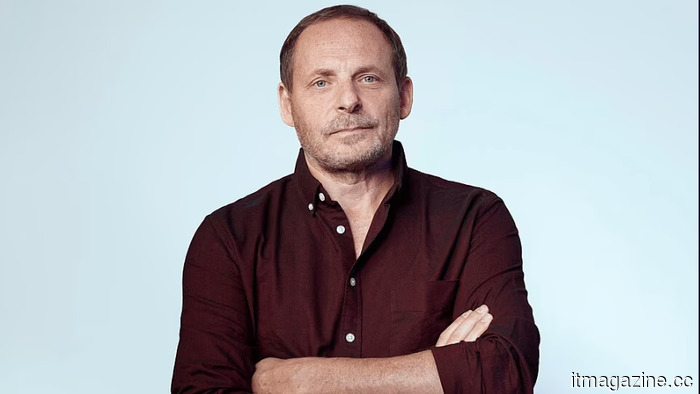 Nebius purchases Eigen AI, comprising 20 employees, for $643 million as inference optimization emerges as the most crucial component of AI infrastructure.
Nebius acquires Eigen AI, a 20-person spinout from MIT, for $643 million. This company specializes in maximizing tokens per GPU. In the neocloud competition, optimizing inference is the key advantage.
Nebius purchases Eigen AI, comprising 20 employees, for $643 million as inference optimization emerges as the most crucial component of AI infrastructure.
Nebius acquires Eigen AI, a 20-person spinout from MIT, for $643 million. This company specializes in maximizing tokens per GPU. In the neocloud competition, optimizing inference is the key advantage.
Meta purchases Assured Robot Intelligence to develop the Android of humanoid robots.
Meta acquired ARI, a robotics AI startup, and integrated it into Superintelligence Labs. The aim is to become the essential platform for all humanoid manufacturers.