
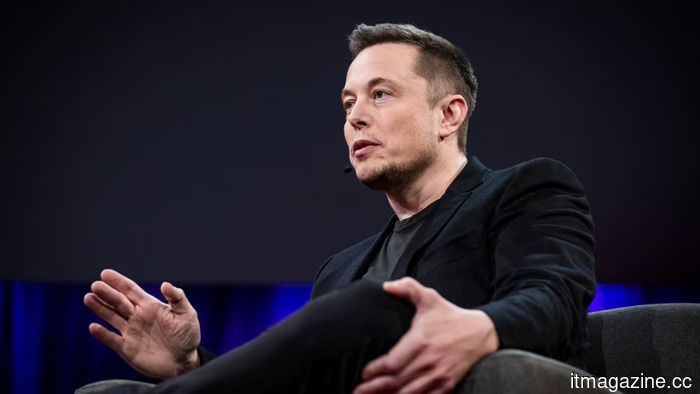
Musk referred to himself as 'a fool' while testifying for financially supporting OpenAI.
The tense third day of Musk v. Altman featured OpenAI’s lead attorney, William Savitt, utilizing Musk’s emails, pledge deficiencies, and text messages from Shivon Zilis to argue that the lawsuit is merely a competitive complaint disguised as a charitable assertion. Elon Musk referred to himself as “a fool” for financially supporting OpenAI, accused its leadership of “looting the nonprofit,” and had several confrontations with the company’s attorney during a tense cross-examination in Oakland federal court on Wednesday.
The day's events, the third of the four-week trial, were the most contentious thus far, as Savitt systematically sought to leverage Musk’s donations, communications, and personal connections against his claims of charitable intent. “I gave them $38 million of essentially free funding, which they then used to create an $800 billion for-profit company,” Musk stated to the jury. “I truly was a fool who provided them with free funding to launch a startup. I literally was.”
This assertion was notable: Musk's own legal narrative has cast him as a misled donor rather than a failed corporate maneuver, and by labeling himself a fool, he reinforces that narrative for the jury.
However, Savitt quickly examined the disparity between Musk’s actual contributions of $38 million and the “up to $1 billion” he pledged when OpenAI was established.
“Without me, OpenAI wouldn’t exist!” Musk retorted, raising his voice as Savitt pressed him about the funding gap. Musk contended that, apart from monetary contributions, he brought his reputation, connections, and credibility, stating, “These things have value,” and asserted that his overall contribution exceeded $100 million in intangible benefits.
At one point, Judge Yvonne Gonzalez Rogers intervened, noting that Savitt was finding it “difficult” to obtain direct answers from Musk. “That is the challenge of all litigants,” the judge remarked.
The texts from Zilis presented a second narrative. The most damaging evidence Savitt presented came from Musk's private correspondence with Shivon Zilis, a venture capitalist on OpenAI’s board and mother to four of Musk’s children. Savitt introduced a 2018 email in which Zilis asked Musk whether she should maintain her closeness to OpenAI to “keep feeding him information on the company.” Musk confirmed he agreed with this.
Savitt’s second Zilis exhibit had further significance: an email from Zilis to Sam Teller, who worked for Musk, outlining two potential changes to OpenAI’s structure: “Roll everything into a B corp,” or “OpenAI C Corp and OpenAI nonprofit.” Savitt’s argument was clear: Musk had been presented with for-profit restructuring options and had considered them.
When asked if he ever directed Zilis to file paperwork to convert OpenAI into a for-profit corporation, Musk replied, “I don’t recall.” Savitt then posed his sharpest question of the day: “You were never really committed to OpenAI being a nonprofit, were you, Mr. Musk?” Musk disagreed with that premise. However, the jury now had two contradictory narratives: a donor claiming he was misled about the nonprofit status and a co-founder who was actively contemplating for-profit conversions in internal communications.
Under questioning from his attorney in redirect, Musk recounted the events that led him from skepticism to litigation. It was Microsoft’s $10 billion investment, not the initial for-profit structure, that he identified as the major breach. “At a $10 billion scale, there’s no way Microsoft is just giving that as a donation or any kind of charitable way,” he stated. “I texted Sam Altman and said, ‘What the hell is going on?’, something to that effect. I think I said, ‘This is a bait and switch.’”
He also highlighted the safety concerns that have been central to Musk’s public stance since filing the lawsuit in 2024. When asked if a for-profit AI company poses safety risks, he responded: “Yes, I think it creates a safety risk.” Savitt countered that Musk could not possibly know OpenAI’s safety practices from an external perspective. “You just don’t know,” Savitt stated. Musk admitted he did not know the specifics of OpenAI’s internal safety initiatives but insisted that the for-profit structure itself raised concerns: “It does worry me that a nonprofit suddenly is a for-profit with unlimited profit.”
Savitt pressed Musk regarding xAI, directly asking if Grok “lags much farther behind” ChatGPT. Musk acknowledged that xAI, now integrated into SpaceX, has a “very small market share” and is “much smaller” than OpenAI currently, while maintaining that xAI is only “technically” a competitor.
The implication was clear: a man developing a direct AI competitor to OpenAI is using the legal system to hinder its progress while cloaked in terms of charitable principle.
What’s next? Savitt informed the
Other articles
 INIU Pocket Rocket P50 Spring Promotion: Small Yet Powerful for Daily Needs
Spring is a time when routines change. Days grow longer, weekends feel extended, and outings become more regular – whether it's a brief visit to a café, a stroll through the city, or a quick trip. Along with this change comes a common challenge: ensuring your devices stay charged without lugging around heavy equipment. This season’s offers favor compact options, […]
INIU Pocket Rocket P50 Spring Promotion: Small Yet Powerful for Daily Needs
Spring is a time when routines change. Days grow longer, weekends feel extended, and outings become more regular – whether it's a brief visit to a café, a stroll through the city, or a quick trip. Along with this change comes a common challenge: ensuring your devices stay charged without lugging around heavy equipment. This season’s offers favor compact options, […]
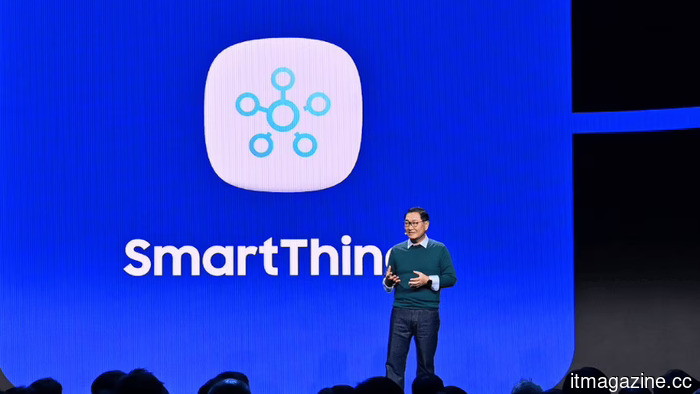 The wealth of Samsung's Lee family has surged to $45.5 billion due to the AI chip boom, while 30,000 employees are calling for a share of the profits and are threatening to strike.
Samsung's Lee dynasty saw its wealth increase to $45.5 billion within a year, fueled by demand for AI memory chips. Profits in Q1 surged eightfold. Currently, 30,000 employees are threatening to strike for a share of the profits.
The wealth of Samsung's Lee family has surged to $45.5 billion due to the AI chip boom, while 30,000 employees are calling for a share of the profits and are threatening to strike.
Samsung's Lee dynasty saw its wealth increase to $45.5 billion within a year, fueled by demand for AI memory chips. Profits in Q1 surged eightfold. Currently, 30,000 employees are threatening to strike for a share of the profits.
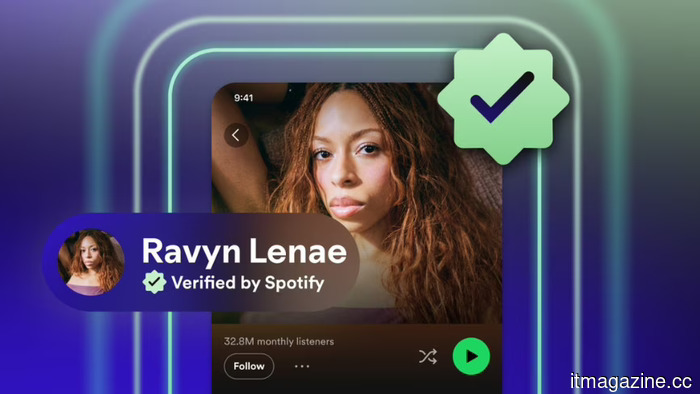 Spotify's new green checkmark distinguishes genuine artists from AI-generated content.
Spotify has introduced a Verified by Spotify badge for artist profiles, specifically excluding accounts created by AI or AI personas, following several months of criticism.
Spotify's new green checkmark distinguishes genuine artists from AI-generated content.
Spotify has introduced a Verified by Spotify badge for artist profiles, specifically excluding accounts created by AI or AI personas, following several months of criticism.
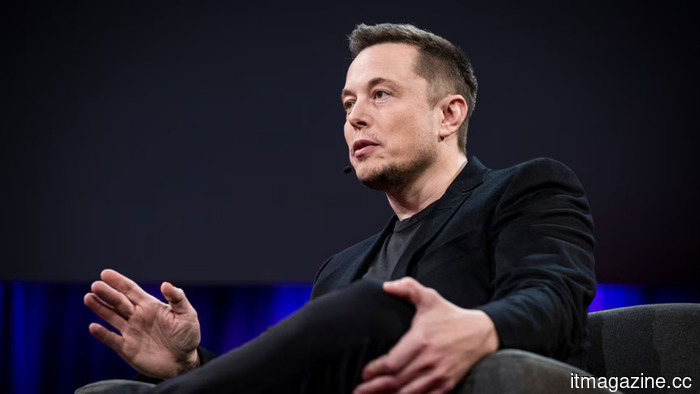 Musk refers to himself as 'a fool' during his testimony for financing OpenAI.
Elon Musk referred to himself as 'a fool' while on the stand and had a heated exchange with OpenAI’s lawyer during a tense cross-examination on the third day of Musk v. Altman.
Musk refers to himself as 'a fool' during his testimony for financing OpenAI.
Elon Musk referred to himself as 'a fool' while on the stand and had a heated exchange with OpenAI’s lawyer during a tense cross-examination on the third day of Musk v. Altman.
 Blue Owl achieved a tenfold return on its investment in SpaceX and has already divested half of its stake.
The co-CEO of Blue Owl Capital revealed a return of approximately 10 times on SpaceX, having sold half of the position at a valuation of $1.25 trillion.
Blue Owl achieved a tenfold return on its investment in SpaceX and has already divested half of its stake.
The co-CEO of Blue Owl Capital revealed a return of approximately 10 times on SpaceX, having sold half of the position at a valuation of $1.25 trillion.
 The wealth of Samsung's Lee family has increased to $45.5 billion due to the surge in AI chip demand, while 30,000 employees are demanding a share of the profits and are threatening to go on strike.
Samsung's Lee dynasty increased its wealth to $45.5 billion in just a year due to the demand for AI memory chips. Profits in the first quarter surged eightfold. Currently, 30,000 employees are threatening to go on strike for a share of the earnings.
The wealth of Samsung's Lee family has increased to $45.5 billion due to the surge in AI chip demand, while 30,000 employees are demanding a share of the profits and are threatening to go on strike.
Samsung's Lee dynasty increased its wealth to $45.5 billion in just a year due to the demand for AI memory chips. Profits in the first quarter surged eightfold. Currently, 30,000 employees are threatening to go on strike for a share of the earnings.
Musk referred to himself as 'a fool' while testifying for financially supporting OpenAI.
Elon Musk referred to himself as ‘a fool’ while testifying and had an intense confrontation with OpenAI’s attorney during a heated cross-examination on the third day of Musk v. Altman.