
Blue Owl achieved a tenfold return on its investment in SpaceX and has already divested half of its stake.
The co-CEO of the alternative asset manager revealed the earnings during a Q1 earnings call, presenting the SpaceX gain as a hedge against possible software credit losses due to AI disruption, highlighting how private credit firms are adapting to the AI landscape. Blue Owl Capital has divested roughly half of its SpaceX investment at a $1.25 trillion valuation, realizing about 10 times its initial investment while retaining the remainder, co-CEO Marc Lipschultz shared during a Q1 2026 analyst call on Thursday. “Specifically at SpaceX, we made about 10 times our money on that investment,” Lipschultz noted, as reported by Reuters. “We’ve sold about half of it at a $1.25 trillion valuation, still holding about half of it.” Blue Owl was among SpaceX’s first institutional lenders and later invested in equity by acquiring shares across two classes in 2021, according to a 2025 securities filing. The $1.25 trillion valuation at which it sold its initial portion aligns with the post-merger figure established when SpaceX bought Elon Musk’s AI company xAI in an all-stock deal in February 2026, incorporating Grok, X (previously Twitter), and xAI’s GPU infrastructure into the merged entity. Should Blue Owl maintain its remaining stake until the SpaceX IPO, which aims for a June 2026 launch at a potential $1.75 trillion valuation and a $75 billion raise—the largest public offering in history—those unrealized gains could increase further.
The strategic context: SpaceX as a credit hedge
What stood out in Lipschultz’s remarks was not merely the 10x return but the context in which he mentioned it. He presented the SpaceX gain as a potential buffer against losses in Blue Owl’s software loan portfolio, expressing concern that the newest AI models could disrupt some of the software firms to which Blue Owl has extended credit, leading to defaults. This observation reflects a tension present in the private credit industry in 2026. Companies like Blue Owl, Ares, Apollo, and Blackstone have developed substantial direct lending portfolios targeting technology and software firms—many of which find themselves competing with the very AI innovations that are simultaneously driving up the valuations of companies like SpaceX. The hedge Lipschultz outlined, with SpaceX equity gains countering possible software credit losses, serves not only as reassurance for analysts but also as a structural recognition that private credit firms are now facing AI disruption risks from multiple angles, indicating that equity growth in the AI infrastructure sector is one management strategy.
Investor reaction and financial performance
Blue Owl’s shares surged following the earnings call, as investors positively reacted to the SpaceX disclosure and the firm's Q1 outcomes: fee-related earnings of $0.25 per share (up 14% year-over-year), distributable earnings of $0.19 per share (up 11%), and a total of $11 billion in capital raised during the quarter, with 67% sourced from institutional investors and $3 billion from private wealth channels.
Context of the SpaceX IPO
Blue Owl’s announcement comes at a critical juncture in the SpaceX IPO process. As previously reported, SpaceX confidentially filed with the SEC on April 1, 2026, seeking a $75 billion raise at a valuation of $1.75 trillion—more than 2.5 times the Saudi Aramco IPO record of $29.4 billion set in 2019. The roadshow is expected to commence around June 8, with a significant investor event on June 11. Leading underwriters include Morgan Stanley, Goldman Sachs, JPMorgan, Bank of America, and Citigroup. If the IPO achieves a valuation of $1.75 trillion, it would debut as one of the most valuable publicly traded companies worldwide. The $1.25 trillion valuation at which Blue Owl divested half of its stake is noteworthy, as it stems from the SpaceX-xAI merger rather than a market transaction. Thus, Blue Owl's realized gains were based on a valuation set by an all-stock merger rather than through a fully liquid market price. The variance between the $1.25 trillion and the IPO target of $1.75 trillion represents the remaining potential upside for the half-position that Blue Owl continues to hold, amounting to approximately $440 billion in increased valuation if the IPO is priced at the upper end.
For institutional investors in private credit funds, Blue Owl’s SpaceX narrative exemplifies the transformation of the asset class over the past decade. What began as senior secured loans to established businesses has increasingly included equity co-investments, preferred shares, and structured products to provide funds with exposure to the growth potential of private companies approaching IPO. The 10x return on SpaceX equity, disclosed alongside a Meta bond offering and an Anthropic fundraising near $900 billion, highlights how 2026’s financial markets have centered around a singular underlying bet: that the current generation
Other articles
 Netflix introduces its own "Clips" vertical video feed to attract users from TikTok and Reels.
Netflix's new Clips feed introduces swipeable vertical videos within the app, allowing users to explore shows through brief snippets, bookmark them, and easily access full episodes.
Netflix introduces its own "Clips" vertical video feed to attract users from TikTok and Reels.
Netflix's new Clips feed introduces swipeable vertical videos within the app, allowing users to explore shows through brief snippets, bookmark them, and easily access full episodes.
 What to buy for the mom who claims she doesn't want anything.
This post is presented to you as a paid collaboration with SKG. Finding a thoughtful Mother's Day gift is more challenging than it appears, and many typical choices tend to lose their significance after the occasion ends. The SKG G7 Pro Fold 3.0 neck massager and the SKG W9 Ultra 2.0 lower back massager are designed for everyday use, […]
What to buy for the mom who claims she doesn't want anything.
This post is presented to you as a paid collaboration with SKG. Finding a thoughtful Mother's Day gift is more challenging than it appears, and many typical choices tend to lose their significance after the occasion ends. The SKG G7 Pro Fold 3.0 neck massager and the SKG W9 Ultra 2.0 lower back massager are designed for everyday use, […]
 The integration of AI requires accountability, in addition to innovation.
With the rapid adoption of AI, it is essential for leaders to emphasize accountability, ethics, and oversight. This is why integrity is crucial for successful AI integration.
The integration of AI requires accountability, in addition to innovation.
With the rapid adoption of AI, it is essential for leaders to emphasize accountability, ethics, and oversight. This is why integrity is crucial for successful AI integration.
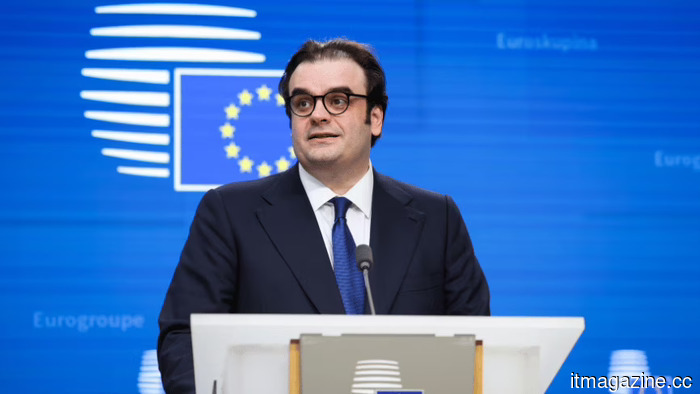 Finance ministers from the Eurozone will meet to discuss Anthropic's Mythos AI, as no EU government currently has access, and the White House is preventing its expansion.
EU finance ministers are set to discuss Mythos on Monday. No European government has access to the model. The Bundesbank asserts that the EU should request it. However, the White House disagrees.
Finance ministers from the Eurozone will meet to discuss Anthropic's Mythos AI, as no EU government currently has access, and the White House is preventing its expansion.
EU finance ministers are set to discuss Mythos on Monday. No European government has access to the model. The Bundesbank asserts that the EU should request it. However, the White House disagrees.
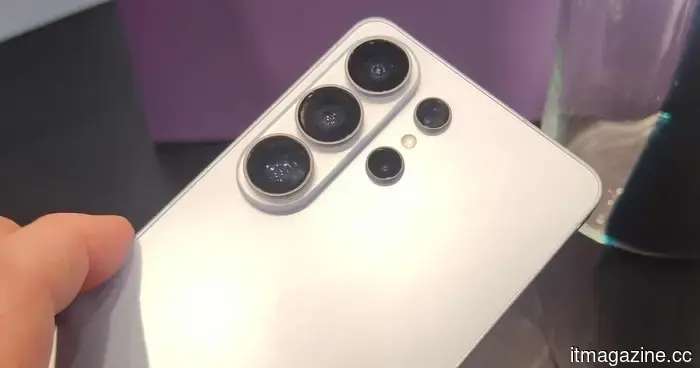 The Samsung Galaxy S27 Ultra may enhance its zoom capabilities by eliminating a significant weak point.
Samsung might reconsider the camera arrangement of the Galaxy S27 Ultra to enhance zoom capabilities, potentially leading to superior optics and a more optimized internal structure for its upcoming flagship.
The Samsung Galaxy S27 Ultra may enhance its zoom capabilities by eliminating a significant weak point.
Samsung might reconsider the camera arrangement of the Galaxy S27 Ultra to enhance zoom capabilities, potentially leading to superior optics and a more optimized internal structure for its upcoming flagship.
 A Sony patent suggests a gaming system that modifies its difficulty level depending on the player's performance.
A recently revealed Sony patent describes an AI system that has the capability to observe player emotions and adjust the game's difficulty in real-time accordingly.
A Sony patent suggests a gaming system that modifies its difficulty level depending on the player's performance.
A recently revealed Sony patent describes an AI system that has the capability to observe player emotions and adjust the game's difficulty in real-time accordingly.
Blue Owl achieved a tenfold return on its investment in SpaceX and has already divested half of its stake.
The co-CEO of Blue Owl Capital revealed a return of approximately 10 times on SpaceX, having sold half of the position at a valuation of $1.25 trillion.