
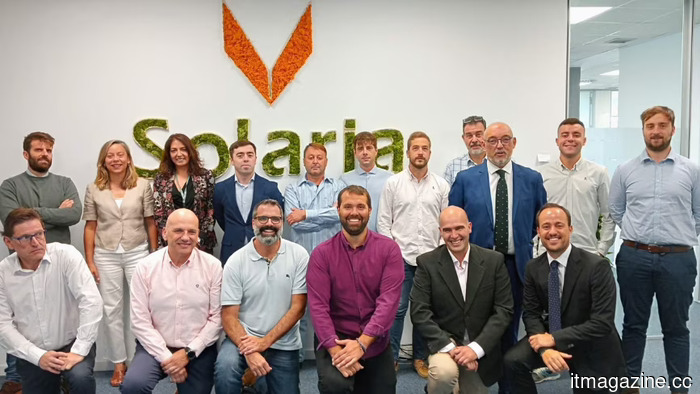
Solaria secures €300 million to transform solar farms into AI infrastructure.
The Spanish solar developer is wagering that the solution to AI's energy needs lies in placing renewable energy generation alongside battery storage near data centres, and investor interest is markedly high, with oversubscription at 6.7 times. Europe faces challenges with data centres, as electricity grids struggle to meet the heightened power demands from the AI surge, planning processes are sluggish, and the wait times for grid connections in regions like the UK, Ireland, and Germany extend for several years.
Solaria, a solar developer listed on the Madrid stock exchange, believes it has discovered a way to navigate these three obstacles simultaneously. On Wednesday, the company raised €299.88 million through a private placement that amounted to up to 10% of its share capital, with the offering being oversubscribed by 6.7 times across its price range of €24 per share, with participation from top-tier international institutional investors.
Funds raised will support two interconnected strategies: speeding up Solaria’s ‘Powered Land’ data centre platform which offers renewable-powered sites that have secured grid connections to hyperscalers and colocation operators; and significantly enhancing its battery energy storage system (BESS) hybrid program, which combines solar farms with wind energy and storage to provide reliable, dispatchable power.
The oversubscription is a critical aspect. For a capital raise of this magnitude, especially at a time when Spanish solar stocks are experiencing pressure from low power prices due to record hydro output and new capacity coming online in 2025, the 6.7x demand indicates that institutional investors are focused on Solaria’s shift towards data centres rather than its current generation economics.
Solaria’s offering for data centre operators is straightforward yet difficult to duplicate. The company operates over 70 solar facilities throughout Spain, Italy, Portugal, and Germany, connected by a private electrical network comprising approximately 1,000 kilometres of infrastructure and 97 substations. This network, built over more than two decades, provides something that data centre developers currently find challenging to quickly obtain: confirmed grid connection capacity.
The 'Powered Land' model provides data centre operators with locations next to existing or under-construction solar projects, with pre-secured grid connections, established electrical infrastructure, and long-term renewable power purchase agreements (PPAs). The operator simply connects; Solaria manages the energy supply.
As of its November 2025 Capital Markets Day, Solaria had established a 3.4 GW portfolio of secured data centre capacity across five countries, with its largest concentrations being in Italy (1.4 GW) and Germany (1.2 GW), followed by the UK and Spain. The company has already finalized two significant agreements with Merlin Properties, the Spanish REIT, amounting to a total of 438 MW of data centre capacity, supported by 40-year solar PPAs totaling 871 MW and a 10-year BESS contract for 600 MWh of storage. A third agreement is reportedly in advanced stages for an additional 500 MW. Solaria expects its data centre operations to generate €700 million in revenues over the next five years, with Spanish data centre contracts alone expected to cover 80% of its target for infrastructure services revenue.
The second application of the raised funds aims to tackle the fundamental limitation of solar-only energy supply for data centres: intermittency. A large-scale data centre cannot rely solely on solar power; it requires around-the-clock dispatchable power, which necessitates storage. Solaria’s solution is a large-scale hybridization program that will incorporate wind generation and BESS into its existing solar facilities in Iberia. The company plans to invest €770 million in capital to hybridize its solar parks, aiming for 500 MW of wind power and 4 GWh of BESS in Iberia by the end of 2028. At the broader European level, it has assembled a 5.1 GW storage development portfolio, of which 1.9 GW already holds secured connection permits, targeting a total of 6.4 GWh of European BESS capacity by 2028.
The joint venture with Stoneshield Capital, Gravyx, manages a 14 GWh European storage portfolio and is set up to develop standalone battery projects outside of Solaria’s core hybrid strategy. The rationale behind this strategy is both financial and operational. BESS systems located with solar farms benefit from favorable gas spreads, the difference between low daytime solar power prices and higher evening gas-fired prices, generating revenue through energy arbitrage and capacity payments that help protect Solaria from low Spanish solar prices currently affecting its 2026 EBITDA projections.
Solaria’s capital raise directly responds to one of the key infrastructure challenges of the AI era. U.S. utilities alone are projected to invest $1.4 trillion by 2030 in electricity infrastructure to meet data centre demand. The urgency is similarly pronounced in Europe: the IEA anticipates that global electricity consumption from data centres will surpass 1,000 TWh by 2026, roughly
Other articles
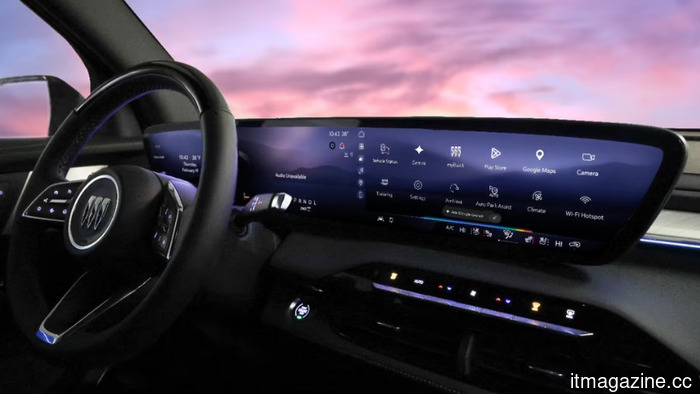 GM introduces Google Gemini to four million cars.
GM is deploying Google Gemini to around four million vehicles in the US through an over-the-air update, marking a significant shift in in-car AI by replacing Google Assistant.
GM introduces Google Gemini to four million cars.
GM is deploying Google Gemini to around four million vehicles in the US through an over-the-air update, marking a significant shift in in-car AI by replacing Google Assistant.
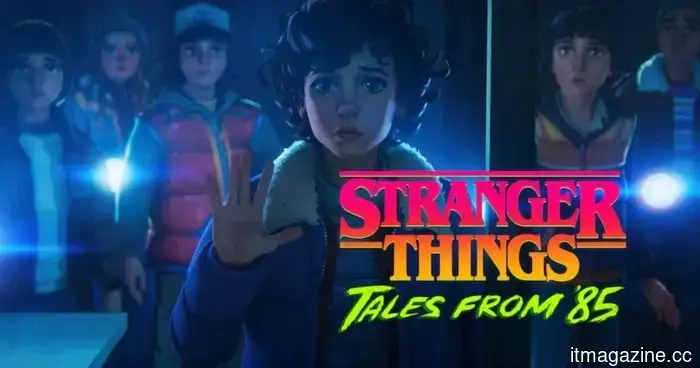 Netflix has renewed Stranger Things: Tales From ’85 for a second season, even though it has received the lowest ratings in the franchise's history.
Despite mixed reviews, Netflix has renewed Stranger Things: Tales From '85 for a second season. The animated spin-off has received the lowest ratings for the franchise on both Rotten Tomatoes and IMDB.
Netflix has renewed Stranger Things: Tales From ’85 for a second season, even though it has received the lowest ratings in the franchise's history.
Despite mixed reviews, Netflix has renewed Stranger Things: Tales From '85 for a second season. The animated spin-off has received the lowest ratings for the franchise on both Rotten Tomatoes and IMDB.
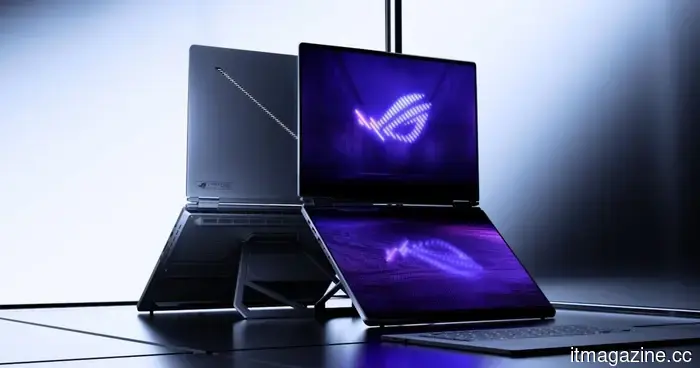 Asus has placed the astonishing dual-screen ROG Zephyrus Duo on the market at a staggering price.
The ROG Zephyrus Duo makes a comeback featuring two complete 16-inch ROG Nebula HDR OLED touchscreens, offering over 21 inches of total display area, powered by the Intel Core Ultra 9 386H, and up to the RTX 5090 Laptop GPU at 135W.
Asus has placed the astonishing dual-screen ROG Zephyrus Duo on the market at a staggering price.
The ROG Zephyrus Duo makes a comeback featuring two complete 16-inch ROG Nebula HDR OLED touchscreens, offering over 21 inches of total display area, powered by the Intel Core Ultra 9 386H, and up to the RTX 5090 Laptop GPU at 135W.
 Cognizant acquires Astreya for $600 million in its fourth significant acquisition.
Cognizant has reached an agreement to purchase Astreya, a managed services company specializing in AI infrastructure and data centers, for around $600 million. This marks its fourth significant acquisition in the past 18 months.
Cognizant acquires Astreya for $600 million in its fourth significant acquisition.
Cognizant has reached an agreement to purchase Astreya, a managed services company specializing in AI infrastructure and data centers, for around $600 million. This marks its fourth significant acquisition in the past 18 months.
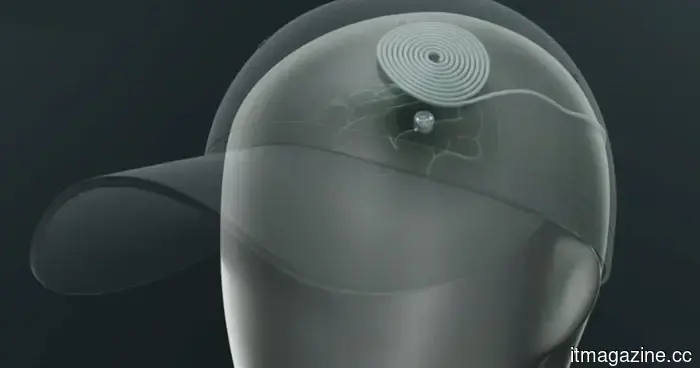 This small brain implant has the potential to alleviate depression from home.
Motif Neurotech has recently received FDA approval to test a small brain implant aimed at treating depression, and the entire procedure can be completed in just 20 minutes.
This small brain implant has the potential to alleviate depression from home.
Motif Neurotech has recently received FDA approval to test a small brain implant aimed at treating depression, and the entire procedure can be completed in just 20 minutes.
 Steam Deck 2 wish list: features I'd like to see in the next generation model.
Valve already possesses the top handheld foundation available, so the upcoming Steam Deck 2 requires only intelligent enhancements in the most crucial areas.
Steam Deck 2 wish list: features I'd like to see in the next generation model.
Valve already possesses the top handheld foundation available, so the upcoming Steam Deck 2 requires only intelligent enhancements in the most crucial areas.
Solaria secures €300 million to transform solar farms into AI infrastructure.
Solaria secures €300 million in a placement that was oversubscribed by 6.7 times to expand its Powered Land data centre platform and battery energy storage system (BESS) hybrid initiative throughout Europe.