
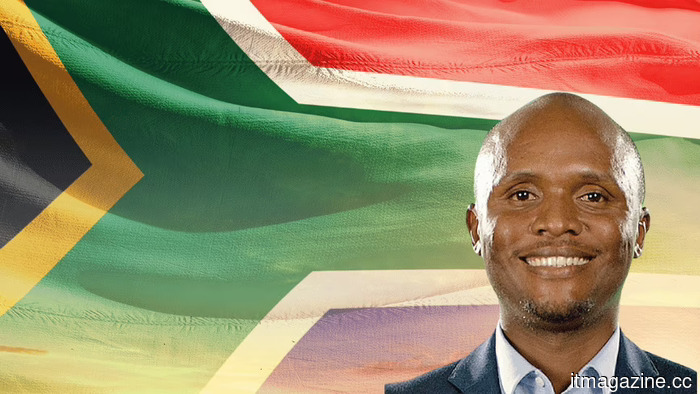
South Africa has retracted its national AI policy after discovering that at least 6 out of 67 academic citations were identified as AI-generated inaccuracies.
**TL;DR**
The draft national AI policy of South Africa was withdrawn by Communications Minister Solly Malatsi after News24 revealed that at least six of its 67 academic citations were AI-generated fabrications that referenced non-existent articles in actual journals. This policy had received Cabinet approval in March and was opened for public feedback. Malatsi labeled the incident an “unacceptable lapse” and committed to accountability measures. The fallout leaves South Africa without an AI governing framework, raising concerns about the institutional capability to regulate the technology.
For months, South Africa’s Department of Communications and Digital Technologies worked on a national AI policy that proposed several regulatory bodies, including a National AI Commission and an AI Ethics Board, while outlining five pillars for AI governance: skills capacity, responsible governance, ethical and inclusive AI, cultural preservation, and human-centered deployment. The approach was risk-based, inspired by the EU AI Act, with the draft being approved on March 25 and published for public comment on April 10. But News24’s investigation found that at least six citations supposedly supporting the policy's claims were fabricated. Although the journals were legitimate, the articles did not exist, and the credited authors had not written the works attributed to them. Editors from various respected journals confirmed to News24 that those cited articles were never published. Malatsi suggested that the drafters likely utilized an AI tool without verifying the references, undermining a policy aimed at regulating artificial intelligence with the very same technology.
**The Withdrawal**
Malatsi made the withdrawal announcement on April 27, deeming the phony citations an “unacceptable lapse” that “compromised the integrity and credibility of the draft policy,” and promised consequences for those involved in both drafting and quality assurance. He stated, “This failure is not a mere technical issue.” A chair of the parliamentary portfolio committee succinctly advised the department to "avoid using ChatGPT this time" in rewriting the document. Though it will undergo revisions before being resubmitted for public commentary, no specific timeline has been provided. Currently, South Africa lacks a formal AI governance framework at a time when nations across the globe are addressing how to regulate AI, damaging the country's credibility in these crucial conversations.
The scandal extends beyond the mere existence of false citations in a government document; it highlights the absurd situation of such errors appearing in an official policy about artificial intelligence, crafted by the department overseeing the country’s digital technology strategy, amid significant global discussions about AI governance in places like Brussels, Washington, and Beijing. The ambitious EU AI Act faces delays concerning standards and a shifting implementation timeline, while the U.S. lacks federal AI legislation, with states taking independent legislative action as discussions occur in the White House. China has introduced AI regulations that are enforced selectively. Against this backdrop, South Africa presented a policy that could not withstand a bibliographical review.
**The Pattern**
The issue of fabricated citations is part of a troubling trend affecting institutions leveraging generative AI for research and drafting. A Nature study indicated that 2.6% of academic papers published in 2025 included at least one potentially invented citation, up from 0.3% in 2024. If this trend persists across approximately seven million scholarly articles from that year, over 110,000 could feature invalid references. The Canadian detection startup GPTZero analyzed more than 4,000 research papers accepted at NeurIPS 2025—a leading AI conference—and found over 100 fabricated citations in at least 53 papers. In a separate study, only 26.5% of AI-generated bibliographic references were completely accurate. The structural issue arises because large language models create citations based on probabilistic token predictions rather than actual information retrieval; they do not verify papers but predict references that appear authoritative yet reference nothing.
South Africa's case stands out not due to the technology's hallucinations—an inherent limitation of generative AI—but rather because these fabrications were included in an official government policy document that went through Cabinet approval without reference verification. The drafting included civil servants, expert consultations, and ministerial review. Dumisani Sondlo, the lead on AI policy for the department, had earlier described the policy development as a recognition of insufficient knowledge. However, this acknowledgment did not extend to the understanding that the drafting tool itself was unreliable. The six faulty citations identified by News24 are merely those that were found; it remains unverified if other citations in the document are valid. The entire bibliography is under scrutiny, which calls into question the analytical basis upon which the policy’s recommendations were constructed.
**The Implications**
The result of this fiasco is a reset of South Africa's AI governance timeline. The draft policy aimed to position the nation as a leader in responsible AI adoption within Africa will need significant revisions, consultations, and resubmission. The damage to institutional credibility reaches beyond this specific policy. If the department tasked with overseeing AI cannot confirm the authenticity of sources in its document, serious doubts arise about
Other articles
 The release date for season 4 of Ted Lasso is scheduled for this summer, and the trailer appears promising.
In Season 4, Ted returns to Richmond, facing an entirely new challenge: coaching a women's football team in the second division.
The release date for season 4 of Ted Lasso is scheduled for this summer, and the trailer appears promising.
In Season 4, Ted returns to Richmond, facing an entirely new challenge: coaching a women's football team in the second division.
 Samsung is facing a potential ban on its foldable phones in the US due to a patent dispute.
A recent lawsuit alleges that Samsung has violated patents related to foldable phones and is requesting a ban on sales in the US, although these allegations have yet to be substantiated.
Samsung is facing a potential ban on its foldable phones in the US due to a patent dispute.
A recent lawsuit alleges that Samsung has violated patents related to foldable phones and is requesting a ban on sales in the US, although these allegations have yet to be substantiated.
 Google has finalized a classified AI agreement with the Pentagon for
Google provided the Pentagon with classified access to Gemini for "any lawful purpose" just one day after more than 580 employees voiced their objections. Additionally, the company withdrew from a $100 million drone swarm competition following an ethics assessment.
Google has finalized a classified AI agreement with the Pentagon for
Google provided the Pentagon with classified access to Gemini for "any lawful purpose" just one day after more than 580 employees voiced their objections. Additionally, the company withdrew from a $100 million drone swarm competition following an ethics assessment.
 Scholly's founder, Christopher Gray, has filed a lawsuit against Sallie Mae, claiming wrongful termination and the unauthorized sale of student data that includes information about minors.
Christopher Gray created Scholly to assist students in finding scholarships. Following its acquisition by Sallie Mae, he claims he was terminated for raising concerns about the sale of users' personal data, including information about minors.
Scholly's founder, Christopher Gray, has filed a lawsuit against Sallie Mae, claiming wrongful termination and the unauthorized sale of student data that includes information about minors.
Christopher Gray created Scholly to assist students in finding scholarships. Following its acquisition by Sallie Mae, he claims he was terminated for raising concerns about the sale of users' personal data, including information about minors.
 The LibrePods app, designed to enhance compatibility between AirPods and Android devices, has finally resolved its most significant problem.
LibrePods, the application that enables AirPods functionalities on Android devices, is now more user-friendly thanks to its availability on the Play Store and a decreased dependence on potentially risky root access.
The LibrePods app, designed to enhance compatibility between AirPods and Android devices, has finally resolved its most significant problem.
LibrePods, the application that enables AirPods functionalities on Android devices, is now more user-friendly thanks to its availability on the Play Store and a decreased dependence on potentially risky root access.
 Musk states that the OpenAI case will establish a precedent for
Musk informed the jurors that his lawsuit against OpenAI is aimed at safeguarding charitable donations rather than pursuing personal profit. He has rejected any financial advantages and is advocating for a mandatory return to a nonprofit status. OpenAI contends that his true motive was to obtain control.
Musk states that the OpenAI case will establish a precedent for
Musk informed the jurors that his lawsuit against OpenAI is aimed at safeguarding charitable donations rather than pursuing personal profit. He has rejected any financial advantages and is advocating for a mandatory return to a nonprofit status. OpenAI contends that his true motive was to obtain control.
South Africa has retracted its national AI policy after discovering that at least 6 out of 67 academic citations were identified as AI-generated inaccuracies.
South Africa retracted its proposed AI policy after News24 discovered fraudulent citations in legitimate journals. Minister Malatsi referred to it as an "unacceptable lapse." The credibility of the policy intended to regulate AI was compromised as a result.