
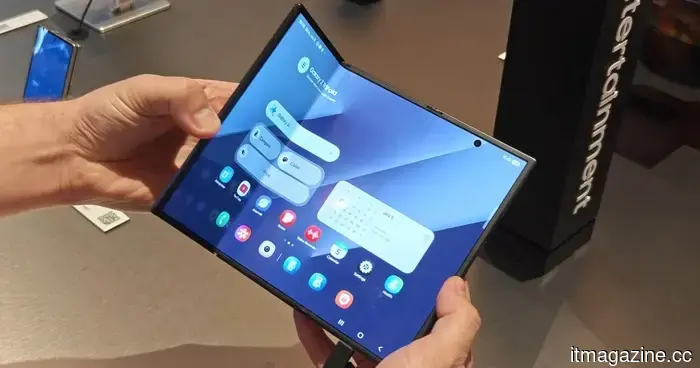
Samsung is facing a potential ban on its foldable phones in the US due to a patent conflict.
Samsung’s lead in foldable technology is encountering a significant legal obstacle.
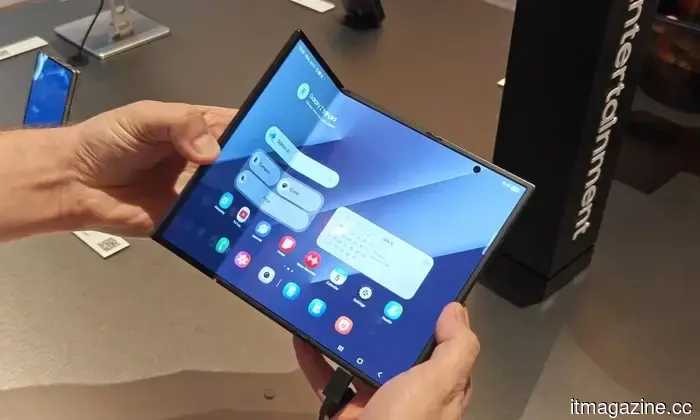
Samsung is dealing with a new lawsuit that could halt its foldable phone sales in the US. Lepton Computing LLC has initiated legal proceedings in a federal court in Texas, alleging that the South Korean tech company and its US subsidiary have infringed on multiple patents concerning foldable phone technology.
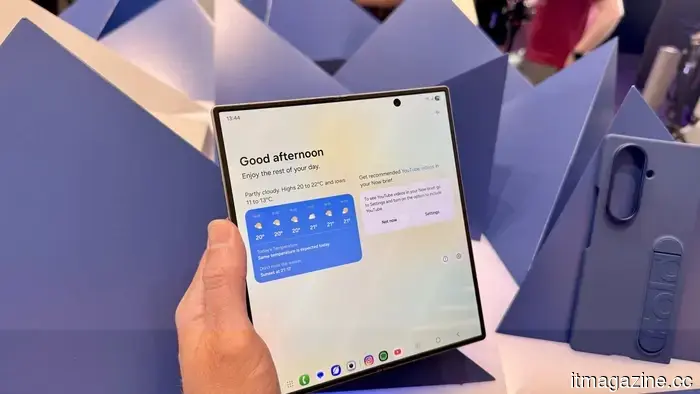
If this legal matter escalates, it might affect the sales of Samsung’s Galaxy Z series, which consists of the Fold, Flip, and the new TriFold models.
Details of the lawsuit
In the lawsuit, which was later reported by The Biz, Lepton claims that Samsung is utilizing patented technologies related to flexible display structures, hinge mechanisms, and user interface functionalities without authorization. Lepton asserts that it developed these technologies years before the introduction of these foldable phones.
The patents at the center of the dispute include methods concerning the operation of foldable displays and how software adapts to different screen states, both of which are fundamental to today’s foldable devices. Lepton is seeking damages and is notably requesting a potential ban on Samsung's foldable phones in the US market.
Legal considerations
It's important to remember that alleging patent infringement does not equate to proving it. Patent conflicts in the tech industry can be intricate due to overlapping ideas, previous inventions, and competing claims. While Lepton holds patents related to foldable technology, this does not automatically confirm that Samsung has infringed upon them.
Samsung already possesses a substantial portfolio of patents related to foldable technology that it has built up over years of research and development, which will likely be significant if the case progresses.
Why this matters and what lies ahead
Samsung is a major player in the foldable phone market, particularly in the US, where its main competition is Motorola’s Razr series. Thus, any disruption could significantly affect the entire market segment. In a worst-case scenario where Samsung is prohibited from selling foldables in the US, Apple’s forthcoming foldable iPhone might enter the market with little competition.
Currently, the legal battle is in its initial stages. Such cases can often take years to resolve, typically resulting in a substantial settlement. For now, this is an evolving situation.



Other articles
 South Africa retracts its national AI policy after discovering that at least 6 out of 67 academic references were AI-generated fabrications.
South Africa retracted its draft AI policy after News24 discovered fraudulent citations in legitimate journals. Minister Malatsi described it as an "unacceptable lapse." The policy intended to regulate AI was compromised as a result.
South Africa retracts its national AI policy after discovering that at least 6 out of 67 academic references were AI-generated fabrications.
South Africa retracted its draft AI policy after News24 discovered fraudulent citations in legitimate journals. Minister Malatsi described it as an "unacceptable lapse." The policy intended to regulate AI was compromised as a result.
 Google has entered into a classified agreement with the Pentagon regarding AI.
Google provided the Pentagon with classified access to Gemini for "any lawful purpose" just one day after over 580 employees voiced their protests. Additionally, it withdrew from a $100 million drone swarm competition following an ethics evaluation.
Google has entered into a classified agreement with the Pentagon regarding AI.
Google provided the Pentagon with classified access to Gemini for "any lawful purpose" just one day after over 580 employees voiced their protests. Additionally, it withdrew from a $100 million drone swarm competition following an ethics evaluation.
 Musk states that the OpenAI case will establish a precedent for
Musk informed the jurors that his lawsuit against OpenAI is focused on safeguarding charitable contributions rather than seeking personal advantages. He has given up any financial benefit and is advocating for a return to the nonprofit status. OpenAI, however, claims that he was aiming for control.
Musk states that the OpenAI case will establish a precedent for
Musk informed the jurors that his lawsuit against OpenAI is focused on safeguarding charitable contributions rather than seeking personal advantages. He has given up any financial benefit and is advocating for a return to the nonprofit status. OpenAI, however, claims that he was aiming for control.
 Nvidia discreetly announced a new version of the GeForce RTX 5070 GPU within a driver blog post.
Nvidia's latest 12GB GeForce RTX 5070 Laptop GPU employs a different GDDR7 memory format to tackle supply issues, offering laptop manufacturers a third configuration option in addition to the current 8GB variant.
Nvidia discreetly announced a new version of the GeForce RTX 5070 GPU within a driver blog post.
Nvidia's latest 12GB GeForce RTX 5070 Laptop GPU employs a different GDDR7 memory format to tackle supply issues, offering laptop manufacturers a third configuration option in addition to the current 8GB variant.
 OpenAI states that it is
OpenAI rejected a WSJ report about unmet targets as mere clickbait. In reaction, investors began selling shares of Oracle, CoreWeave, SoftBank, and chip stocks. The key issue now is whether the $600 billion in commitments continues to be viable.
OpenAI states that it is
OpenAI rejected a WSJ report about unmet targets as mere clickbait. In reaction, investors began selling shares of Oracle, CoreWeave, SoftBank, and chip stocks. The key issue now is whether the $600 billion in commitments continues to be viable.
 Nvidia launches the Nemotron 3 Nano Omni: a versatile open multimodal model featuring 30 billion parameters, with 3 billion active, designed for edge AI agents.
Nvidia's Nemotron 3 Nano Omni combines vision, audio, and text into a single open-weight model with a throughput that is 9 times greater. It utilizes only 3 billion of its 30 billion parameters at each step and is designed for edge AI agents operating on single GPUs.
Nvidia launches the Nemotron 3 Nano Omni: a versatile open multimodal model featuring 30 billion parameters, with 3 billion active, designed for edge AI agents.
Nvidia's Nemotron 3 Nano Omni combines vision, audio, and text into a single open-weight model with a throughput that is 9 times greater. It utilizes only 3 billion of its 30 billion parameters at each step and is designed for edge AI agents operating on single GPUs.
Samsung is facing a potential ban on its foldable phones in the US due to a patent conflict.
A recent lawsuit alleges that Samsung has violated foldable phone patents and is requesting a ban on sales in the US, although the allegations have not yet been substantiated.