

After 12 hours of discussions, the EU and Parliament could not reach a consensus on alterations to the AI Act, delaying the agreement until next month.
The collapse of Tuesday's trilogue reveals significant divisions regarding whether high-risk AI systems included in consumer products should be exempt from the world's strictest AI regulations. After 12 hours of discussions on Tuesday, EU member states and lawmakers from the European Parliament were unable to finalize an agreement on proposed amendments to the EU's landmark AI Act. Negotiations are set to continue in May, as reported by Reuters.
"A consensus was not achievable with the European Parliament," stated a Cypriot official, representing Cyprus, which currently holds the rotating presidency of the EU Council. The unsuccessful meeting marked the last scheduled political trilogue concerning the AI Omnibus, a collection of amendments to the AI Act which is set to take effect in August 2024, alongside suggested alterations to the GDPR, the e-Privacy Directive, and the Data Act. The Omnibus is presented as a measure to enhance competitiveness, designed to ease regulatory burdens on businesses to assist European firms in keeping pace with competitors from the US and Asia. Critics, including a broad coalition of privacy and civil rights organizations, contend that it represents a rollback of established protections under the guise of simplification.
The primary unresolved issue on Tuesday was whether high-risk AI systems integrated into products already governed by EU product safety laws — including medical devices, toys, connected cars, and industrial machines — should be exempt from the AI Act’s additional stipulations. The European Parliament, supported by industry groups, advocates for these systems to adhere solely to existing sector-specific regulations. In contrast, the Council, representing member states, has displayed limited enthusiasm for such a wide-ranging exemption.
The Omnibus has faced persistent backlash from researchers and civil society organizations, which argue that diluting the AI Act before its essential provisions are enacted threatens to undermine one of Europe's most distinctive regulatory achievements. Michael McNamara, the Parliament’s chief negotiator on the AI Omnibus, acknowledged in an interview with Tech Policy Press that managing overlapping regulations can be challenging, but cautioned that shifting AI governance to sectoral laws might ultimately lead to "deregulatory rather than simplifying" outcomes.
Civil society organizations have been more straightforward in their concerns. More than 40 groups signed a letter to the Parliament in mid-April, stating that the proposed modifications weaken the fundamental rights protections of the AI Act, particularly regarding biometric identification systems, AI in educational settings, and medical AI. The AI Act was broadly viewed as a global benchmark when it came into effect.
The pressure surrounding the negotiations is structural. The AI Act’s primary obligations for high-risk AI systems are scheduled to take effect from August 2, 2026, which is only three months away. The intent of the AI Omnibus is to extend that deadline to December 2, 2027, for standalone high-risk systems, and to August 2, 2028, for those embedded in regulated products.
For this delay to be legally recognized before the August deadline, a final political agreement, formal vote in Parliament, Council approval, and publication in the Official Journal must occur within a few weeks.
If discussions remain stalled in May and no agreement is reached prior to June, the original August 2026 deadline will be enforced. This would mean that companies depending on the extended timelines provided by the Omnibus would suddenly be faced with immediate compliance obligations for which many are inadequately prepared—a situation Brussels is striving to avoid.
The Omnibus also includes one widely accepted measure: a prohibition on AI systems producing non-consensual intimate images, including materials related to child sexual abuse. This provision was incorporated into the package following the fallout from the capabilities of Elon Musk’s Grok chatbot in late 2025, and both the Parliament and Council had already reached an agreement on it. The collapse of the talks despite this shared consensus emphasizes the complexity of the sectoral exemption issue.
The continuation of discussions next month will determine whether the EU can still assert that these negotiations are being conducted in an orderly fashion or if the world's most ambitious AI regulation falters just as its stringent rules are set to take effect.
Other articles
 Amadeus has reached an agreement to acquire IDEMIA's public security division for $1.2 billion.
Amadeus has reached an agreement to acquire IDEMIA Public Security for $1.2 billion, which will enhance its airport technology offerings with biometric border control and law enforcement identity systems.
Amadeus has reached an agreement to acquire IDEMIA's public security division for $1.2 billion.
Amadeus has reached an agreement to acquire IDEMIA Public Security for $1.2 billion, which will enhance its airport technology offerings with biometric border control and law enforcement identity systems.
 After 12 hours of discussions, the EU and Parliament could not reach an agreement on the modifications to the AI Act, delaying the deal until next month.
After 12 hours of discussions on April 29, EU member states and the European Parliament were unable to reach an agreement on amendments to the AI Act, leaving May as the final opportunity before the August 2026 deadline.
After 12 hours of discussions, the EU and Parliament could not reach an agreement on the modifications to the AI Act, delaying the deal until next month.
After 12 hours of discussions on April 29, EU member states and the European Parliament were unable to reach an agreement on amendments to the AI Act, leaving May as the final opportunity before the August 2026 deadline.
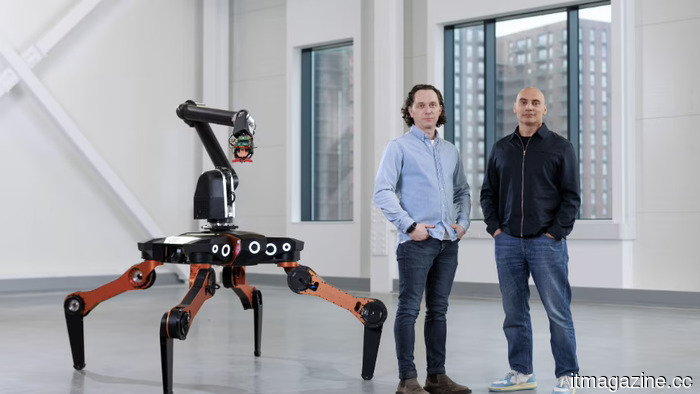 All3 secures $25 million to automate construction using legged robots.
All3 secures $25 million in seed funding, led by RTP Global, to implement legged robots and AI software in construction sites throughout Germany, addressing the housing crisis.
All3 secures $25 million to automate construction using legged robots.
All3 secures $25 million in seed funding, led by RTP Global, to implement legged robots and AI software in construction sites throughout Germany, addressing the housing crisis.
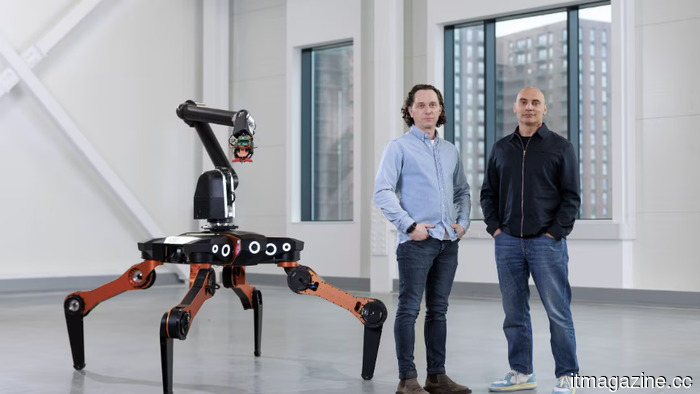 All3 secures $25 million to automate construction using legged robots.
All3 secures $25 million in seed funding, led by RTP Global, to implement legged robots and AI software at construction sites in Germany, aiming to address the housing crisis.
All3 secures $25 million to automate construction using legged robots.
All3 secures $25 million in seed funding, led by RTP Global, to implement legged robots and AI software at construction sites in Germany, aiming to address the housing crisis.
 The European Commission officially accuses Meta.
The EU has released initial results indicating that Meta violated DSA regulations by not preventing underage children from accessing Facebook and Instagram, marking the first accusation of this kind against a major social media platform.
The European Commission officially accuses Meta.
The EU has released initial results indicating that Meta violated DSA regulations by not preventing underage children from accessing Facebook and Instagram, marking the first accusation of this kind against a major social media platform.
 Amadeus has reached an agreement to purchase IDEMIA's public security division for $1.2 billion.
Amadeus has reached an agreement to acquire IDEMIA Public Security for $1.2 billion, thereby enhancing its airport technology portfolio with biometric border control and identity systems for law enforcement.
Amadeus has reached an agreement to purchase IDEMIA's public security division for $1.2 billion.
Amadeus has reached an agreement to acquire IDEMIA Public Security for $1.2 billion, thereby enhancing its airport technology portfolio with biometric border control and identity systems for law enforcement.
After 12 hours of discussions, the EU and Parliament could not reach a consensus on alterations to the AI Act, delaying the agreement until next month.
After 12 hours of discussions on April 29, EU member states and the European Parliament were unable to reach an agreement on the amendments to the AI Act, making May the final opportunity before the August 2026 deadline.