

Spotify seemingly lacks a definitive strategy for tagging AI-generated music.
Spotify
A quiet anxiety is spreading across music streaming, and Spotify, the platform relied on by over half a billion users to provide their soundtracks, is doing very little to address it. AI-generated songs are inundating streaming services at a rate that would have seemed dystopian just five years ago. Every day, tens of thousands of these tracks are added to the same playlists and recommendation algorithms as music from your favorite human artists. Most listeners are likely unaware of the difference—research indicates that the vast majority cannot distinguish between the two in a blind test.
Listeners are taking matters into their own hands
When users began to sense that something was off, they took action themselves. One developer in Germany, frustrated by suspected AI tracks infiltrating his Spotify playlists, created a tool to identify and block these songs. He shared it online, and hundreds downloaded it right away. This should serve as a signal to Spotify.
However, Spotify's response to date has been more of a corporate shrug than a substantive reaction. The platform recently introduced a feature to display AI usage in song credits—but only if the artist chooses to reveal it. This reliance on voluntary disclosures from individuals who might fear repercussions is not true transparency; it merely gives the illusion of it.
Conversely, Deezer has implemented its own detection system and has begun tagging and filtering out AI-generated content from its recommendations. Apple Music is at least moving towards compulsory disclosure. Spotify, the largest platform, remains hesitant, citing complexity as a reason for inaction.
Yes, it is complex, but that's not a valid justification
The distinction between AI-assisted and AI-generated content is indeed ambiguous. An artist using AI to help craft a verse is different from someone who simply inputs a prompt and uploads the outcome. Experts recognize that this is not a clear-cut situation. Mistakenly categorizing a human artist as AI could lead to significant ramifications.
But here's the thing—nobody is demanding perfection. What listeners seek, and what artists deserve, is a baseline starting point. Clearly label fully AI-generated music, and then evaluate the ambiguity from there. The argument that it’s too challenging to act, so no action should be taken, is beginning to feel like a convenient excuse because there is potential profit involved. AI-generated music is inexpensive to produce, potentially cheaper to distribute, and does not incur royalties like human artists do. The underlying incentives are clear. When the largest music platform opts not to interrogate the origins of its content, it raises questions about why.
A brewing trust issue
There exists a scenario in which Spotify eventually makes the right move—where transparency measures, industry standards, and platform accountability align with technological advancements. This future may be closer than it appears, with increasing regulatory pressure and music industry bodies advancing toward disclosure frameworks. But for now, listeners are resorting to third-party blockers and meticulously scrutinizing their playlists, as if deciphering the fine print of a dubious contract. This is not the kind of relationship a platform should aspire to have with its audience. Spotify has established its entire identity around helping users discover music they cherish. If people begin to doubt what they are hearing, that identity holds little value.
Shimul is a contributor at Digital Trends, with over five years in the tech industry.
Samsung’s upcoming Galaxy Glasses have leaked, and the design fails to impress
In the realm of smart glasses, the most popular models are those that don’t make wearers feel like they’re donning a science experiment. Samsung’s alleged smart glasses are no longer merely a rumor. Android Headlines appears to have released the first images of the Galaxy Glasses, and if you were hoping for a futuristic design, prepare for disappointment.
The pictures reveal that the Galaxy Glasses sport a classic, rounded sunglasses appearance that closely resembles Meta’s Ray-Bans, which have been on the market for a couple of years. The “Samsung” logo is visible on one of the temple arms, but aside from that, there are hardly any distinctive design features that separate them.
Meta’s latest outrageous project involves beaming solar power from satellites, even at night
Meta's initiative with Overview Energy is not solely focused on sustainable power; it also hints at the extensive resources needed to keep AI operational at a planetary scale. Among numerous accusations aimed at Meta, being small-minded has never been one of them. The company behind the most widely used social media and messaging platforms—including Facebook, Instagram, Messenger, and WhatsApp—is now exploring ways to beam sunlight from space to power its AI data centers during nighttime (via TechCrunch).
Controversial AI software is now assisting in detecting corrupt and negligent officers
Palantir Technologies, one of the most secretive and contentious tech companies globally, has taken on a striking (and somewhat dystopian) new role in London. As reported by The Guardian, a one-week pilot of the company’s software aided in identifying potential misconduct within the Metropolitan Police Force. Issues discovered included manipulation of shift







Other articles
 Jabra Evolve3 85 review: I was surprised to find that I really love this business headset, changing my initial opinion.
The Jabra Evolve3 85 combines a surprisingly stylish design and high-quality construction with an exceptional calling experience, dependable audio quality, and the ease of wireless charging. While it may not suit everyone, it is almost ideal for the right user.
Jabra Evolve3 85 review: I was surprised to find that I really love this business headset, changing my initial opinion.
The Jabra Evolve3 85 combines a surprisingly stylish design and high-quality construction with an exceptional calling experience, dependable audio quality, and the ease of wireless charging. While it may not suit everyone, it is almost ideal for the right user.
 True Anomaly secures $650 million, becoming the sole space startup dedicated solely to orbital defense.
True Anomaly, the startup developing autonomous satellites, has secured $650 million just weeks after being chosen for Golden Dome’s space interceptor program.
Revolut is launching its inaugural physical store in Barcelona.
Revolut is set to launch its first physical store in Barcelona, expected to open by 2027. This permanent location will test a retail model that the fintech intends to replicate worldwide.
True Anomaly secures $650 million, becoming the sole space startup dedicated solely to orbital defense.
True Anomaly, the startup developing autonomous satellites, has secured $650 million just weeks after being chosen for Golden Dome’s space interceptor program.
Revolut is launching its inaugural physical store in Barcelona.
Revolut is set to launch its first physical store in Barcelona, expected to open by 2027. This permanent location will test a retail model that the fintech intends to replicate worldwide.
 Spotify seemingly lacks a definitive strategy for labeling music created by AI.
Spotify boasts 500 million listeners and a recommendation system that understands your emotions better than your therapist—yet, it seems to lack a clear strategy for informing you whether the music you're enjoying was created by a human or a chatbot on a Tuesday afternoon.
Spotify seemingly lacks a definitive strategy for labeling music created by AI.
Spotify boasts 500 million listeners and a recommendation system that understands your emotions better than your therapist—yet, it seems to lack a clear strategy for informing you whether the music you're enjoying was created by a human or a chatbot on a Tuesday afternoon.
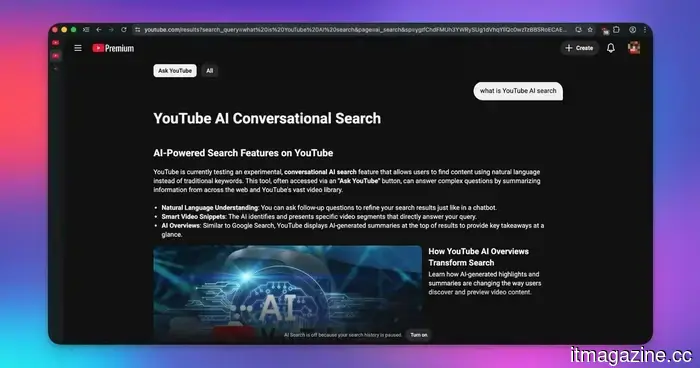 YouTube is evolving into an answer engine with the introduction of a new conversational search feature.
Subscribers of YouTube Premium in the US can now experience Ask YouTube, a conversational AI search feature that aggregates videos, Shorts, and text summaries in a single location.
Revolut is launching its inaugural physical store in Barcelona.
Revolut is set to launch its inaugural physical store in Barcelona, expected to open by 2027. This permanent location will serve as a test for a retail model that the fintech company aims to replicate worldwide.
YouTube is evolving into an answer engine with the introduction of a new conversational search feature.
Subscribers of YouTube Premium in the US can now experience Ask YouTube, a conversational AI search feature that aggregates videos, Shorts, and text summaries in a single location.
Revolut is launching its inaugural physical store in Barcelona.
Revolut is set to launch its inaugural physical store in Barcelona, expected to open by 2027. This permanent location will serve as a test for a retail model that the fintech company aims to replicate worldwide.
Spotify seemingly lacks a definitive strategy for tagging AI-generated music.
Spotify boasts over 500 million listeners and possesses a recommendation algorithm that understands your mood more effectively than your therapist — yet, it seems there is no clear strategy in place to inform you whether what you're listening to was created by a human or a chatbot on a Tuesday afternoon.