
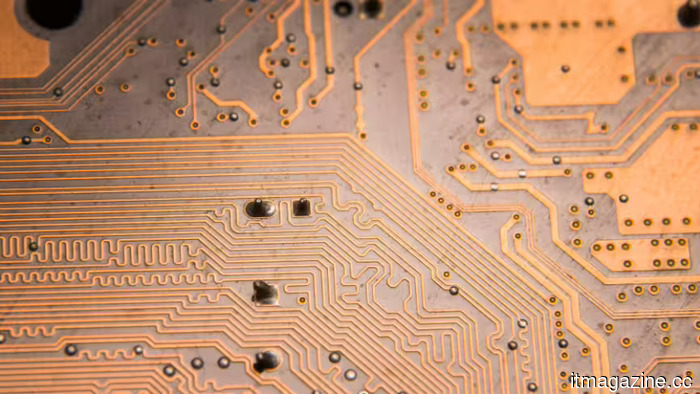
The war in Iran is severely impacting the AI supply chain.
Iran's attack on SABIC's petrochemical complex in Jubail at the beginning of April stopped the production of resin used in PCB laminates. Analysts from Goldman Sachs report that prices jumped by 40% just in April. A South Korean supplier for Samsung and AMD has indicated that the waiting period for epoxy resin has increased from three weeks to fifteen.
The conflict in Iran, which began with coordinated strikes from the US and Israel in late February 2026, has now impacted the printed circuit board (PCB) supply chain. This infrastructure supports nearly all electronic devices, from smartphones and laptops to the AI servers that hyperscalers are eager to deploy.
According to Goldman Sachs analysts, PCB prices skyrocketed by nearly 40% in April compared to March, with industry sources telling Reuters that the disruption is worsening supply pressures that were already developing before the conflict erupted.
The issue is specific and can be traced back to one facility. In early April, Iranian forces targeted Saudi Arabia's Jubail Industrial City petrochemical complex, which hosts SABIC, the Saudi Basic Industries Corporation.
SABIC supplies about 70% of the global high-purity polyphenylene ether (PPE) resin, the essential raw material for producing the laminates used in PCBs. The attack halted SABIC's PPE production, limiting global availability and directly affecting PCB prices, as the laminate doesn’t have suitable substitutes and there are no alternative suppliers capable of compensating for a 70% shortfall.
Additionally, there is pressure from copper prices. According to Victory Giant Technology—a significant Chinese PCB supplier that serves clients like Nvidia—copper constitutes around 60% of PCB manufacturing’s total raw material costs. Victory Giant cautioned earlier this month that the Middle Eastern conflict could lead to rising prices for essential materials like resin and copper as disruptions in Gulf shipping impact both the transportation of commodities and petrochemical feedstocks necessary for production.
Shipping to and from the Gulf has been severely impacted since the onset of the conflict, disrupting the logistics that connect Gulf chemical producers to Asian electronics manufacturers.
The effects are evident in procurement timelines. A senior executive from Daeduck Electronics, a South Korean PCB manufacturer supplying customers such as Samsung Electronics, SK Hynix, and AMD, reported to Reuters that the company has started conversations with clients regarding price hikes. The executive noted that their focus has shifted from customer service to supplier relations, and that the lead times for chemical materials like epoxy resin have increased from three weeks to fifteen.
A fifteen-week lead time for a critical production input reflects a structural disruption rather than a mere temporary supply shock, and it will take months to resolve even if SABIC’s production were reinstated today.
PCB prices were already on the rise before the Iran conflict, driven by increasing demand for AI servers. This conflict has added more pressure to an already tight market. According to Goldman Sachs, cloud service providers are prepared to accept further price hikes as they anticipate demand will exceed supply for years.
This readiness to absorb cost increases implies that PCB price signals are not curbing demand; instead, they are being transferred to the cost structure of AI infrastructure. The Prismark research firm forecasts that the global PCB industry will grow by 12.5%, reaching $95.8 billion by 2026.
The disruption in PCBs is just one of several supply chain challenges the Iran war has created for the technology sector. Helium, vital for semiconductor manufacturing due to its role as an inert coolant preventing unwanted chemical reactions during chip production and detecting leaks in fabrication cleanrooms, has seen its spot prices roughly double, as reported by Fitch Ratings.
Qatar's Ras Laffan Industrial City, which provides about a third of the global helium supply, has been offline since Iranian strikes in early March. Both TSMC and SK Hynix have reported that their helium stocks and diversified supply chains have thus far protected them from operational disruptions. J.P. Morgan noted in March that the Iran war represents “a manageable risk, for now,” due to semiconductor industry inventory reserves.
However, the phrase "for now" is significant: the ceasefire established on April 7 is described as fragile, the Strait of Hormuz remains partially closed, and SABIC's production in Jubail continues to be halted.
The AI industry’s annual capital expenditure plans, exceeding $200 billion, are being tested against an unforeseen geopolitical disruption.
Other articles
 X launches the XChat messaging application for iPhone users.
X has introduced XChat for iOS, a standalone messaging application designed to enhance its ecosystem and compete with well-known chat platforms by prioritizing privacy features and social integration.
X launches the XChat messaging application for iPhone users.
X has introduced XChat for iOS, a standalone messaging application designed to enhance its ecosystem and compete with well-known chat platforms by prioritizing privacy features and social integration.
 Atech secures pre-seed funding from Sequoia, a16z, and Lovable.
Atech has secured pre-seed funding from Nordic Makers, Lovable, the Sequoia Scout Fund, and the a16z Scout Fund to develop a hardware prototyping platform focused on natural language.
Atech secures pre-seed funding from Sequoia, a16z, and Lovable.
Atech has secured pre-seed funding from Nordic Makers, Lovable, the Sequoia Scout Fund, and the a16z Scout Fund to develop a hardware prototyping platform focused on natural language.
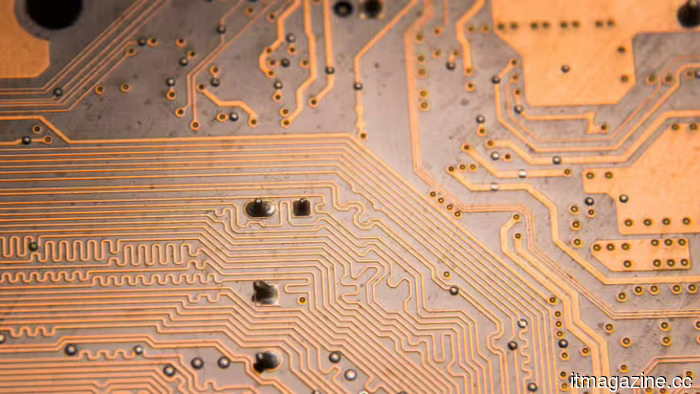 The Iran conflict is affecting the AI supply chain significantly.
Iranian attacks on SABIC's Jubail facility disrupted 70% of the worldwide supply of PPE resin, resulting in a 40% increase in PCB prices in April.
The Iran conflict is affecting the AI supply chain significantly.
Iranian attacks on SABIC's Jubail facility disrupted 70% of the worldwide supply of PPE resin, resulting in a 40% increase in PCB prices in April.
 Atech secures pre-seed funding from Sequoia, a16z, and Lovable.
Atech has secured a pre-seed investment from Nordic Makers, Lovable, the Sequoia Scout Fund, and the a16z Scout Fund to develop a hardware prototyping platform based on natural language.
Atech secures pre-seed funding from Sequoia, a16z, and Lovable.
Atech has secured a pre-seed investment from Nordic Makers, Lovable, the Sequoia Scout Fund, and the a16z Scout Fund to develop a hardware prototyping platform based on natural language.
 If you believe that managing a celebrity fan page on social media is easy, reconsider that notion.
Managing a celebrity fan page isn’t as simple as it appears. What may seem like innocent fandom on the internet can quickly evolve into a demanding, full-time responsibility.
If you believe that managing a celebrity fan page on social media is easy, reconsider that notion.
Managing a celebrity fan page isn’t as simple as it appears. What may seem like innocent fandom on the internet can quickly evolve into a demanding, full-time responsibility.
 DeepSeek reduces V4-Pro prices by 75%.
DeepSeek is providing a 75% discount on V4-Pro until May 5 and reducing API cache hit prices to one-tenth across its entire range of products.
DeepSeek reduces V4-Pro prices by 75%.
DeepSeek is providing a 75% discount on V4-Pro until May 5 and reducing API cache hit prices to one-tenth across its entire range of products.
The war in Iran is severely impacting the AI supply chain.
Iranian attacks on SABIC’s Jubail facility disrupted 70% of the worldwide PPE resin supply, causing PCB prices to increase by 40% in April.