
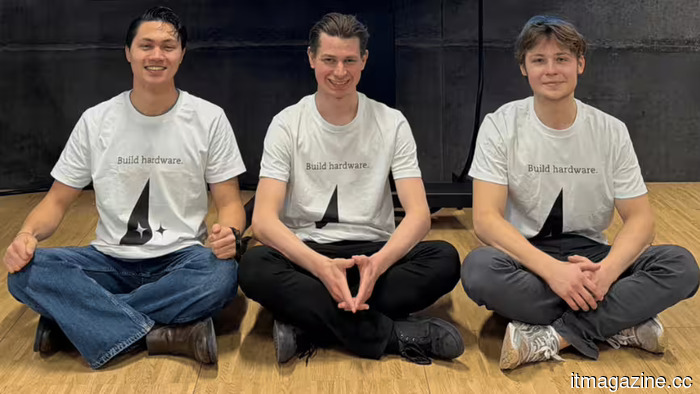
Atech secures pre-seed funding from Sequoia, a16z, and Lovable.
The specific amount raised remains confidential. Investors in this round include Nordic Makers, Emblem, the Lovable company itself, the Sequoia Scout Fund, and the Andreessen Horowitz Scout Fund. Anton Osika, CEO of Lovable, has personally endorsed the team. Atech enables users to articulate a hardware concept in everyday language and obtain a functioning prototype.
Atech, an AI hardware startup based in Copenhagen, has successfully secured an undisclosed pre-seed funding round from Nordic Makers, Emblem, Lovable, Sequoia Scout Fund, and Andreessen Horowitz Scout Fund. Founded by Vladimir Baran (CCO), Tomas Erik Harmer (CEO), and David Stålmarck (CTO), the company is developing what it describes as “vibe-engineering” for hardware—a platform that translates user descriptions of a physical device concept into a working prototype, while the platform manages all underlying technical complexities.
The concept draws a parallel to Lovable's contributions to web application development. Lovable, a Swedish startup that empowers non-developers to create full-stack web applications using natural language prompts, is now valued at over $1 billion after experiencing rapid growth since its launch in 2024.
Anton Osika, CEO of Lovable, has given Atech his direct support, providing a significant endorsement: “I observe the same patterns in Atech as we experienced at Lovable, but applied to hardware. I am eager to see Atech succeed. The team is truly unique.” This backing from a pioneer in software-vibe-coding is a newsworthy highlight and firmly positions Atech as a hardware counterpart to an established category.
Atech is addressing a real and well-documented challenge. Traditionally, creating a hardware prototype necessitated either years of specialized engineering knowledge or substantial funding to hire that expertise. Unlike software development, which allows developers to build and deploy web applications within a weekend using modern tools, there is no equivalent comprehensive hardware experience. This disparity has stifled hardware innovation, keeping it within the hands of a few specialists and well-funded companies, while software development has increasingly been democratized in the last decade through layers of abstraction that have eliminated the need for understanding compilers, memory management, or network protocols.
Tomas Erik Harmer, Atech's CEO, articulated this gap: “The software ecosystem has an array of tools that enables teenagers to build apps quickly. Hardware lacks this, and we're still operating at the initial level of abstraction. Atech is constructing the necessary layers, allowing creation in the physical realm to be as quick and enjoyable as writing code.”
The investor group is significant for a pre-seed round and requires careful description. The Sequoia Scout Fund and the Andreessen Horowitz Scout Fund are scout programs run by Sequoia Capital and a16z, respectively, through which scouts—typically founders and operators within the funds’ networks—make small investments (usually ranging from $5,000 to $100,000) in early-stage companies on behalf of the firm.
Participation in the scout fund does not imply a direct investment by Sequoia or a16z in the traditional sense and does not guarantee ongoing commitment from these parent companies. For Atech, the main benefit of scout participation is the signaling of its proximity to two of the world's leading venture capital firms, rather than the amount of capital involved.
Nordic Makers is a collective of angel investors based in Copenhagen with strong connections to the Danish and wider Nordic startup ecosystem, while Emblem is a seed fund operating within Europe. Lovable’s role as a corporate investor, in addition to being an endorser, adds a strategic layer to this funding round since Lovable has a vested interest in advancing hardware development—this would broaden the scope for Lovable-style interfaces.
Atech operates within a broader thesis termed “Physical AI,” which is gaining momentum across the industry. Nvidia’s 2025 annual report identified Physical AI as its next major market opportunity: smart systems that can perceive, interact with, and take action in the physical world, including robotics, autonomous vehicles, drones, and industrial systems.
As these applications grow, the capability to swiftly prototype physical hardware emerges as a vital competitive advantage rather than a specialized skill. Whether the natural language-to-prototype platform can truly bridge the hardware-software divide hinges on the extent of the abstraction layers Atech is developing. Areas such as PCB layout, component selection, firmware, and manufacturing involve risks—mistakes result in non-functional physical objects rather than simple bug fixes in code submissions.
This represents a more complex challenge than what Lovable has addressed, and it is a critical test that Atech’s initial customers will face.
Other articles
 DeepSeek reduces V4-Pro prices by 75%.
DeepSeek is providing a 75% discount on V4-Pro until May 5 and reducing API cache hit prices to one-tenth across its entire range of products.
DeepSeek reduces V4-Pro prices by 75%.
DeepSeek is providing a 75% discount on V4-Pro until May 5 and reducing API cache hit prices to one-tenth across its entire range of products.
 X launches the XChat messaging application for iPhone users.
X has introduced XChat for iOS, a standalone messaging application designed to enhance its ecosystem and compete with well-known chat platforms by prioritizing privacy features and social integration.
X launches the XChat messaging application for iPhone users.
X has introduced XChat for iOS, a standalone messaging application designed to enhance its ecosystem and compete with well-known chat platforms by prioritizing privacy features and social integration.
 The war in Iran is severely impacting the AI supply chain.
Iranian attacks on SABIC’s Jubail facility disrupted 70% of the worldwide PPE resin supply, causing PCB prices to increase by 40% in April.
The war in Iran is severely impacting the AI supply chain.
Iranian attacks on SABIC’s Jubail facility disrupted 70% of the worldwide PPE resin supply, causing PCB prices to increase by 40% in April.
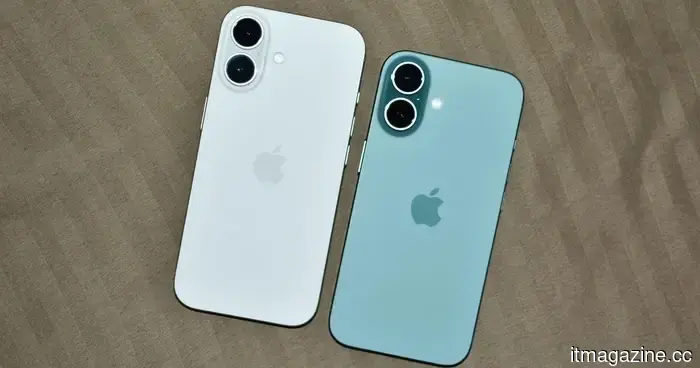 The iPhone 17 impressed me, yet I would still suggest the iPhone 16 to the majority of individuals.
Returning to the iPhone 16 after using the iPhone 17 for six months made me realize that a one-year difference in the product cycle and a one-tier variation in quality are not equivalent.
The iPhone 17 impressed me, yet I would still suggest the iPhone 16 to the majority of individuals.
Returning to the iPhone 16 after using the iPhone 17 for six months made me realize that a one-year difference in the product cycle and a one-tier variation in quality are not equivalent.
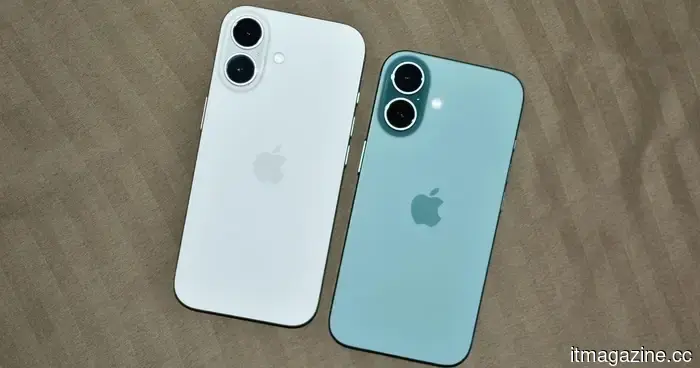 I was impressed by the iPhone 17, but I would still suggest the iPhone 16 to most users.
Returning to the iPhone 16 after using the iPhone 17 for six months has shown me that a one-year gap in product cycles and a single tier difference in quality are not equivalent.
I was impressed by the iPhone 17, but I would still suggest the iPhone 16 to most users.
Returning to the iPhone 16 after using the iPhone 17 for six months has shown me that a one-year gap in product cycles and a single tier difference in quality are not equivalent.
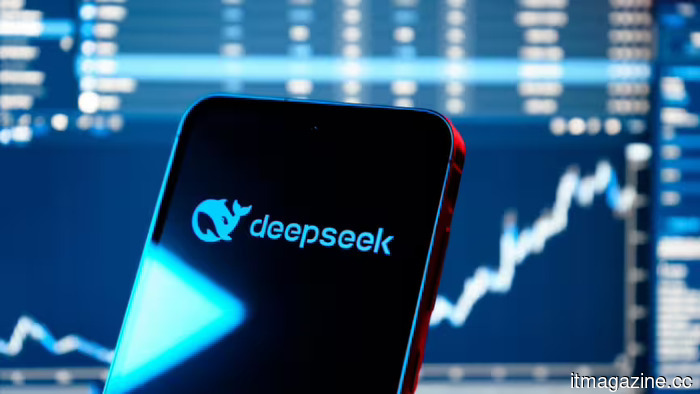 DeepSeek reduces V4-Pro prices by 75%.
DeepSeek is providing a 75% discount on V4-Pro until May 5 and reducing API cache hit prices to one-tenth across its entire range of products.
DeepSeek reduces V4-Pro prices by 75%.
DeepSeek is providing a 75% discount on V4-Pro until May 5 and reducing API cache hit prices to one-tenth across its entire range of products.
Atech secures pre-seed funding from Sequoia, a16z, and Lovable.
Atech has secured a pre-seed investment from Nordic Makers, Lovable, the Sequoia Scout Fund, and the a16z Scout Fund to develop a hardware prototyping platform based on natural language.