
The Iran conflict is affecting the AI supply chain significantly.
Iran's attack on SABIC’s Jubail petrochemical facility in early April disrupted the production of resin used for PCB laminates. According to analysts from Goldman Sachs, prices soared by 40% in April alone. A South Korean supplier for Samsung and AMD reported that wait times for epoxy resin have extended from three weeks to fifteen weeks.
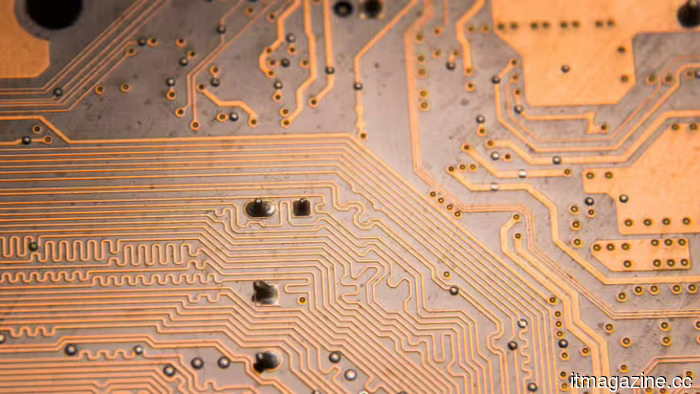
The conflict in Iran, which began with coordinated strikes by the US and Israel in late February 2026, has now impacted the printed circuit board (PCB) supply chain. This vital infrastructure supports nearly all electronic devices, ranging from smartphones and laptops to AI servers being rapidly deployed by major companies.
Goldman Sachs analysts observed that the prices of PCBs soared up to 40% in April compared to March, while industry sources informed Reuters that this disruption is exacerbating supply challenges that were already underway before the conflict began.
The situation can be traced back to a singular location. In early April, Iranian forces targeted Saudi Arabia's Jubail Industrial City petrochemical complex, which houses SABIC (Saudi Basic Industries Corporation).
SABIC produces about 70% of the global supply of high-purity polyphenylene ether (PPE) resin, an essential material for PCB laminate manufacture. The attack halted SABIC's PPE production, leading to decreased availability of PPE worldwide, which directly affected PCB prices, as the laminate cannot be easily replaced, and no alternative suppliers exist at a capacity sufficient to offset a 70% shortfall.
Another contributing factor is copper, which makes up about 60% of the total raw material costs in PCB production, as per Victory Giant Technology, a major Chinese PCB supplier that serves clients such as Nvidia. Victory Giant recently cautioned that the ongoing Middle Eastern conflict could raise prices for critical materials, such as resin and copper, due to shipping disruptions affecting both commodity transit and the petrochemical feedstocks utilized in production.
Logistics in and out of the Gulf have been significantly hindered since the onset of the conflict, which has strained the routes connecting Gulf chemical manufacturers to Asian electronics suppliers.
The operational repercussions are already evident in procurement schedules. A senior executive from Daeduck Electronics, a South Korean PCB manufacturer that supplies companies like Samsung Electronics, SK Hynix, and AMD, told Reuters that they are now focusing more on suppliers than customers and that the wait for chemical materials like epoxy resin has risen from three weeks to fifteen weeks.
A fifteen-week lead time for a crucial production material is not merely a temporary shock; it indicates a deeper disruption that may take months to rectify, even if SABIC were to resume production immediately.
PCB prices were already climbing prior to the war in Iran, driven by increasing demand for AI servers. The conflict has added further strain to an already constrained market. Cloud service providers are reportedly willing to accept additional price hikes, anticipating that demand will continue to outpace supply for several years.
This readiness to absorb cost increases means that PCB price signals are not serving as a deterrent to demand; instead, they are being incorporated into the cost base for AI infrastructure. The research firm Prismark forecasts that the global PCB industry will expand by 12.5%, reaching $95.8 billion by 2026.
The disruption in PCB production is among several supply chain challenges posed by the Iran conflict for the technology sector. Helium, vital for semiconductor fabrication due to its role as an inert coolant and in leak detection within cleanrooms, has seen spot prices nearly double, according to Fitch Ratings.
Qatar's Ras Laffan Industrial City, responsible for about one-third of global helium supply, has been offline following Iranian attacks earlier in March. Both TSMC and SK Hynix have reported that their helium stocks and diversified supply chains have thus far protected them from operational disruptions, and J.P. Morgan concluded in a March report that the Iran conflict represents a "manageable risk, for now," considering the semiconductor industry's inventory reserves.
However, the caveat "for now" is significant: the ceasefire established on April 7 is described as fragile, the Strait of Hormuz remains partially closed, and SABIC's production in Jubail continues to be halted. The AI industry’s annual capital expenditure plans, exceeding $200 billion, are facing tests against an unforeseen geopolitical disturbance.
Other articles
 X launches the XChat messaging application for iPhone users.
X has introduced XChat on iOS, a separate messaging application designed to broaden its ecosystem and rival well-known chat platforms by emphasizing privacy features and social connectivity.
X launches the XChat messaging application for iPhone users.
X has introduced XChat on iOS, a separate messaging application designed to broaden its ecosystem and rival well-known chat platforms by emphasizing privacy features and social connectivity.
 The iPhone 17 impressed me, yet I would still suggest the iPhone 16 to the majority of individuals.
Returning to the iPhone 16 after using the iPhone 17 for six months made me realize that a one-year difference in the product cycle and a one-tier variation in quality are not equivalent.
The iPhone 17 impressed me, yet I would still suggest the iPhone 16 to the majority of individuals.
Returning to the iPhone 16 after using the iPhone 17 for six months made me realize that a one-year difference in the product cycle and a one-tier variation in quality are not equivalent.
 X launches the XChat messaging application for iPhone users.
X has introduced XChat for iOS, a standalone messaging application designed to enhance its ecosystem and compete with well-known chat platforms by prioritizing privacy features and social integration.
X launches the XChat messaging application for iPhone users.
X has introduced XChat for iOS, a standalone messaging application designed to enhance its ecosystem and compete with well-known chat platforms by prioritizing privacy features and social integration.
 Apple is focusing on ten new product categories in the years ahead.
Apple is said to be planning significant product expansion under its new leadership, with developments underway for foldable devices, AI wearables, and smart home gadgets.
Apple is focusing on ten new product categories in the years ahead.
Apple is said to be planning significant product expansion under its new leadership, with developments underway for foldable devices, AI wearables, and smart home gadgets.
 The war in Iran is severely impacting the AI supply chain.
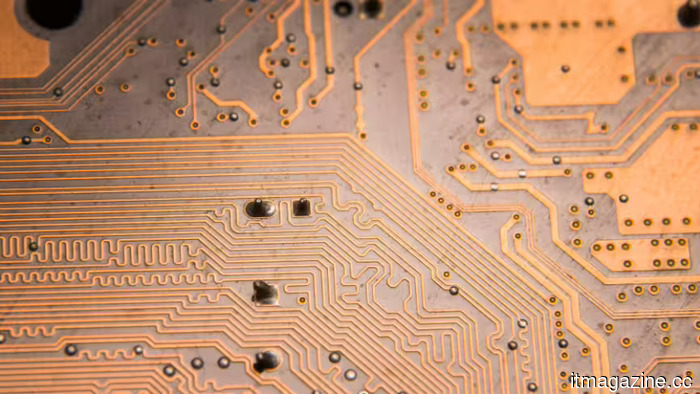
Iranian attacks on SABIC’s Jubail facility disrupted 70% of the worldwide PPE resin supply, causing PCB prices to increase by 40% in April.
The war in Iran is severely impacting the AI supply chain.
Iranian attacks on SABIC’s Jubail facility disrupted 70% of the worldwide PPE resin supply, causing PCB prices to increase by 40% in April.
 Forget about smartwatches; your clothing might soon monitor your health.
A new smart fabric, which is powered by your phone, could discreetly take the place of wearable health trackers as we currently understand them.
Forget about smartwatches; your clothing might soon monitor your health.
A new smart fabric, which is powered by your phone, could discreetly take the place of wearable health trackers as we currently understand them.
The Iran conflict is affecting the AI supply chain significantly.
Iranian attacks on SABIC's Jubail facility disrupted 70% of the worldwide supply of PPE resin, resulting in a 40% increase in PCB prices in April.