
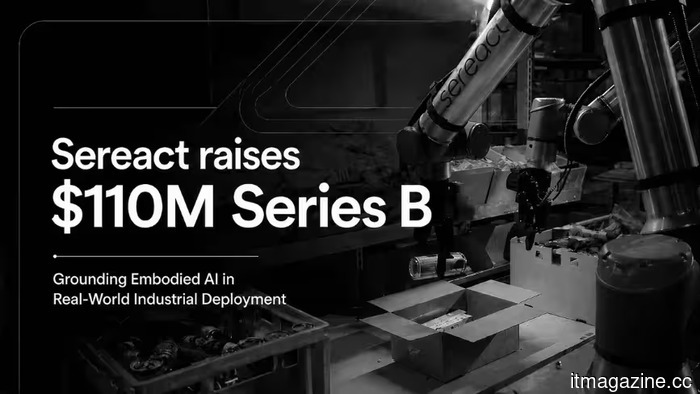
Sereact secures $110 million to enhance its AI that enables any robot to become adaptable.
The Series B round is led by Headline, with new investors including Bullhound Capital, Felix Capital, and Daphni, while the valuation remains undisclosed. Sereact’s vision language action models are already in operation with clients like BMW, Daimler Truck, and various logistics companies. The $110 million raised is more than four times the €25 million obtained in the Series A round just 15 months prior.
Sereact, a Stuttgart-based AI robotics software firm, has secured $110 million in a Series B funding round spearheaded by Headline, an international venture capital firm with locations in Berlin, San Francisco, and Paris. This round saw participation from new investors Bullhound Capital, Felix Capital, and Daphni, as well as several existing supporters.
The company chose not to disclose its valuation. The funds will be directed towards advancing Sereact’s core AI model, which aims to enhance the intelligence and adaptability of robots for various tasks, and to broaden its deployment in logistics, manufacturing, and increasingly in humanoid robot platforms.
Founded in 2021 by Ralf Gulde (CEO) and Marc Tuscher (CTO), both of whom were former AI researchers at the University of Stuttgart, Sereact employs Vision Language Action Models (VLAMs). These AI systems fuse computer vision, natural language understanding, and action planning into a single model, enabling robots to understand their surroundings, interpret commands, and perform physical tasks without the need for extensive programming or specific pre-training for their environment.
For instance, a robot designed to pick delicate items could theoretically assess whether its intended grip might cause damage before acting. This capability distinguishes Sereact in a market where most industrial robots follow pre-set programming based on predictable, controlled environments.
However, warehouses, manufacturing sites, and logistics centers are inherently unpredictable; items arrive in various orientations, packaging differs, and edge cases continuously arise. Sereact’s software-first model directly counters the hardware-centric approaches prevalent among many robotics firms, allowing robots to adapt to these variations without engineers needing to reprogram for each new object type or layout alteration.
As Gulde noted in the Series A announcement, "our technology enables robots to operate situationally rather than adhering strictly to programmed sequences."
The commercial background supporting the Series B funding is robust. Customers include the BMW Group, Daimler Truck, the Dutch e-commerce fulfillment company Bol, and logistics experts MS Direct and Active Ants. The implementation of Sereact’s technology in automotive original equipment manufacturers (OEMs) is significant; BMW and Daimler Truck are not merely conducting pilots or proofs of concept but rather operating within production environments where each robot failure can lead to costly line stoppages.
Sereact's technology achieving production levels with such high-profile clients stands as a validation point that sets it apart from many AI robotics companies still in demonstration phases. The funding trajectory clearly outlines the company's ambitions: Sereact raised $5 million in seed funding in 2023, followed by €25 million (around $26 million) in a Series A led by Creandum in January 2025, and now $110 million in April 2026, marking a more than four-fold increase from the Series A within just fifteen months.
Creandum’s Johan Brenner articulated the investment rationale during the Series A: "most AI robotics companies currently adopt a hardware-first approach. What distinguishes Sereact is their software-first, foundational strategy, which equips them to become the intelligence behind any robot that requires vision and autonomous functionality."
This foundational thesis, emphasizing a software-first layer of intelligence applicable across any hardware, parallels the successful approaches of Mobileye in the autonomous vehicle market and Nvidia’s endeavors through its Isaac robotics platform, suggesting that the most lucrative position in robotics lies not in the robot itself but in the intelligence orchestrating its operations.
The wider market situation is gaining momentum. The deployment of humanoid robots by Figure AI, Boston Dynamics, and Unitree is transitioning from testing to commercial production within warehousing and manufacturing environments. The global humanoid robot market, valued at less than $1 billion in 2023, is expected to surpass $38 billion by 2030. Tesla’s Optimus production ramp, aiming to achieve large-scale output by July 2026, will depend heavily on robotics intelligence software.
Sereact’s clear ambition to extend beyond logistics into the humanoid robotics sector, expressed during the Series A, positions it competitively within this emerging market. The $110 million raised in Series B represents significant capital to substantiate that expansion.
Other articles
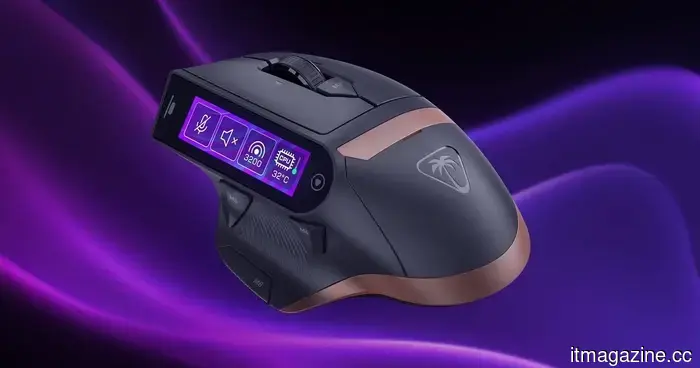 Turtle Beach has included a controls display on its Command Series MC7 gaming mouse.
The Command Series MC7 from Turtle Beach transforms the gaming mouse into a compact control hub featuring an integrated touch screen for DPI settings, macros, audio management, apps, and streaming controls.
Turtle Beach has included a controls display on its Command Series MC7 gaming mouse.
The Command Series MC7 from Turtle Beach transforms the gaming mouse into a compact control hub featuring an integrated touch screen for DPI settings, macros, audio management, apps, and streaming controls.
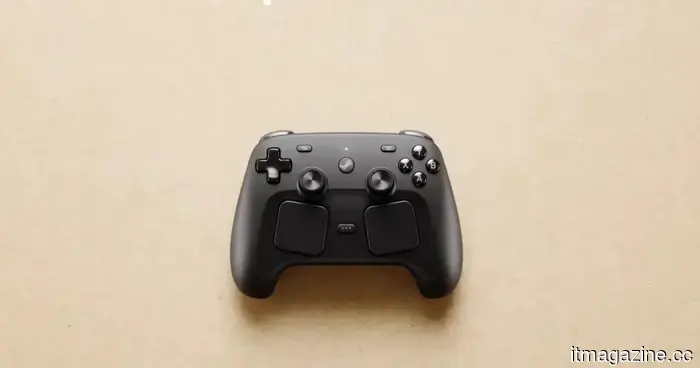 The upcoming Steam Controller has just experienced a price leak, and wow!
A YouTuber released a video prematurely, revealing the Steam Controller's price of $99.99. Although the video was quickly removed, it was seen by the internet before disappearing.
The upcoming Steam Controller has just experienced a price leak, and wow!
A YouTuber released a video prematurely, revealing the Steam Controller's price of $99.99. Although the video was quickly removed, it was seen by the internet before disappearing.
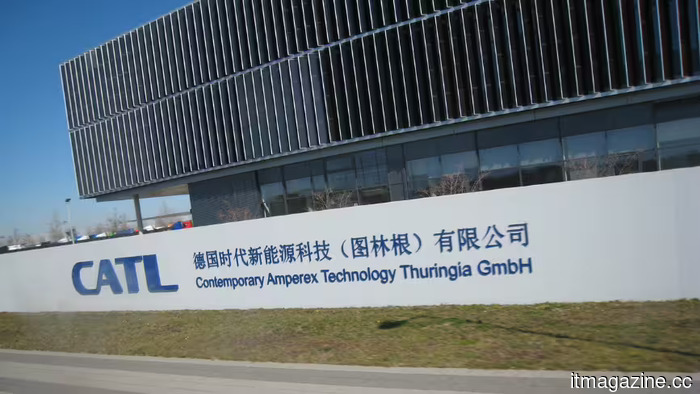 CATL announces a $5 billion share placement in Hong Kong.
CATL is aiming to raise $5 billion through a share placement in Hong Kong, which could become the city's largest deal in four years, as the leading EV battery manufacturer takes advantage of a 160% surge in its stock price.
CATL announces a $5 billion share placement in Hong Kong.
CATL is aiming to raise $5 billion through a share placement in Hong Kong, which could become the city's largest deal in four years, as the leading EV battery manufacturer takes advantage of a 160% surge in its stock price.
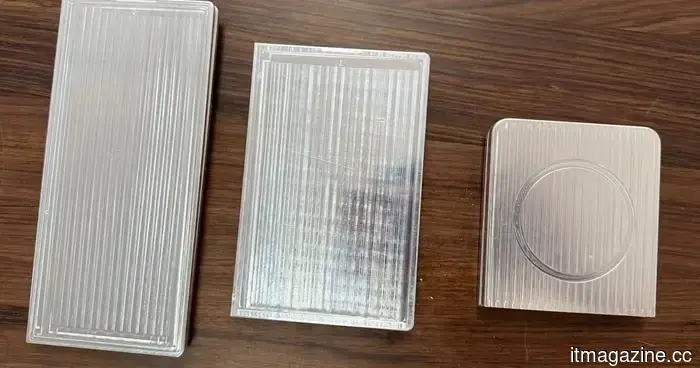 A Samsung leak indicates that its forthcoming wide foldable phone will stand out prominently amid a multitude of devices.
Leaked prototypes showcase a broader, shorter Galaxy Fold featuring a passport-like design and seemingly supporting Qi2 magnets, and we are definitely excited about it.
A Samsung leak indicates that its forthcoming wide foldable phone will stand out prominently amid a multitude of devices.
Leaked prototypes showcase a broader, shorter Galaxy Fold featuring a passport-like design and seemingly supporting Qi2 magnets, and we are definitely excited about it.
 Google DeepMind is set to establish its inaugural AI campus globally in Seoul.
Google DeepMind will launch its inaugural AI campus in Seoul following the signing of a memorandum of understanding by Demis Hassabis with South Korea's Science Ministry on Monday.
Google DeepMind is set to establish its inaugural AI campus globally in Seoul.
Google DeepMind will launch its inaugural AI campus in Seoul following the signing of a memorandum of understanding by Demis Hassabis with South Korea's Science Ministry on Monday.
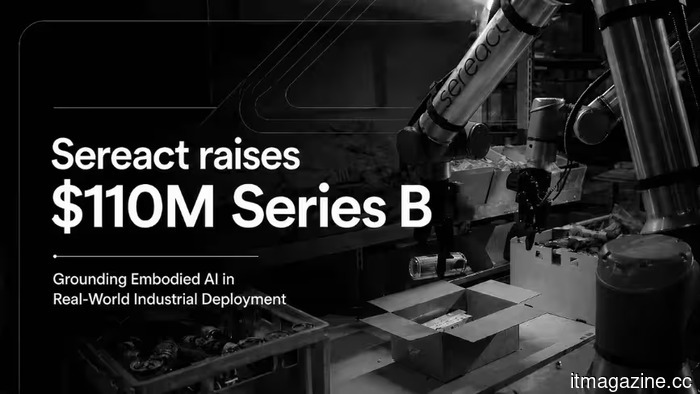 Sereact secures $110 million to expand its AI technology that allows any robot to become adaptable.
Sereact, located in Stuttgart, has secured $110 million in a Series B funding round led by Headline to advance AI that enables robots to foresee outcomes before taking action.
Sereact secures $110 million to expand its AI technology that allows any robot to become adaptable.
Sereact, located in Stuttgart, has secured $110 million in a Series B funding round led by Headline to advance AI that enables robots to foresee outcomes before taking action.
Sereact secures $110 million to enhance its AI that enables any robot to become adaptable.
Sereact, located in Stuttgart, has secured $110 million in Series B funding led by Headline to advance AI technology that enables robots to foresee outcomes prior to taking action.