

OpenAI is working on an AI agent smartphone in collaboration with Qualcomm and MediaTek, with a goal of reaching 300-400 million annual shipments by 2028.
TL;DR: OpenAI is creating a smartphone centered on AI agents instead of traditional apps, with Qualcomm and MediaTek collaborating on a custom processor and Luxshare handling exclusive manufacturing, as per Ming-Chi Kuo. The analyst anticipates annual shipments of 300-400 million, aiming for mass production in 2028. Qualcomm's shares increased by 13% following the news. While Luxshare supplies AirPods and Qualcomm powers most Galaxy S26 devices, OpenAI has yet to release hardware, and previous AI products (like the Humane Pin and Rabbit R1) have failed. This marks OpenAI's second hardware venture alongside a project with Jony Ive.
OpenAI is working on a smartphone designed to employ AI agents instead of conventional apps. Qualcomm and MediaTek are partnering on a unique processor, while Luxshare Precision Industry is exclusively manufacturing it, according to Ming-Chi Kuo of TF International Securities, a notable hardware analyst with insights into Apple's supply chain. Kuo expects successful shipments between 300 and 400 million annually, surpassing Apple's iPhone figures and positioning the device against two companies that control around 40% of the global smartphone market. The specifications and suppliers are likely to be confirmed by late 2026 or early 2027, with mass production set for 2028. Following the announcement, Qualcomm’s shares rose up to 13% in premarket trading. Neither Qualcomm, OpenAI, nor MediaTek has validated the partnership. While Kuo's report is not an official announcement, the supply chain he outlines is reliable, involving firms that already manufacture widely used devices.
The concept outlined by Kuo is not merely a smartphone with an AI assistant; it envisions a device where the AI agent functions as the primary interface, rendering apps unnecessary. Users would interact with these agents to perform tasks like ordering transportation, making restaurant reservations, managing emails, conducting research, and sending messages, all without needing apps. The device would handle simpler tasks on-site, ensuring context awareness and memory management, while transferring complex processing to the cloud. Kuo highlights the notion of maintaining “full real-time state” to track users' location, activity, communication, and surroundings for the agents’ use. This reflects Qualcomm CEO Cristiano Amon’s vision for 2026 that AI agents could supplant traditional mobile operating systems and applications, requiring entirely new hardware optimized for continuous and power-efficient AI processing instead of adapting existing chipsets.
This concept is distinct from OpenAI’s other hardware endeavor with Jony Ive, the former Apple design chief, whose company is reportedly creating a non-phone device, starting with a smart speaker featuring a camera, and later expanding to eyewear, lamps, and earbuds, with the first product projected for early 2027. OpenAI is pursuing two simultaneous hardware strategies: one that redefines personal computing without a screen and another that retains the phone structure while overhauling its software framework. In contrast, Apple is exploring AI smart glasses with a dedicated chip, cameras, and voice assistance powered by a Gemini model, aiming for a 2027 release. The competition among major tech companies to determine where AI will reside—be it in smartphones, wearable devices, or smart speakers—is rapidly evolving, with OpenAI betting on all possible avenues.
The credibility of this report hinges on the established supply chain. Luxshare Precision Industry is a key supplier to Apple, producing AirPods, components for Apple Watches, and more iPhones. Qualcomm's Snapdragon 8 Elite Gen 5 powers 75% of Samsung’s Galaxy S26 series, recently surpassing Apple in multi-core and GPU performance. MediaTek's Dimensity 9500 competes with both Qualcomm and Apple in CPU performance, offering it at a lower cost with enhanced efficiency. These firms do not represent mere concept suppliers; they are the backbone of smartphones that sell in the hundreds of millions. Qualcomm's acquisition of Edge Impulse in 2025 signaled its strategic commitment to on-device AI capabilities across various devices. The Snapdragon 8 Elite Gen 5 is equipped with a Hexagon NPU that enhances AI processing speed significantly and facilitates user-behavior learning alongside a personal knowledge graph with continuous context awareness. Additionally, Qualcomm is developing custom 3D DRAM tailored for AI tasks on mobile devices. The necessary components for Kuo's envisioned phone are already available; the critical question remains whether the software will effectively perform as intended.
Understanding the financial landscape is crucial. Before the report, Qualcomm’s stock traded at $149.84, down from a peak of $205.95 in the last year, with a notable earnings decline and diminishing gross margins. The company is scheduled to report earnings on April 29, two days after Kuo's update. Reports earlier in February indicated Qualcomm's lackluster forecast amid a shaky smartphone market. Collaborating with OpenAI presents a new revenue path, particularly as Qualcomm’s core business—supplying modems and processors—faces challenges from Apple’s self
Other articles
 How Arpit Agrawal is expanding consumer markets in emerging economies
Arpit Agrawal is developing distribution ecosystems in emerging markets by integrating global brands, local connections, and digital technologies to access billions of consumers.
How Arpit Agrawal is expanding consumer markets in emerging economies
Arpit Agrawal is developing distribution ecosystems in emerging markets by integrating global brands, local connections, and digital technologies to access billions of consumers.
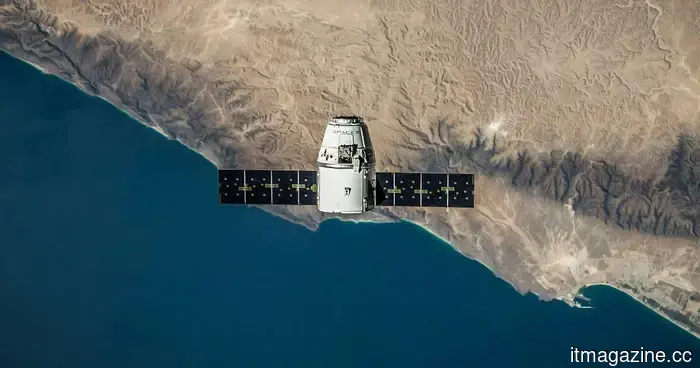 Meta's newest astonishing project involves transmitting solar power via satellites, even during nighttime.
Meta has committed to obtaining energy from a network of 1,000 satellites in space that will gather sunlight while in geosynchronous orbit and transmit it as infrared light to solar farms on Earth.
Meta's newest astonishing project involves transmitting solar power via satellites, even during nighttime.
Meta has committed to obtaining energy from a network of 1,000 satellites in space that will gather sunlight while in geosynchronous orbit and transmit it as infrared light to solar farms on Earth.
 More than 580 Google employees, including researchers from DeepMind, are urging Pichai to decline a classified AI contract with the Pentagon.
More than 580 employees at Google have signed a letter against classified military AI projects. On air-gapped networks, Google is unable to track the usage of Gemini. Last year, the company eliminated its own limits regarding weaponry.
Microsoft relinquishes its exclusive license to OpenAI's technology.
Microsoft and OpenAI have revised their partnership agreement, making Microsoft's license non-exclusive until 2032.
More than 580 Google employees, including researchers from DeepMind, are urging Pichai to decline a classified AI contract with the Pentagon.
More than 580 employees at Google have signed a letter against classified military AI projects. On air-gapped networks, Google is unable to track the usage of Gemini. Last year, the company eliminated its own limits regarding weaponry.
Microsoft relinquishes its exclusive license to OpenAI's technology.
Microsoft and OpenAI have revised their partnership agreement, making Microsoft's license non-exclusive until 2032.
 OpenAI is collaborating with Qualcomm and MediaTek to develop an AI agent smartphone, aiming for 300-400 million annual shipments by 2028.
According to analyst Ming-Chi Kuo, OpenAI is developing an agent-first smartphone in collaboration with Qualcomm, MediaTek, and Luxshare. The phone will feature no apps, only agents. Mass production is aimed for 2028. Following this news, Qualcomm's shares rose by 13%.
Microsoft relinquishes its exclusive license to OpenAI's technology.
Microsoft and OpenAI have revised their partnership agreement, making Microsoft’s license non-exclusive until 2032.
OpenAI is collaborating with Qualcomm and MediaTek to develop an AI agent smartphone, aiming for 300-400 million annual shipments by 2028.
According to analyst Ming-Chi Kuo, OpenAI is developing an agent-first smartphone in collaboration with Qualcomm, MediaTek, and Luxshare. The phone will feature no apps, only agents. Mass production is aimed for 2028. Following this news, Qualcomm's shares rose by 13%.
Microsoft relinquishes its exclusive license to OpenAI's technology.
Microsoft and OpenAI have revised their partnership agreement, making Microsoft’s license non-exclusive until 2032.
OpenAI is working on an AI agent smartphone in collaboration with Qualcomm and MediaTek, with a goal of reaching 300-400 million annual shipments by 2028.
According to analyst Ming-Chi Kuo, OpenAI is developing an agent-first smartphone in collaboration with Qualcomm, MediaTek, and Luxshare. The device will feature agents exclusively, without traditional apps. Mass production is aimed for 2028. Following the news, Qualcomm's stock rose by 13%.