

How Arpit Agrawal is expanding consumer markets in emerging economies
Arpit Agrawal's career has been consistently focused on one principal aim: increasing access. For over a decade, he has operated at the convergence of global brands and emerging markets, establishing distribution and retail networks that link products to consumers who have typically been underserved.
As Executive Director at Vishal Group, Agrawal has been instrumental in creating scalable platforms that now cater to consumer markets comprising over 2.5 billion individuals.
Building a career in emerging markets
Agrawal’s professional journey has been entrenched in emerging economies, where challenges like infrastructure deficiencies, fragmented retail, and varied consumer behaviors necessitate fundamentally different strategies compared to developed markets.
From the beginning, his efforts centered on assisting multinational corporations in adapting their market entry strategies for areas where distribution systems are still developing, and where trust, education, and availability are as crucial as pricing.
He has consistently viewed these markets not merely as short-term growth prospects but as long-term ecosystems, prioritizing sustainable platforms that foster growth amidst regulatory challenges and economic instability.
Leadership at Vishal Group
Agrawal has been Executive Director at Vishal Group since 2007, a Nepalese conglomerate involved in distribution, manufacturing, financial services, infrastructure, education, real estate, agriculture, automobiles, hydropower, and hospitality.
The group employs around 20,000 individuals and boasts the largest distribution network in Nepal, handling over 500 million SKUs annually and reaching households nationwide.
In this diverse organization, Agrawal leads the FMCG distribution sector, one of the fastest-growing branches of the group.
Under his guidance, this sector represents more than 70 international brands in Nepal and has achieved a 100% retention rate with global partners.
His responsibilities extend beyond operational management to encompass strategic planning, partner selection, and the ongoing evolution of a family-run business into a professionally organized regional multinational.
Designing scalable distribution systems
A notable aspect of Agrawal’s work is his focus on developing integrated distribution models rather than isolated market entry solutions.
He has contributed to creating frameworks that combine traditional wholesale and retail networks with digital commerce tools and professional recommendation systems, enabling brands to connect with consumers in urban and semi-urban areas while aligning with local purchasing behaviors.
These systems, which connect physical networks with emerging digital platforms, facilitate the movement of billions of consumer products each year.
They are engineered for resilience, able to adjust to supply chain disruptions, regulatory changes, and shifts in consumer preferences without compromising reach or efficiency.
Empowering premium brands in underserved markets
Agrawal has closely collaborated with global brand owners to challenge long-standing assumptions about emerging markets. A significant contribution of his has been proving that demand for premium and scientifically supported consumer products exists well beyond conventional urban hubs.
Through localized execution, consumer education, and innovative channel strategies, he has assisted brands in establishing credibility and lasting relevance in markets often neglected in global expansion plans. This strategy has enabled partners to transition from transactional sales models to sustained platform growth based on trust and accessibility.
Incorporating technology and data into traditional systems
Although much of Agrawal’s work occurs within conventional consumer sectors, technology is becoming an increasingly vital component of his strategy. He concentrates on merging digital tools with traditional distribution systems, leveraging data to enhance forecasting, inventory management, and consumer engagement.
His focus on omnichannel strategy reflects his belief that the future of retail in emerging markets lies in hybrid models.
These models blend the expansive reach and relationships of physical networks with the efficiency and insights of digital platforms, enabling brands to scale while preserving local relevance.
Navigating complexity and volatility
Operating in emerging and frontier markets presents ongoing challenges. Regulatory uncertainty, infrastructure issues, and economic fluctuations form part of daily operations.
For Agrawal, a key challenge has been persuading global brands to commit to long-term ecosystem development rather than merely conducting short-term market tests.
These experiences have underscored the necessity of adaptability, local insight, and partnership-driven growth. Agrawal emphasizes cultivating trust with retailers, consumers, and brand partners, recognizing that sustainable expansion requires more than simply making products available.
Commitment beyond financial growth
In addition to his corporate duties, Agrawal is Vice President of the Vishal Group Foundation, the philanthropic branch of the organization.
Since 2013, he has facilitated a transition in the foundation’s approach from transactional philanthropy to transformative initiatives, aligning corporate resources with long-term humanitarian and sustainability needs in Nepal.
This work reflects the same ecosystem-oriented mindset that characterizes his commercial strategy: constructing resilient systems that generate shared value over time.
He is also a member of YPO Global One and serves on the board of EO South Asia Bridge, demonstrating his involvement with regional and global leadership communities.
A vision for the future of consumer growth
Agrawal believes that the forthcoming major wave of global consumer growth will be led by emerging markets, where demographic expansion, increasing aspirations, and digital adoption are converging.
His long-term aspiration is to foster the development of integrated consumer ecosystems that
Other articles
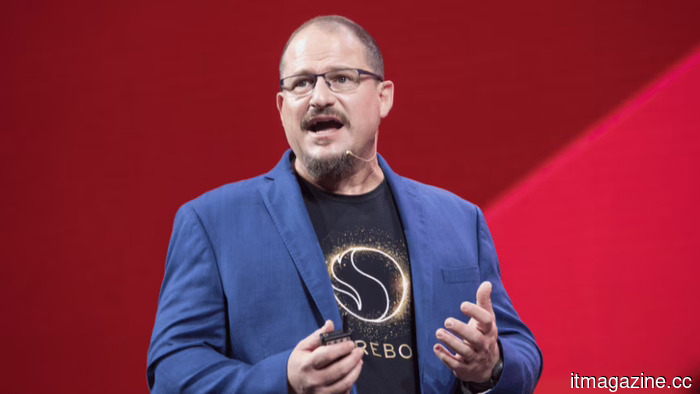 OpenAI is collaborating with Qualcomm and MediaTek to create an AI agent smartphone, aiming for annual shipments of 300-400 million units by 2028.
According to analyst Ming-Chi Kuo, OpenAI is developing a phone designed primarily for agents in collaboration with Qualcomm, MediaTek, and Luxshare. The device will not include apps, only agents. Mass production is aimed for 2028. Following this news, Qualcomm's stock rose by 13%.
OpenAI is collaborating with Qualcomm and MediaTek to create an AI agent smartphone, aiming for annual shipments of 300-400 million units by 2028.
According to analyst Ming-Chi Kuo, OpenAI is developing a phone designed primarily for agents in collaboration with Qualcomm, MediaTek, and Luxshare. The device will not include apps, only agents. Mass production is aimed for 2028. Following this news, Qualcomm's stock rose by 13%.
 WhatsApp for Windows feels worse than it ever has, and I'm fed up with pretending it's not.
From slow performance and unexpected logouts to a controversial redesign, WhatsApp's Windows application is causing frustration for many desktop users.
WhatsApp for Windows feels worse than it ever has, and I'm fed up with pretending it's not.
From slow performance and unexpected logouts to a controversial redesign, WhatsApp's Windows application is causing frustration for many desktop users.
 How Arpit Agrawal is expanding consumer markets in emerging economies
Arpit Agrawal is creating distribution ecosystems in emerging markets by integrating global brands, local networks, and digital tools to connect with billions of consumers.
How Arpit Agrawal is expanding consumer markets in emerging economies
Arpit Agrawal is creating distribution ecosystems in emerging markets by integrating global brands, local networks, and digital tools to connect with billions of consumers.
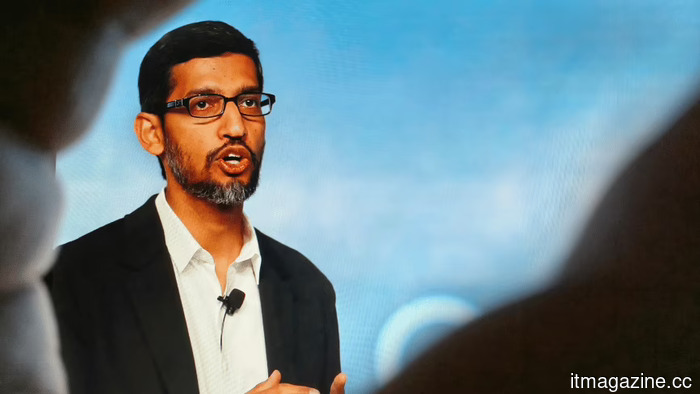 Over 580 Google employees, including researchers from DeepMind, are calling on Pichai to reject a classified AI contract with the Pentagon.
More than 580 employees at Google signed a letter against classified military AI projects. Google is unable to oversee the usage of Gemini on air-gapped networks. Last year, the company eliminated its self-imposed restrictions regarding weapons.
Over 580 Google employees, including researchers from DeepMind, are calling on Pichai to reject a classified AI contract with the Pentagon.
More than 580 employees at Google signed a letter against classified military AI projects. Google is unable to oversee the usage of Gemini on air-gapped networks. Last year, the company eliminated its self-imposed restrictions regarding weapons.
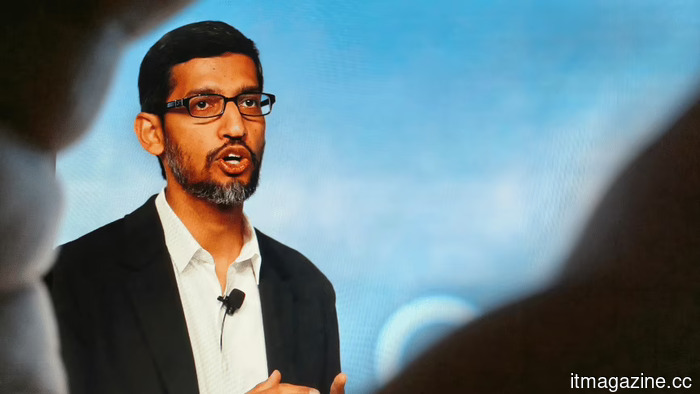 Over 580 Google employees, including researchers from DeepMind, are urging Pichai to decline a classified AI agreement with the Pentagon.
More than 580 Google employees have signed a letter in opposition to classified military AI projects. On air-gapped networks, Google is unable to track the usage of Gemini. Last year, the company eliminated its own restrictions regarding weapons.
Over 580 Google employees, including researchers from DeepMind, are urging Pichai to decline a classified AI agreement with the Pentagon.
More than 580 Google employees have signed a letter in opposition to classified military AI projects. On air-gapped networks, Google is unable to track the usage of Gemini. Last year, the company eliminated its own restrictions regarding weapons.
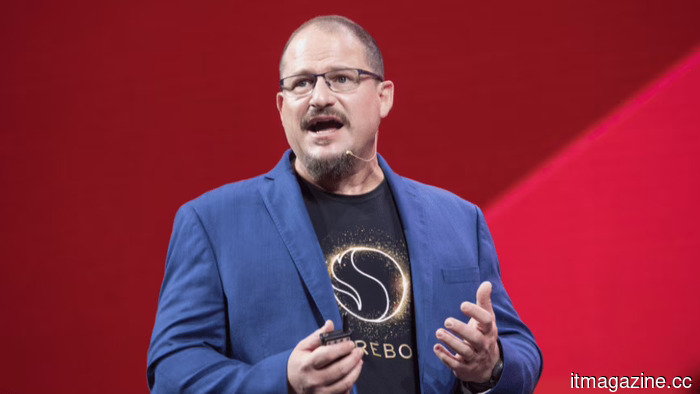 OpenAI is collaborating with Qualcomm and MediaTek to develop an AI agent smartphone, aiming for 300-400 million annual shipments by 2028.
According to analyst Ming-Chi Kuo, OpenAI is developing an agent-first smartphone in collaboration with Qualcomm, MediaTek, and Luxshare. The phone will feature no apps, only agents. Mass production is aimed for 2028. Following this news, Qualcomm's shares rose by 13%.
OpenAI is collaborating with Qualcomm and MediaTek to develop an AI agent smartphone, aiming for 300-400 million annual shipments by 2028.
According to analyst Ming-Chi Kuo, OpenAI is developing an agent-first smartphone in collaboration with Qualcomm, MediaTek, and Luxshare. The phone will feature no apps, only agents. Mass production is aimed for 2028. Following this news, Qualcomm's shares rose by 13%.
How Arpit Agrawal is expanding consumer markets in emerging economies
Arpit Agrawal is developing distribution ecosystems in emerging markets by integrating global brands, local connections, and digital technologies to access billions of consumers.