

More than 580 Google employees, including researchers from DeepMind, are urging Pichai to decline a classified AI contract with the Pentagon.
TL;DR: Over 580 Google employees, including more than 20 directors and VPs, signed a letter asking CEO Sundar Pichai to decline classified military AI projects for the Pentagon. The letter indicates that Google cannot oversee AI usage on air-gapped classified networks, making “trust us” the only safeguard against autonomous weapons and mass surveillance. While Google’s workforce successfully challenged Project Maven in 2018, the company has since altered its AI principles, secured a portion of a $9B Pentagon cloud contract, implemented Gemini for 3 million Pentagon staff, and is currently negotiating classified access under "all lawful uses."
More than 580 Google employees, including over 20 directors, senior directors, and vice presidents, have sent a letter to CEO Sundar Pichai urging him to decline classified military AI contracts with the Pentagon, as reported by Bloomberg. This letter, which includes senior researchers from Google DeepMind, was addressed to Pichai on Monday. They state, “We are Google employees who are deeply concerned about ongoing negotiations between Google and the US Department of Defense.” They emphasize that as AI professionals, they understand that these systems can centralize power and are prone to errors. The signers are calling for Google to reject all classified projects, arguing that the company would lack the means to monitor or restrict how its AI technologies are utilized on isolated classified networks. The letter asserts, “Currently, the only way to ensure that Google does not become associated with such harms is to reject any classified projects. Otherwise, such uses may happen without our knowledge or the ability to intervene.”
The Background
Google employees have previously taken a stand on this issue. In 2018, around 4,000 employees signed an internal petition, and at least 12 resigned in protest against Project Maven, a Pentagon initiative that utilized AI for analyzing drone video feeds. Their protest compelled Google to establish AI principles that pledged not to engage in weaponry or surveillance technologies and allowed the Maven contract to expire in March 2019, with Palantir taking over. While the Maven contract was worth millions, Palantir's investment in Maven has since ballooned to $13 billion. Although the 2018 victory was significant, it marked the last time Google employees effectively limited the company’s defense ambitions. Since then, Google has systematically rebuilt connections that the protest had severed.
In December 2022, Google secured a part of the Pentagon's $9 billion Joint Warfighting Cloud Capability contract alongside Amazon, Microsoft, and Oracle. By February 2025, Google removed commitments from its AI principles that recommended avoiding the deployment of technology in “weapons or other technologies meant to cause or facilitate injury to people” and to steer clear of “technologies that gather or use information for surveillance that breaches internationally accepted norms.” A blog post co-authored by Demis Hassabis, CEO of Google DeepMind, cited “global competition for AI leadership” as the justification for this change. Both Human Rights Watch and Amnesty International condemned this shift. In December 2025, the Pentagon launched GenAI.mil, a platform powered by Google's Gemini chatbot, accessible to all defense personnel. Defense Secretary Pete Hegseth remarked, “The future of American warfare is here, and it’s spelled AI.” By March 2026, Google rolled out Gemini AI agents to the Pentagon's three million personnel at the unclassified level, offering eight pre-built agents for tasks like summarizing meeting notes, creating budgets, and aligning actions with defense strategy.
The Negotiation
The classified deal represents the next phase. Emil Michael, the under secretary of defense for research and engineering, indicated to Bloomberg in March that the Pentagon would “begin with unclassified since that’s where most users are, and then we’ll progress to classified and top secret.” He confirmed that discussions regarding the use of Gemini agents on classified cloud infrastructure were underway. In April, The Information reported that negotiations were moving toward “all lawful uses” of Google’s AI tools, a phrase that does not meet the strict boundaries set by Anthropic before being flagged as a supply-chain risk by the Pentagon for resisting the removal of limitations on autonomous weapons and domestic mass surveillance. The Pentagon challenged Anthropic’s claims vigorously, asserting that commercial entities should not dictate utilization policies during wartime or military preparations.
OpenAI signed its own Pentagon agreement shortly after Anthropic was blacklisted, which included three stated restrictions: no mass domestic surveillance, no autonomous weapons, and no high-stakes automated decision-making. However, the enforcement of these restrictions within classified networks is what Google employees are questioning. On an air-gapped system, the AI operates in a network that is deliberately disconnected from Google’s infrastructure, meaning the company cannot monitor what queries are executed, what outputs are produced, or how those outputs are utilized. The only safeguard against any violations of agreed-upon boundaries comes from the “trust us” assurances from Pentagon leadership. Sofia Liguori, an
Other articles
 How Arpit Agrawal is expanding consumer markets in emerging economies
Arpit Agrawal is developing distribution ecosystems in emerging markets by integrating global brands, local connections, and digital technologies to access billions of consumers.
Microsoft relinquishes its exclusive license to OpenAI's technology.
Microsoft and OpenAI have revised their partnership agreement, making Microsoft’s license non-exclusive until 2032.
How Arpit Agrawal is expanding consumer markets in emerging economies
Arpit Agrawal is developing distribution ecosystems in emerging markets by integrating global brands, local connections, and digital technologies to access billions of consumers.
Microsoft relinquishes its exclusive license to OpenAI's technology.
Microsoft and OpenAI have revised their partnership agreement, making Microsoft’s license non-exclusive until 2032.
 Over 580 Google employees, including researchers from DeepMind, are calling on Pichai to reject a classified AI contract with the Pentagon.
More than 580 employees at Google signed a letter against classified military AI projects. Google is unable to oversee the usage of Gemini on air-gapped networks. Last year, the company eliminated its self-imposed restrictions regarding weapons.
Over 580 Google employees, including researchers from DeepMind, are calling on Pichai to reject a classified AI contract with the Pentagon.
More than 580 employees at Google signed a letter against classified military AI projects. Google is unable to oversee the usage of Gemini on air-gapped networks. Last year, the company eliminated its self-imposed restrictions regarding weapons.
 The iPhone's reintroduction of curved displays might be a smart maneuver, rather than just a design choice of sloped glass.
Leaker Ice Universe suggests that the iPhone celebrating Apple's 20th anniversary may incorporate a "Liquid Glass Display," a new type of display technology that minimizes the appearance of bezels through optical illusions rather than relying solely on curves.
The iPhone's reintroduction of curved displays might be a smart maneuver, rather than just a design choice of sloped glass.
Leaker Ice Universe suggests that the iPhone celebrating Apple's 20th anniversary may incorporate a "Liquid Glass Display," a new type of display technology that minimizes the appearance of bezels through optical illusions rather than relying solely on curves.
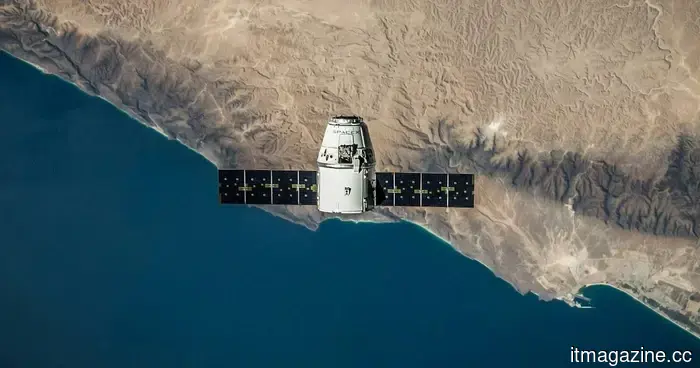 Meta's newest astonishing agreement involves transmitting solar energy via satellites even during nighttime.
Meta has consented to obtain energy from a constellation of 1,000 satellites in space, which will harvest sunlight while in geosynchronous orbit and transmit it in the form of infrared light to solar farms on Earth.
Meta's newest astonishing agreement involves transmitting solar energy via satellites even during nighttime.
Meta has consented to obtain energy from a constellation of 1,000 satellites in space, which will harvest sunlight while in geosynchronous orbit and transmit it in the form of infrared light to solar farms on Earth.
 How Arpit Agrawal is expanding consumer markets in emerging economies
Arpit Agrawal is creating distribution ecosystems in emerging markets by integrating global brands, local networks, and digital tools to connect with billions of consumers.
How Arpit Agrawal is expanding consumer markets in emerging economies
Arpit Agrawal is creating distribution ecosystems in emerging markets by integrating global brands, local networks, and digital tools to connect with billions of consumers.
More than 580 Google employees, including researchers from DeepMind, are urging Pichai to decline a classified AI contract with the Pentagon.
More than 580 employees at Google have signed a letter against classified military AI projects. On air-gapped networks, Google is unable to track the usage of Gemini. Last year, the company eliminated its own limits regarding weaponry.