
Microsoft relinquishes its exclusive license to OpenAI's technology.
Both companies issued a joint statement on Monday regarding the updated agreement. Microsoft holds a non-exclusive license to OpenAI’s intellectual property until 2032, remains the main cloud partner, and maintains its 27% equity stake. OpenAI will continue to provide Microsoft with a revenue share until 2030, subject to a cap on the total amount. Following the announcement, Microsoft’s shares dropped by approximately 3%, while Amazon and Alphabet saw slight gains.
On Monday, Microsoft and OpenAI revealed they have revised their partnership agreement, which eliminates Microsoft’s exclusive right to sell OpenAI’s AI models and products. The new terms permit Microsoft to keep its license to OpenAI’s intellectual property for models and products up to 2032, but this license will now be non-exclusive. Consequently, OpenAI is free to sell its products and serve customers with any cloud provider, not just Microsoft Azure. In return, Microsoft will no longer provide OpenAI with a revenue share from the products it resells.
Revenue share payments from OpenAI to Microsoft will persist through 2030, remaining at the same percentage and independent of OpenAI’s technological advancements, but capped at a total amount. Microsoft continues to serve as OpenAI's primary cloud partner, and OpenAI products will still be launched on Azure first unless Microsoft cannot or opts not to support the required capabilities.
The market perceived the agreement negatively for Microsoft and positively for its cloud competitors. Microsoft shares fell by roughly 3% on Monday following the announcement, while Amazon and Alphabet each experienced modest increases. The reasoning is clear: Microsoft’s exclusive distribution rights provided a competitive edge in the cloud market, which is now being relinquished.
Until now, Azure was the only public cloud where OpenAI’s most advanced models could be accessed, giving Microsoft a unique advantage that boosted enterprise adoption of Azure during the peak of the AI race in 2023 and 2024. The removal of exclusivity allows competitors like AWS, Google Cloud, and Oracle Cloud to offer OpenAI models directly to their clients, thus equalizing the competitive landscape.
For OpenAI, the situation is quite the opposite. The company’s ability to enter partnerships with Microsoft’s competitors had been limited since the inception of its partnership. In February 2026, Amazon and OpenAI announced a significant strategic partnership in which Amazon pledged to invest up to $50 billion in OpenAI, and AWS would act as the exclusive third-party cloud distributor for OpenAI's enterprise platform, Frontier. Additionally, OpenAI expanded its existing $38 billion AWS agreement by $100 billion over an eight-year period. This announcement came while the exclusive agreement with Microsoft was still technically active, raising concerns about how OpenAI would reconcile the apparent conflict.
The restructuring on Monday provides clarity: by waiving the exclusivity with Microsoft, OpenAI has allowed itself the flexibility to fulfill the Amazon agreement and seek additional cloud distribution partnerships without limitations.
Furthermore, the restructuring eliminates one of the more unusual legal provisions present in the original agreement: the AGI clause. Under the previous terms, Microsoft had to evaluate whether OpenAI achieved artificial general intelligence—an AI system that meets or exceeds human intelligence across various tasks—as a trigger for changes in their relationship terms. This clause represented the theoretical potential that the onset of AGI would necessitate a different governance structure, which was significant for OpenAI's nonprofit mission.
The revised agreement completely removes this clause, thus simplifying the legal relationship and eliminating a potentially uncomfortable interpretive power that Microsoft held as OpenAI grew in commercial scale and autonomy.
The backdrop to Monday’s announcement involves six months of negotiations. In October 2025, after OpenAI completed its recapitalization as a public benefit corporation, Microsoft converted its investment at a valuation of $135 billion, representing around 27% of the company on a diluted basis. The two companies also agreed on a $250 billion commitment from OpenAI to utilize Microsoft Azure cloud services. This commitment, along with the associated revenue share arrangements, constituted the financial foundation of the original partnership. The restructuring simplifies this framework: Microsoft retains its equity stake, its primary cloud partner status, and OpenAI’s revenue share until 2030, but forfeits exclusivity and its obligation to pay its own revenue share.
The net financial implications for Microsoft will depend on the comparative sizes of the revenue share it was previously paying versus what it will continue to receive, details that have not been disclosed by either company.
The context of the ongoing trial is notably relevant. The Musk v. Altman case, which began jury selection on the same day, partially addresses whether Microsoft facilitated OpenAI’s breach of its nonprofit charter by endorsing its for-profit transition. While Monday’s restructuring is not directly related to the trial, it offers contextual evidence concerning the evolution of the relationship since Musk left the board.
For investors and enterprise customers, the pressing question is whether the end of exclusivity will significantly alter the competitive dynamics between Azure, AWS, and Google Cloud for AI workloads, a concern
Other articles
 Samsung's wallet introduces an impressive trip planning feature that will make you desire a Galaxy phone.
Samsung has introduced a solution for scattered travel confirmations: the new Trips feature in Samsung Wallet, which consolidates all aspects of your journey into a single, organized, chronological display.
Samsung's wallet introduces an impressive trip planning feature that will make you desire a Galaxy phone.
Samsung has introduced a solution for scattered travel confirmations: the new Trips feature in Samsung Wallet, which consolidates all aspects of your journey into a single, organized, chronological display.
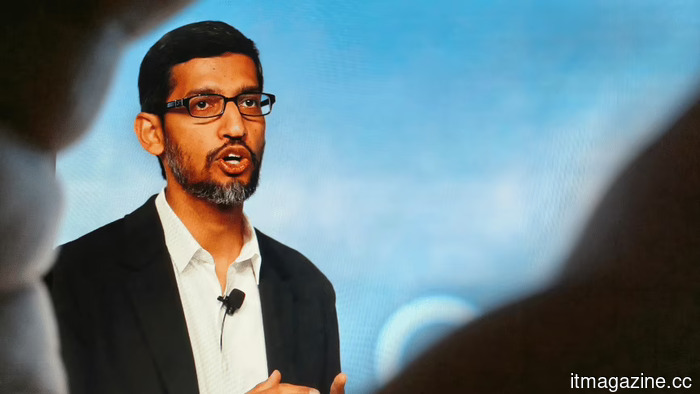 Over 580 Google employees, including researchers from DeepMind, are urging Pichai to decline a classified AI agreement with the Pentagon.
More than 580 Google employees have signed a letter in opposition to classified military AI projects. On air-gapped networks, Google is unable to track the usage of Gemini. Last year, the company eliminated its own restrictions regarding weapons.
Over 580 Google employees, including researchers from DeepMind, are urging Pichai to decline a classified AI agreement with the Pentagon.
More than 580 Google employees have signed a letter in opposition to classified military AI projects. On air-gapped networks, Google is unable to track the usage of Gemini. Last year, the company eliminated its own restrictions regarding weapons.
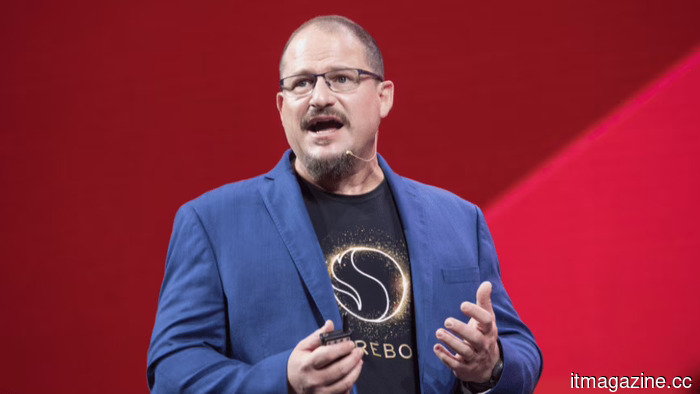 OpenAI is collaborating with Qualcomm and MediaTek to develop an AI agent smartphone, aiming for 300-400 million annual shipments by 2028.
According to analyst Ming-Chi Kuo, OpenAI is developing an agent-first smartphone in collaboration with Qualcomm, MediaTek, and Luxshare. The phone will feature no apps, only agents. Mass production is aimed for 2028. Following this news, Qualcomm's shares rose by 13%.
Microsoft relinquishes its exclusive license to OpenAI's technology.
Microsoft and OpenAI have revised their partnership agreement, making Microsoft's license non-exclusive until 2032.
OpenAI is collaborating with Qualcomm and MediaTek to develop an AI agent smartphone, aiming for 300-400 million annual shipments by 2028.
According to analyst Ming-Chi Kuo, OpenAI is developing an agent-first smartphone in collaboration with Qualcomm, MediaTek, and Luxshare. The phone will feature no apps, only agents. Mass production is aimed for 2028. Following this news, Qualcomm's shares rose by 13%.
Microsoft relinquishes its exclusive license to OpenAI's technology.
Microsoft and OpenAI have revised their partnership agreement, making Microsoft's license non-exclusive until 2032.
 VITURE Beast XR glasses launch featuring a 174-inch virtual display and an expanded field of view.
VITURE has introduced its Beast XR glasses, which feature an expanded virtual display, enhanced brightness, and standalone capabilities, with the intention of making XR experiences more accessible to everyday users.
VITURE Beast XR glasses launch featuring a 174-inch virtual display and an expanded field of view.
VITURE has introduced its Beast XR glasses, which feature an expanded virtual display, enhanced brightness, and standalone capabilities, with the intention of making XR experiences more accessible to everyday users.
 China restricts foreign investment in the Manus AI project as increasing scrutiny on AI exports intensifies.
China's National Development and Reform Commission (NDRC) announced today that it has made a decision in accordance with existing laws and regulations.
China restricts foreign investment in the Manus AI project as increasing scrutiny on AI exports intensifies.
China's National Development and Reform Commission (NDRC) announced today that it has made a decision in accordance with existing laws and regulations.
Microsoft relinquishes its exclusive license to OpenAI's technology.
Microsoft and OpenAI have revised their partnership agreement, making Microsoft’s license non-exclusive until 2032.