
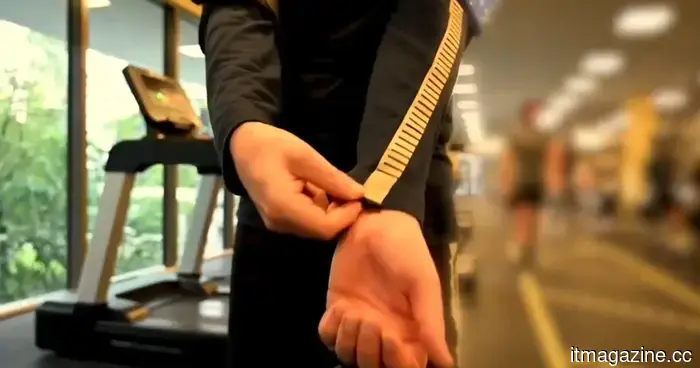
Forget about smartwatches; your clothing might soon monitor your health.
Researchers have created a shirt that continuously monitors your blood pressure.
Wearable technology may be on the brink of a transformation. While we've seen the rise of less intrusive devices like smart rings, researchers are now advancing the concept by integrating health tracking directly into clothing.
A team at the National University of Singapore has designed a new textile system that operates without batteries and can monitor blood pressure in real time, potentially enabling everyday garments to serve as constant health monitors. This innovation, outlined in a recent paper published in Nature Electronics and reported by Tech Xplore, addresses a major drawback of current wearables: the need for frequent recharging.
How the intelligent fabric redefines wearables
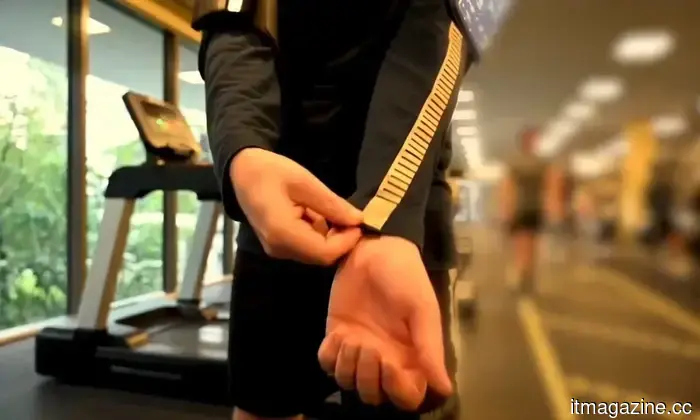
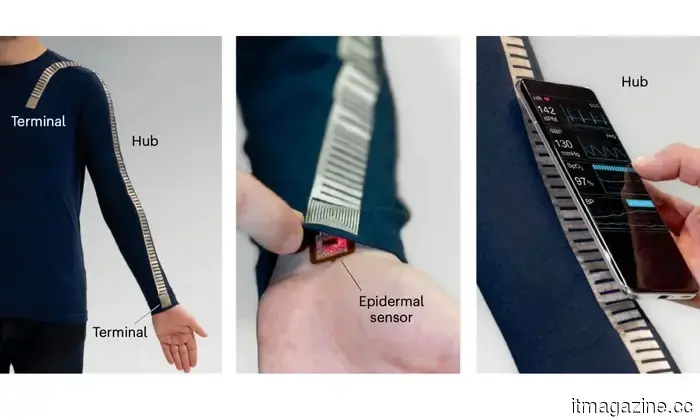
Instead of using a built-in battery, this smart fabric employs ultra-thin sensors that adhere to the skin and connect through a uniquely engineered textile. At the heart of this system is a "metamaterial," which is a precisely constructed fabric that wirelessly transfers power from a nearby smartphone to the sensors.
This configuration separates power transmission and data communication into distinct frequency channels, minimizing interference and maintaining signal stability. Essentially, your phone serves as both the energy source and the data collector that consistently gathers health information, alleviating the inconvenience of charging multiple devices.
Real-time monitoring, even during physical activity
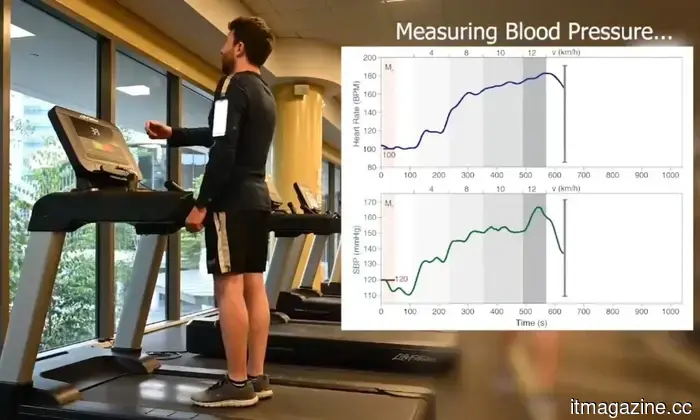
The system primarily tracks systolic blood pressure, assessing the force of blood flow during heartbeats. Initial tests demonstrated its ability to accurately monitor these readings, even during exercise, a challenging area for many wearable sensors. This reliability can be valuable for ongoing health monitoring and the early identification of cardiovascular problems.
The sensors are designed to be extremely thin and flexible, allowing them to sit directly on the skin without obstructing movement. The textile component links multiple sensors into a network, facilitating continuous data gathering across the body.
There have been previous explorations of battery-free wearables, but this approach unites everything into a more practical application. By integrating the system into fabric, the researchers aim to create clothing that functions as a passive health monitor rather than relying on a separate device that must be remembered.
Vikhyaat Vivek is a tech journalist and reviewer with seven years of experience covering consumer hardware.
DeepSeeek V4 has launched, showcasing significant advancements over Gemini, ChatGPT, and Claude.
An open-source model that outperforms GPT-5.4 on Codeforces at a fraction of Claude's cost represents more than just a news headline; it poses a pricing challenge to the entire AI sector.
China’s DeepSeek has again entered the AI landscape in Silicon Valley with the highly anticipated V4 preview. This Hangzhou-based company has introduced its latest AI model, which surpasses popular American models in certain aspects.
DeepSeek has unveiled two new variations: V4-Pro (Expert mode) and V4-Flash (Instant mode). The former features a substantial 1.6 trillion parameter model, while the latter is more manageable at 284 billion parameters. Nevertheless, both models offer a one-million-token context window.
The era of unattractive solar panels may finally come to an end. Introducing artistic colorful tiles!
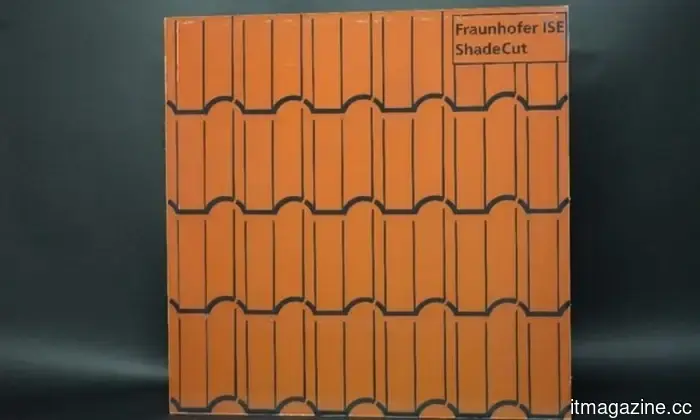
These vibrant solar panels can seamlessly integrate into almost any building. Although solar panels are beneficial for the environment, they have been a source of frustration for architects, homeowners, and historic preservation committees. The challenge of balancing sustainability with aesthetics may have found a true solution.
Researchers at the Fraunhofer Institute for Solar Energy Systems ISE in Germany have developed a technology called ShadeCut, which applies colored, patterned films to solar modules, convincingly emulating roof tiles, masonry, or even bespoke logo designs.
Sony’s table tennis robot prompted me to consider the implications of AI gaining physical form.
The Ace robot starts as an impressive sports demonstration and quickly evolves into a glimpse of AI transitioning from screens to factories, hospitals, farms, and homes.
I initially wanted to dismiss Sony’s table tennis robot as merely another lavish lab showcase. A machine capable of competing with elite players is indeed impressive, but it also seems like a demonstration intended to elicit applause from executives in a setting ready to be amazed.
However, table tennis is a more challenging test than it appears. The ball is small, fast, spinning, and unpredictable, capable of changing direction the instant it hits the table. Sony’s system must navigate unpredictable dynamics, needing to see, anticipate, and respond before the point is over.



Other articles
 X launches the XChat messaging application for iPhone users.
X has introduced XChat for iOS, a standalone messaging application designed to enhance its ecosystem and compete with well-known chat platforms by prioritizing privacy features and social integration.
X launches the XChat messaging application for iPhone users.
X has introduced XChat for iOS, a standalone messaging application designed to enhance its ecosystem and compete with well-known chat platforms by prioritizing privacy features and social integration.
 Atech secures pre-seed funding from Sequoia, a16z, and Lovable.
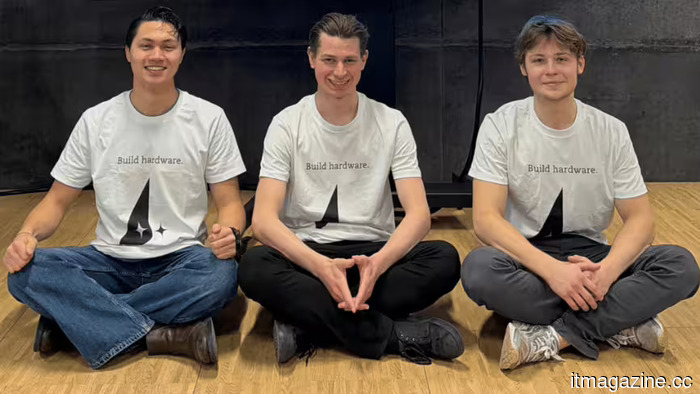
Atech has secured pre-seed funding from Nordic Makers, Lovable, the Sequoia Scout Fund, and the a16z Scout Fund to develop a hardware prototyping platform focused on natural language.
Atech secures pre-seed funding from Sequoia, a16z, and Lovable.
Atech has secured pre-seed funding from Nordic Makers, Lovable, the Sequoia Scout Fund, and the a16z Scout Fund to develop a hardware prototyping platform focused on natural language.
 X launches the XChat messaging application for iPhone users.
X has introduced XChat on iOS, a separate messaging application designed to broaden its ecosystem and rival well-known chat platforms by emphasizing privacy features and social connectivity.
X launches the XChat messaging application for iPhone users.
X has introduced XChat on iOS, a separate messaging application designed to broaden its ecosystem and rival well-known chat platforms by emphasizing privacy features and social connectivity.
 The Iran conflict is affecting the AI supply chain significantly.
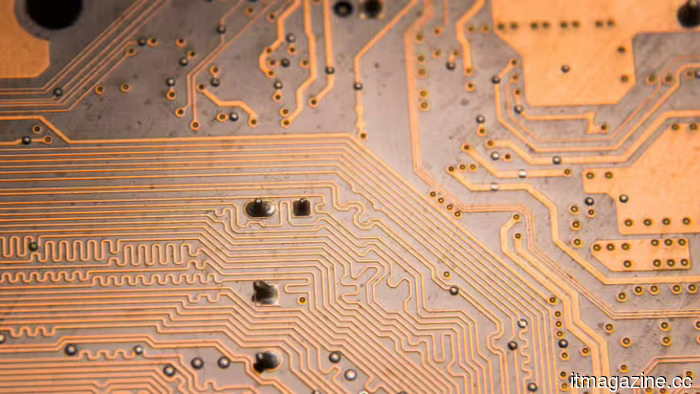
Iranian attacks on SABIC's Jubail facility disrupted 70% of the worldwide supply of PPE resin, resulting in a 40% increase in PCB prices in April.
The Iran conflict is affecting the AI supply chain significantly.
Iranian attacks on SABIC's Jubail facility disrupted 70% of the worldwide supply of PPE resin, resulting in a 40% increase in PCB prices in April.
 The war in Iran is severely impacting the AI supply chain.
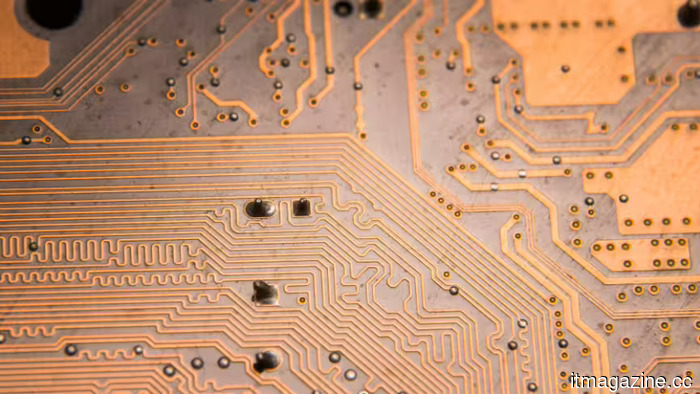
Iranian attacks on SABIC’s Jubail facility disrupted 70% of the worldwide PPE resin supply, causing PCB prices to increase by 40% in April.
The war in Iran is severely impacting the AI supply chain.
Iranian attacks on SABIC’s Jubail facility disrupted 70% of the worldwide PPE resin supply, causing PCB prices to increase by 40% in April.
 Apple is focusing on ten new product categories in the years ahead.
Apple is said to be planning significant product expansion under its new leadership, with developments underway for foldable devices, AI wearables, and smart home gadgets.
Apple is focusing on ten new product categories in the years ahead.
Apple is said to be planning significant product expansion under its new leadership, with developments underway for foldable devices, AI wearables, and smart home gadgets.
Forget about smartwatches; your clothing might soon monitor your health.
A new smart fabric, which is powered by your phone, could discreetly take the place of wearable health trackers as we currently understand them.