
Apple is focusing on ten new product categories in the years ahead.
A recent shift in leadership could signify Apple's most ambitious hardware initiative in years.
Apple is currently at a pivotal moment in its product journey. The company is experiencing unprecedented financial success with a diverse range of products, has stumbled with its AI strategy, and has just undergone a leadership transition.
Tim Cook has stepped down as CEO, with engineering expert John Ternus taking on the role. Notably, this leadership transition appears to align with a substantial shift in Apple’s product development, with plans for at least ten new device categories in the coming years.
What can we expect from Apple next?
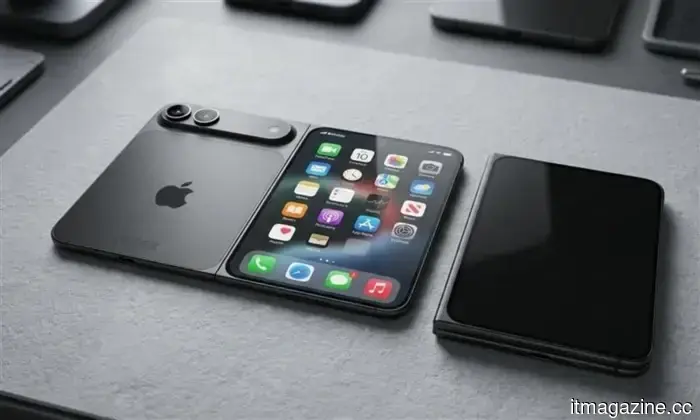
It seems the leadership change comes at a crucial time in Apple’s product development, focusing on Ternus to deliver standout products soon after assuming leadership. Bloomberg reports that one of the first highly anticipated products will be the iPhone Fold (or iPhone Ultra), marking Apple's entry into foldable smartphones.
While Apple is somewhat late to this market, there is significant excitement surrounding the anticipated “pocketable but not pocket-friendly” phone. “Ternus is set to oversee the introduction of a considerable array of new products. With the foldable iPhone included, Apple plans to explore approximately ten new product categories in the next few years. This development could allow Ternus to outshine his predecessor in a relatively short span,” states the report.
The ambition of launching ten product categories is quite remarkable, given that Cook's tenure only saw the introduction of three new segments: two mass-market wearables (AirPods and Apple Watch) and one XR hardware, the underwhelming Vision Pro.
A genuinely transformative roadmap
Apple has generally played it safe with wearable technology, but it appears the company is ready to fully commit across all fronts. Beginning with the AirPods, there are reports of a new version equipped with a camera, significantly enhancing their health monitoring capabilities and enabling multi-modal AI perception of the surrounding environment. Envision something akin to Visual Intelligence, but leveraging the earbuds instead of pointing your iPhone's camera.
This represents a highly promising concept that may prove challenging to implement. However, if the Meta-Ray Ban AI glasses serve as any indication, Apple has the capability to execute. Moreover, it's not an implausible idea; researchers at the University of Washington recently presented the VueBuds, which include cameras on generic earbuds capable of understanding their environment and aiding in translation, among other AI features. Additionally, Apple’s collaboration with Google essentially lays the groundwork for its AI rejuvenation plans with Gemini.
Apart from the earbuds, the following is a list of other product categories reportedly being developed at Apple, many of which have faced delays due to the company's troubled AI endeavors:
- Smart home hub: This device might resemble a small iPad mounted on a wall, functioning as a central unit for smart home controls and communications.
- A robotic device for the tabletop market: Picture an iPad on a stand with a speaker base, with plans for a later version featuring robotic arms.
- Security gear: Apple is considering a camera-equipped device similar to Ring, alongside additional intelligence sensors.
- Next-gen MacBook Pro: This device is expected to showcase a new design with an OLED display featuring touch-screen capabilities, a first for Apple.
- Foldable iPad: Following suit with foldable technology, Apple could apply similar flexible screens to its tablets.
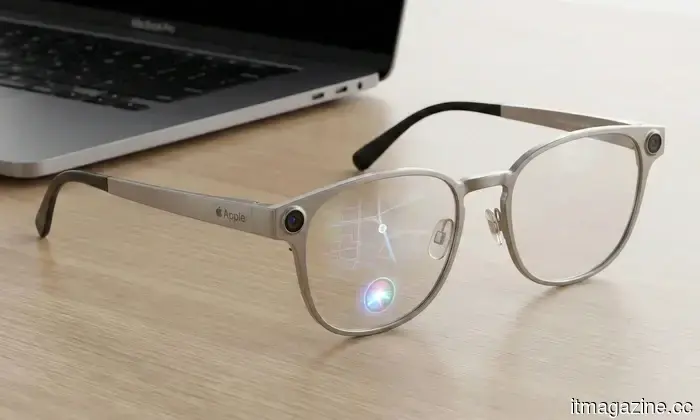
- Smart glasses: Apple’s first pair of glasses will generally draw inspiration from Meta-Ray Ban, but future iterations may include a built-in display unit.
- Pendant: Many attempts exist in this sphere, but Apple’s AI wearable could potentially elevate the category to mainstream popularity.
Nadeem is the Managing Editor at Digital Trends.
The next major moment for the iPhone might arise from an AI company, rather than from Samsung or Apple.
OpenAI is adjusting its approach towards Android and iOS.
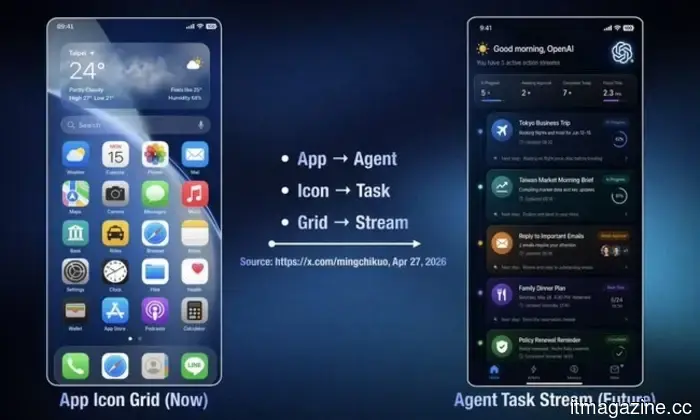
Your smartphone is likely filled with numerous apps. OpenAI aims to replace all of them with a single AI agent that efficiently handles tasks. This vision underpins the company’s plans to develop its own smartphone, featuring a custom processor developed in collaboration with MediaTek and Qualcomm, as first reported by analyst Ming-Chi Kuo on X. Sam Altman seems to align with this sentiment, stating in a post on X, "it feels like a good time to seriously rethink how operating systems and user interfaces are designed." That’s a clear hint.
Samsung's wider Galaxy Fold is poised to make a significant impact in a crowded phone market.
Recent leaks show Samsung's wider Galaxy Fold, confirming design expectations as dummy units have emerged, and the Qi2 magnets have elicited excitement beyond the design itself.
Samsung is in the process of developing a wider version of the Galaxy Fold, which shouldn't come as a surprise if you’ve followed recent tech updates. While its launch was already anticipated, these newly leaked dummy units showcase the design.
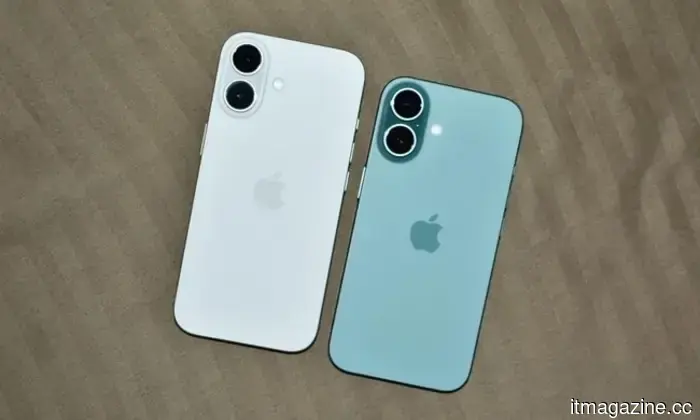
The iPhone 17 impressed me, yet I would still recommend the iPhone 16 for most users.
The iPhone 16 shares



Other articles
 X launches the XChat messaging application for iPhone users.
X has introduced XChat on iOS, a separate messaging application designed to broaden its ecosystem and rival well-known chat platforms by emphasizing privacy features and social connectivity.
X launches the XChat messaging application for iPhone users.
X has introduced XChat on iOS, a separate messaging application designed to broaden its ecosystem and rival well-known chat platforms by emphasizing privacy features and social connectivity.
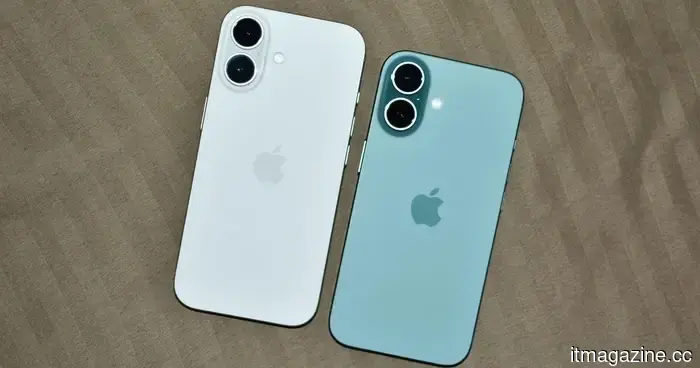 The iPhone 17 impressed me, yet I would still suggest the iPhone 16 to the majority of individuals.
Returning to the iPhone 16 after using the iPhone 17 for six months made me realize that a one-year difference in the product cycle and a one-tier variation in quality are not equivalent.
The iPhone 17 impressed me, yet I would still suggest the iPhone 16 to the majority of individuals.
Returning to the iPhone 16 after using the iPhone 17 for six months made me realize that a one-year difference in the product cycle and a one-tier variation in quality are not equivalent.
 Atech secures pre-seed funding from Sequoia, a16z, and Lovable.
Atech has secured a pre-seed investment from Nordic Makers, Lovable, the Sequoia Scout Fund, and the a16z Scout Fund to develop a hardware prototyping platform based on natural language.
Atech secures pre-seed funding from Sequoia, a16z, and Lovable.
Atech has secured a pre-seed investment from Nordic Makers, Lovable, the Sequoia Scout Fund, and the a16z Scout Fund to develop a hardware prototyping platform based on natural language.
 X launches the XChat messaging application for iPhone users.
X has introduced XChat for iOS, a standalone messaging application designed to enhance its ecosystem and compete with well-known chat platforms by prioritizing privacy features and social integration.
X launches the XChat messaging application for iPhone users.
X has introduced XChat for iOS, a standalone messaging application designed to enhance its ecosystem and compete with well-known chat platforms by prioritizing privacy features and social integration.
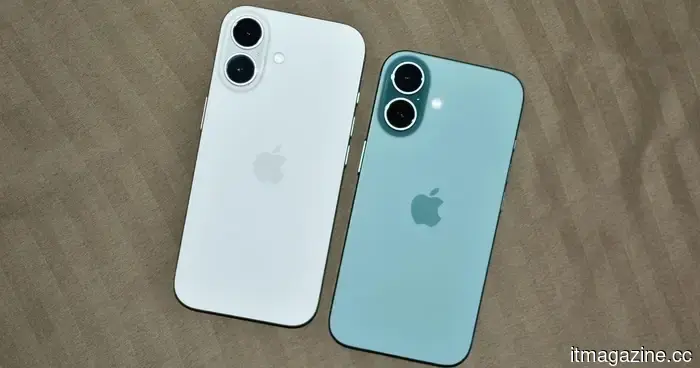 I was impressed by the iPhone 17, but I would still suggest the iPhone 16 to most users.
Returning to the iPhone 16 after using the iPhone 17 for six months has shown me that a one-year gap in product cycles and a single tier difference in quality are not equivalent.
I was impressed by the iPhone 17, but I would still suggest the iPhone 16 to most users.
Returning to the iPhone 16 after using the iPhone 17 for six months has shown me that a one-year gap in product cycles and a single tier difference in quality are not equivalent.
 DeepSeek reduces V4-Pro prices by 75%.
DeepSeek is providing a 75% discount on V4-Pro until May 5 and reducing API cache hit prices to one-tenth across its entire range of products.
DeepSeek reduces V4-Pro prices by 75%.
DeepSeek is providing a 75% discount on V4-Pro until May 5 and reducing API cache hit prices to one-tenth across its entire range of products.
Apple is focusing on ten new product categories in the years ahead.
Apple is said to be planning significant product expansion under its new leadership, with developments underway for foldable devices, AI wearables, and smart home gadgets.