
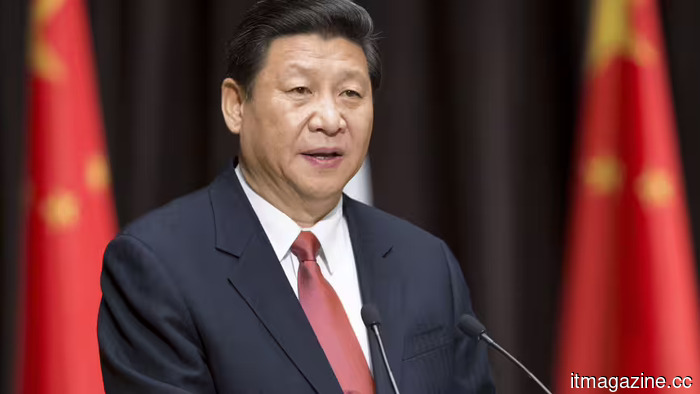
Beijing issues a warning to the EU following the inclusion of 27 Chinese companies in the 20th set of sanctions against Russia, taking action against European defense firms in response.
**TL;DR** China has criticized the EU's latest sanctions package, which targeted around 27 entities from China and Hong Kong for supplying dual-use goods to Russia's military. In response, China quickly imposed its own export restrictions on seven European defense firms, framing the action as related to Taiwan instead of Russia. This situation puts the EU in a difficult position, as its sanctions necessitate limiting technology transfers to Russia, while its defense needs are reliant on critical materials from China, which can leverage these supplies in retaliation.
China's Ministry of Commerce condemned the EU on Saturday after the bloc included about 27 Chinese and Hong Kong entities in its 20th sanctions package against Russia—marking the most extensive listing in two years. Beijing stated that this action "contradicts the consensus reached by Chinese and EU leaders" and significantly damages mutual trust and bilateral relations. It warned that China would "take necessary measures to firmly protect the lawful rights and interests of Chinese businesses" while holding the EU accountable for any repercussions. Within a day of the sanctions' enactment on April 23, China added seven EU entities to its own export control list, barring dual-use exports to them. Although the sanctions impacted defense companies in Belgium, Germany, and the Czech Republic, China characterized the limitations as consequences for "arms sales to or collusion with Taiwan," allowing it to elevate tensions without directly recognizing the Russia-related context.
**The Package**
The EU's 20th sanctions package, adopted on April 23 following a two-month delay due to Hungary and Slovakia's vetoes tied to Russian oil flow negotiations, included 120 new listings. It targets 56 entities in Russia's military and energy sectors, imposes transaction bans on 20 Russian banks and four financial institutions, and notes additional vessels linked to circumvention, totaling 632. New restrictions on cryptocurrency and digital ruble transactions were also introduced, along with a designation of the Kyrgyz Republic as a jurisdiction posing "systematic and persistent circumvention risks." In conjunction with these sanctions, the EU approved a €90 billion loan to Ukraine. Kaja Kallas, the EU's foreign affairs representative, indicated that deliberations for a 21st sanctions package had already commenced.
The sanctioned Chinese entities fell into two categories: 16 entities across third countries, including China and several others, faced asset freezes for supplying dual-use goods or weapon systems to Russia's military sector. Among 60 entities assigned to enhanced export restrictions, 28 were from China and Hong Kong and are now subject to tighter control over dual-use technology exports. The state-owned China Space Sanjiang Group was penalized for the first time under Belarus sanctions due to its role as co-founder of Volat-Sanjiang, which manufactures wheeled chassis for military equipment. There has been a clear escalation: previous sanctions packages listed 7, 5, 2, and 12 Chinese entities, respectively, and now the 20th targets 27. Each package increases in scope, while China's responses have become more pronounced.
**The Trade**
Bilateral trade between China and Russia stabilized at $245 billion in 2024, more than double the amount in 2020, but faced a decline of 6.9% in 2025 as financial sanctions complicated payment pathways and Chinese banks became wary of secondary sanctions risks. However, this downturn did not affect crucial goods involved in the sanctions debate—China exported $1.9 billion worth of "high priority" dual-use items to Russia in the first half of 2025 alone, with total dual-use shipments exceeding $4 billion in both 2024 and 2025. Exports of manganese ore to Russia skyrocketed from 42 tonnes in 2023 to over 126,000 tonnes in early 2025, and Chinese turbojet engine exports to Russia surpassed totals from 2023 and 2024 combined by 37%. Prices for controlled Chinese goods shipped to Russia surged by an average of 87% between 2021 and 2024, indicating increased scarcity in response to the sanctions.
The United States has been ahead of the EU in sanctioning Chinese firms for their support of Russia, with the Treasury Department designating two Chinese drone manufacturers in October 2024 for supplying attack drones. In 2025, over 20 Chinese companies faced sanctions for providing essential materials to Russia's defense sector. The Commerce Department added Shanghai Fudan Microelectronics to its blacklist for technology transfers, while Congress introduced the STOP China and Russia Act to formalize sanctions against mutual military assistance. The EU's latest sanctions package aligns more closely with the U.S. stance, perceived by Beijing as a coordinated effort at containment. Heightened chip export controls targeting China, including the MATCH Act working its way through Congress, reinforce China's view that Western tech restrictions aim to undermine its industrial capacity rather than simply enforce sanctions against Russia.
**The Retaliation**
China's retaliation was both prompt and measured. The seven
Other articles
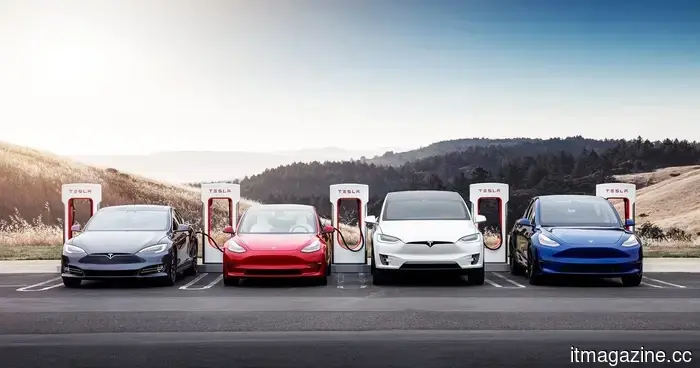 Tesla provides one year of complimentary Supercharging with the Model 3 Premium and Performance options.
Tesla is providing a year of complimentary Supercharging for the Model 3 Premium and Performance models, which helps to lower ownership expenses while enhancing its charging network benefits.
Sequoia distributes 200 engraved Mac Minis at an AI event as OpenClaw emerges as the infrastructure layer that VCs cannot possess.
Alfred Lin distributed 200 engraved Mac Minis that operate on OpenClaw, the open-source AI agent framework that has surpassed Apple's stock in sales and outperformed React on GitHub. Sequoia is unable to invest in it. That's the approach.
Foundation Future Industries secures $24 million in Pentagon contracts for humanoid robot soldiers, supported by Eric Trump and trialed in Ukraine.
Foundation Future Industries has obtained $24 million in contracts from the Pentagon for humanoid robots that have been tested in Ukraine. The company's CEO previously led a bankrupt fintech firm, an adviser to the company is Eric Trump, and it is seeking $500 million with a valuation exceeding $3 billion.
Tesla provides one year of complimentary Supercharging with the Model 3 Premium and Performance options.
Tesla is providing a year of complimentary Supercharging for the Model 3 Premium and Performance models, which helps to lower ownership expenses while enhancing its charging network benefits.
Sequoia distributes 200 engraved Mac Minis at an AI event as OpenClaw emerges as the infrastructure layer that VCs cannot possess.
Alfred Lin distributed 200 engraved Mac Minis that operate on OpenClaw, the open-source AI agent framework that has surpassed Apple's stock in sales and outperformed React on GitHub. Sequoia is unable to invest in it. That's the approach.
Foundation Future Industries secures $24 million in Pentagon contracts for humanoid robot soldiers, supported by Eric Trump and trialed in Ukraine.
Foundation Future Industries has obtained $24 million in contracts from the Pentagon for humanoid robots that have been tested in Ukraine. The company's CEO previously led a bankrupt fintech firm, an adviser to the company is Eric Trump, and it is seeking $500 million with a valuation exceeding $3 billion.
 Sam Altman has issued an apology following OpenAI's decision not to report a ChatGPT user involved in the Tumbler Ridge school shooting.
OpenAI marked the ChatGPT account of the Tumbler Ridge shooter as suspicious eight months prior to the attack. Staff suggested notifying law enforcement, but their leadership decided against it. Altman's apology does not bridge the gap.
Sam Altman has issued an apology following OpenAI's decision not to report a ChatGPT user involved in the Tumbler Ridge school shooting.
OpenAI marked the ChatGPT account of the Tumbler Ridge shooter as suspicious eight months prior to the attack. Staff suggested notifying law enforcement, but their leadership decided against it. Altman's apology does not bridge the gap.
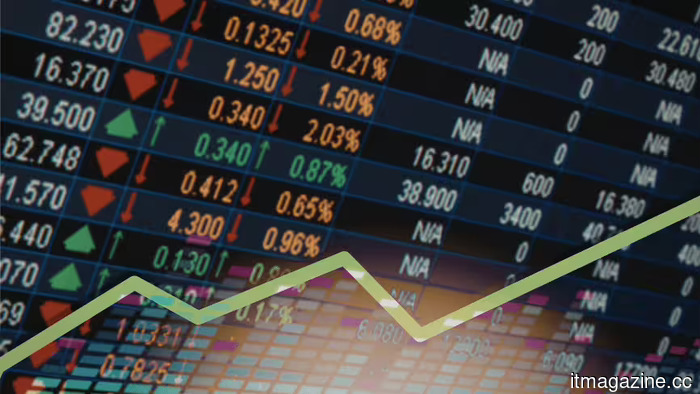 AI stocks compared to the dot-com bubble: CAPE stands at 38, with concentration exceeding levels seen in 2000, yet the companies are genuinely profitable.
The Shiller CAPE stands at 38-40, which is only behind the dot-com peak of 44.19. The concentration of the top 10 companies surpasses levels seen in 2000. However, Nvidia made $120 billion, and tech stocks are trading at 30 times earnings, not 50 times. Both perspectives have validity.
AI stocks compared to the dot-com bubble: CAPE stands at 38, with concentration exceeding levels seen in 2000, yet the companies are genuinely profitable.
The Shiller CAPE stands at 38-40, which is only behind the dot-com peak of 44.19. The concentration of the top 10 companies surpasses levels seen in 2000. However, Nvidia made $120 billion, and tech stocks are trading at 30 times earnings, not 50 times. Both perspectives have validity.
Beijing issues a warning to the EU following the inclusion of 27 Chinese companies in the 20th set of sanctions against Russia, taking action against European defense firms in response.
China criticized the EU's 20th sanctions package, which aimed at 27 Chinese entities, and swiftly responded within 24 hours by targeting seven EU defense companies. The rearmament efforts in Europe rely on the rare earths that Beijing oversees.