
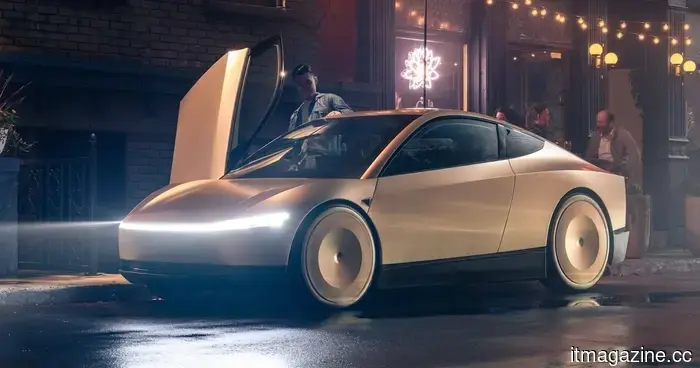
Tesla's Cybercab has started production. Let's hope it can truly drive autonomously this time.
Tesla has completed the manufacturing of the Cybercab, yet the challenge of achieving full autonomy is still ongoing.
Tesla has a history of making announcements before products are fully ready. On April 24, 2026, Elon Musk shared a POV video of a Cybercab without a steering wheel exiting Gigafactory Texas, generating significant excitement online.
Musk has stated that mass production of the autonomous robotaxi has commenced, but the company still faces the tougher challenge ahead.
What has Tesla created, exactly?
For those who are not up to speed, the Cybercab is a two-seater vehicle equipped with Tesla's Full Self-Driving neural network. It is purposely designed without a steering wheel or pedals and utilizes all-around cameras instead of side mirrors.
The first production units of the Cybercab came off the assembly line in February 2026, with continuous volume production commencing in April 2026. The anticipated pricing is under $30,000, aiming to establish the vehicle as an affordable option in the robotaxi market.
So, what’s the issue?
The Cybercab’s future hinges on its capacity for self-driving. However, Tesla has not completely resolved this challenge yet. The current supervised robotaxi fleet experiences incidents at roughly four times the frequency of human drivers: around one incident per 57,000 miles instead of one per 229,000 miles.
Musk has acknowledged that the software can occasionally cause the cars to be “scared to move” or get stuck in perpetual loops. At this point, unsupervised FSD for consumer vehicles has been postponed to the fourth quarter of 2026, a deadline that is being approached with great caution.
This product milestone comes during a period when Tesla’s global sales have declined for the second consecutive year. The Cybercab represents the company’s most significant gamble for a turnaround, but achieving autonomous and safe operation is what millions of commuters truly prioritize.
For over five years, Shikhar has regularly simplified advancements in consumer technology and presented them...
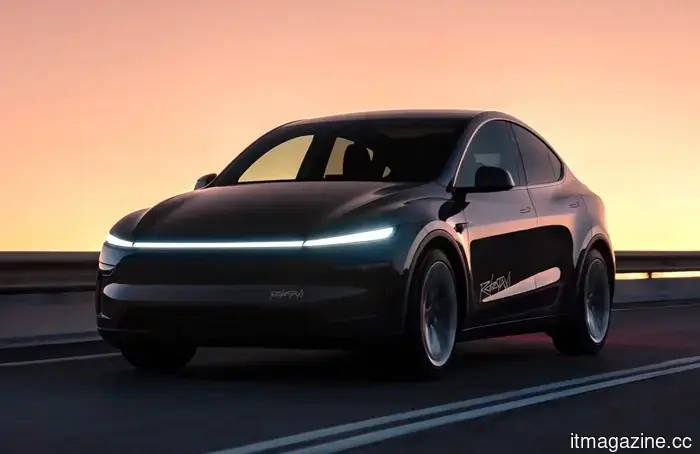
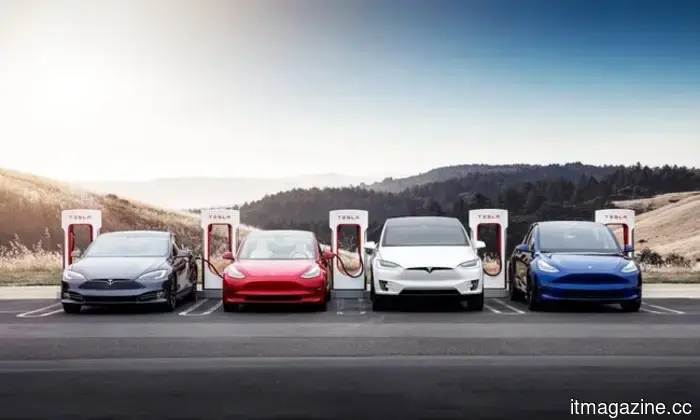
Tesla is offering one year of complimentary Supercharging with the Model 3 Premium and Performance variants.
Tesla has reintroduced free Supercharging to enhance Model 3 sales. The company announced that purchasers of the Model 3 Premium and Performance models will receive one year of free access to its fast-charging network, reinstating a benefit that has historically been effective in driving demand, according to a report from Electrek.
A Strategic Incentive That Represents More Than Just Savings
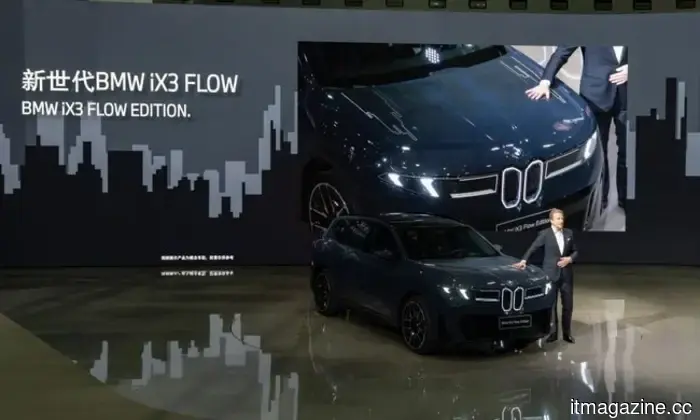
At the Beijing Auto Show 2026, BMW introduced the iX3 Flow Edition, showcasing the first integration of E Ink’s Prism technology into a production-ready vehicle. This announcement marks a significant advancement from prototype concepts to practical automotive solutions, introducing dynamic, color-changing surfaces to everyday driving.
From Concept to Production Reality
The myth of range anxiety for electric vehicles has been debunked by extensive real-world data, revealing that modern EV batteries are performing significantly better than previously assumed.
One of the main reasons people hesitate to purchase an electric vehicle is range anxiety. The logic is straightforward: as batteries age, their range diminishes, leading to the belief that within a few years, a new EV will only serve as a city vehicle.

Other articles
.jpg) Three overlooked Netflix series to check out this weekend (April 24-26).
This weekend's Netflix lineup features three distinctly different genres. There's a 19th-century murder mystery inspired by a novel by Margaret Atwood, a thrilling Danish serial killer story, and an engaging Japanese sumo drama that you won't be able to stop watching.
Three overlooked Netflix series to check out this weekend (April 24-26).
This weekend's Netflix lineup features three distinctly different genres. There's a 19th-century murder mystery inspired by a novel by Margaret Atwood, a thrilling Danish serial killer story, and an engaging Japanese sumo drama that you won't be able to stop watching.
.jpg) Three underrated Netflix series you should check out this weekend (April 24-26).
This weekend's Netflix lineup features three distinctly varied genres. There's a 19th-century murder mystery inspired by a Margaret Atwood novel, a Danish thriller about a serial killer, and an engaging Japanese sumo drama that's hard to stop watching.
Three underrated Netflix series you should check out this weekend (April 24-26).
This weekend's Netflix lineup features three distinctly varied genres. There's a 19th-century murder mystery inspired by a Margaret Atwood novel, a Danish thriller about a serial killer, and an engaging Japanese sumo drama that's hard to stop watching.
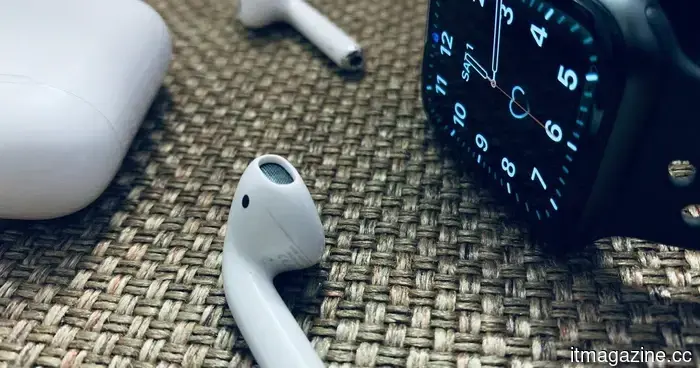 The greatest feat AI can achieve is to become seamlessly integrated into my devices rather than evolving into a standalone product.
AI may ultimately become more beneficial when it ceases to function as a product and begins to enhance the devices that people already possess.
The greatest feat AI can achieve is to become seamlessly integrated into my devices rather than evolving into a standalone product.
AI may ultimately become more beneficial when it ceases to function as a product and begins to enhance the devices that people already possess.
 I'm still enjoying the original Switch in 2026. It’s reliable since everything else has become more complicated.
Although Nintendo's original Switch is less powerful than current handhelds, in 2026, its simplicity appears to be less of a disadvantage and more like its main appeal.
I'm still enjoying the original Switch in 2026. It’s reliable since everything else has become more complicated.
Although Nintendo's original Switch is less powerful than current handhelds, in 2026, its simplicity appears to be less of a disadvantage and more like its main appeal.
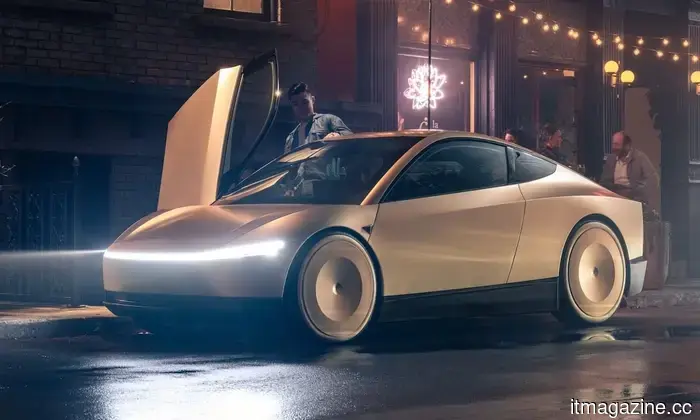
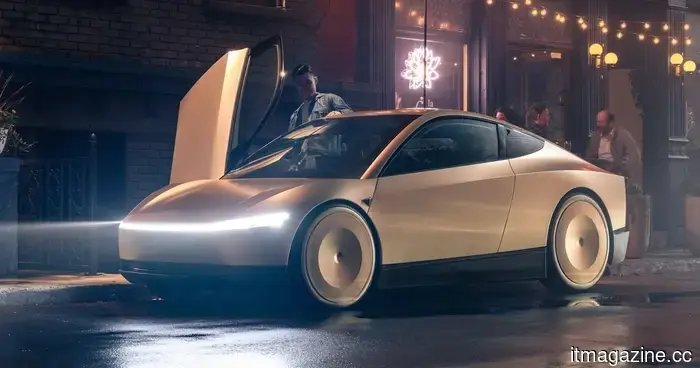 Tesla's Cybercab has begun production. Let's see if it can truly drive itself this time.
Tesla's Cybercab has begun mass production at Gigafactory Texas, yet the self-driving robotaxi still relies on FSD software, which malfunctions four times more frequently than human operators.
Tesla's Cybercab has begun production. Let's see if it can truly drive itself this time.
Tesla's Cybercab has begun mass production at Gigafactory Texas, yet the self-driving robotaxi still relies on FSD software, which malfunctions four times more frequently than human operators.
 I'm still using the original Switch in 2026. It simply works since everything else has become too complicated.
The original Switch from Nintendo may be less powerful than current handheld devices, but by 2026, its straightforwardness seems less of a drawback and more like a key feature.
I'm still using the original Switch in 2026. It simply works since everything else has become too complicated.
The original Switch from Nintendo may be less powerful than current handheld devices, but by 2026, its straightforwardness seems less of a drawback and more like a key feature.
Tesla's Cybercab has started production. Let's hope it can truly drive autonomously this time.
Tesla's Cybercab has begun mass production at Gigafactory Texas; however, the self-driving robotaxi still relies on FSD software that experiences crashes at a rate four times greater than human drivers.