
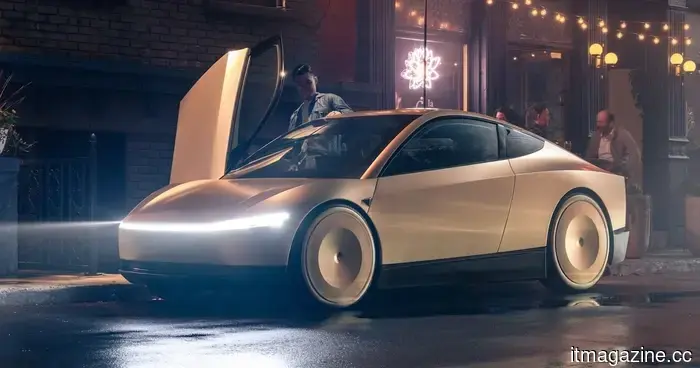
Tesla has begun production of the Cybercab. Let's hope it can genuinely operate autonomously this time.
Tesla has successfully completed production on the Cybercab, but it still faces challenges in the race for autonomous driving technology.
Tesla has a track record of making announcements prematurely. On April 24, 2026, Elon Musk shared a POV video of a Cybercab without a steering wheel as it exited Gigafactory Texas, causing a stir online.
Musk has verified that mass production of the autonomous robotaxi has commenced. However, the company still needs to tackle the more challenging aspects of the project.
What has Tesla actually created?
For those who are just catching up, the Cybercab is a two-seat vehicle equipped with Tesla’s Full Self-Driving neural network. It is intentionally designed without a steering wheel or pedals, featuring cameras instead of side mirrors.
The initial production units of the Cybercab were produced in February 2026, with continuous mass production beginning in April 2026. The expected price is projected to be under $30,000, making it an affordable option in the robotaxi market.
So, what’s the drawback?
The existence of the Cybercab relies on one crucial factor: its capability to drive autonomously. However, Tesla has not completely resolved this issue yet. Currently, the company’s supervised robotaxi fleet experiences crashes at about four times the rate of human drivers, with one incident occurring approximately every 57,000 miles instead of once every 229,000 miles.
Musk has acknowledged that the software can occasionally leave vehicles "scared to move" or trap them in infinite loops. At present, the unsupervised FSD for consumer cars is pushed back to the fourth quarter of 2026, a deadline that is being approached cautiously.
This product milestone comes during a time when Tesla's global sales have declined for the second year in a row. The Cybercab currently stands as the company’s most significant hope for a turnaround. However, ensuring it operates autonomously and safely remains a primary concern for millions of commuters.
Shikhar has been adept at simplifying updates in consumer technology for over five years.
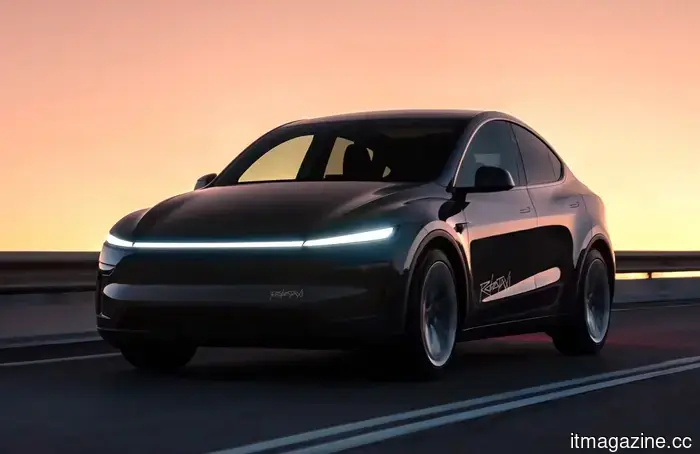
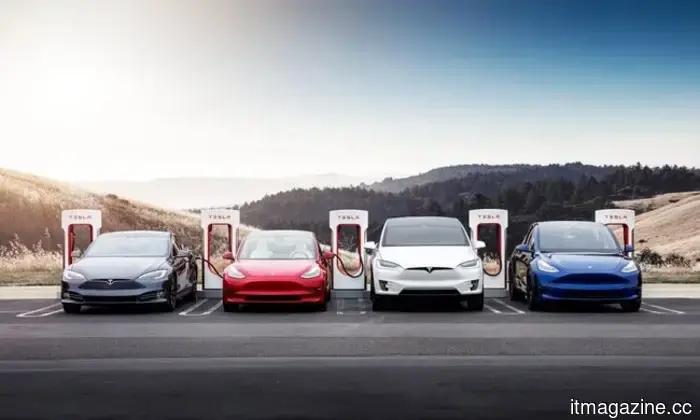
Tesla is once again utilizing one of its most effective sales strategies: free Supercharging. The company has announced that purchasers of the Model 3 Premium and Performance variants will enjoy one year of complimentary access to its fast-charging network, reviving a perk that has historically stimulated demand, as reported by Electrek.
A Strategic Incentive That Represents More Than Just Savings
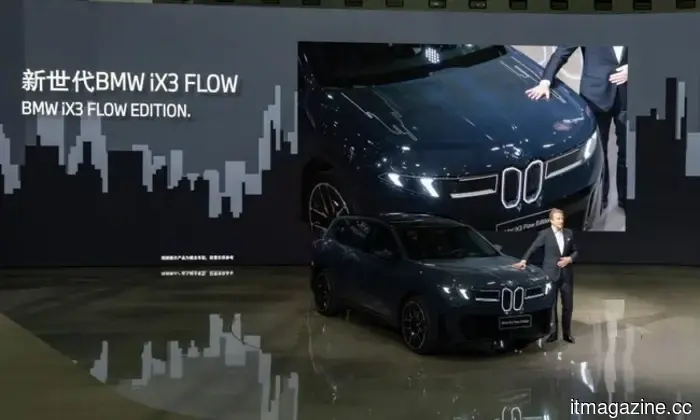
At the Beijing Auto Show 2026, BMW introduced the iX3 Flow Edition, which marks the first application of E Ink’s Prism technology in a mass-production vehicle. This announcement signifies a significant transition from experimental concept vehicles to tangible automotive solutions, offering dynamic, color-changing surfaces for everyday use.
From Concept to Production Reality
A billion miles of real-world data has debunked the myth of range anxiety related to electric vehicles.
One of the main reasons potential buyers resist purchasing electric vehicles is due to range anxiety. The prevailing assumption is straightforward: batteries deteriorate over time, leading to reduced range, meaning your new EV may only serve as an urban vehicle within a few years of acquisition.

Other articles
 I'm still enjoying the original Switch in 2026. It’s reliable since everything else has become more complicated.
Although Nintendo's original Switch is less powerful than current handhelds, in 2026, its simplicity appears to be less of a disadvantage and more like its main appeal.
I'm still enjoying the original Switch in 2026. It’s reliable since everything else has become more complicated.
Although Nintendo's original Switch is less powerful than current handhelds, in 2026, its simplicity appears to be less of a disadvantage and more like its main appeal.
.jpg) Three overlooked Netflix series to check out this weekend (April 24-26).
This weekend's Netflix lineup features three distinctly different genres. There's a 19th-century murder mystery inspired by a novel by Margaret Atwood, a thrilling Danish serial killer story, and an engaging Japanese sumo drama that you won't be able to stop watching.
Three overlooked Netflix series to check out this weekend (April 24-26).
This weekend's Netflix lineup features three distinctly different genres. There's a 19th-century murder mystery inspired by a novel by Margaret Atwood, a thrilling Danish serial killer story, and an engaging Japanese sumo drama that you won't be able to stop watching.
.jpg) 3 underrated TV shows on HBO Max to catch this weekend (April 24-26)
This weekend's watchlist features two psychological thrillers and an animated conspiracy series that merit much more recognition than they have received.
3 underrated TV shows on HBO Max to catch this weekend (April 24-26)
This weekend's watchlist features two psychological thrillers and an animated conspiracy series that merit much more recognition than they have received.
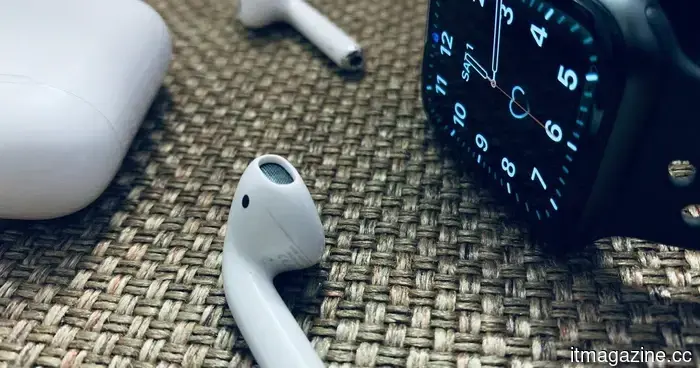 The greatest feat AI can achieve is to become seamlessly integrated into my devices rather than evolving into a standalone product.
AI may ultimately become more beneficial when it ceases to function as a product and begins to enhance the devices that people already possess.
The greatest feat AI can achieve is to become seamlessly integrated into my devices rather than evolving into a standalone product.
AI may ultimately become more beneficial when it ceases to function as a product and begins to enhance the devices that people already possess.
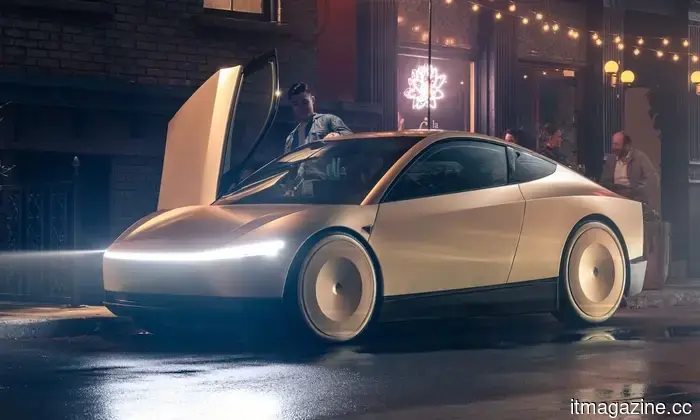
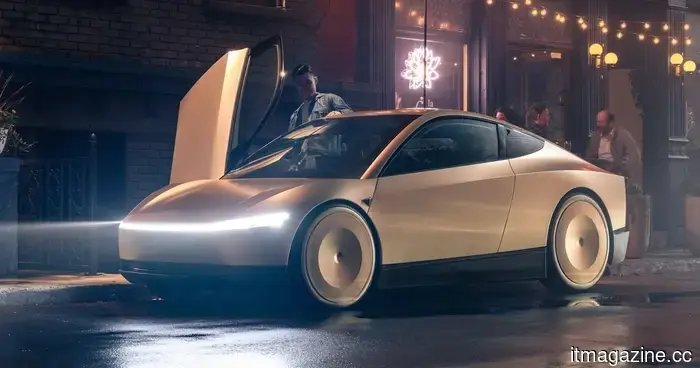 Tesla's Cybercab has begun production. Let's see if it can truly drive itself this time.
Tesla's Cybercab has begun mass production at Gigafactory Texas, yet the self-driving robotaxi still relies on FSD software, which malfunctions four times more frequently than human operators.
Tesla's Cybercab has begun production. Let's see if it can truly drive itself this time.
Tesla's Cybercab has begun mass production at Gigafactory Texas, yet the self-driving robotaxi still relies on FSD software, which malfunctions four times more frequently than human operators.
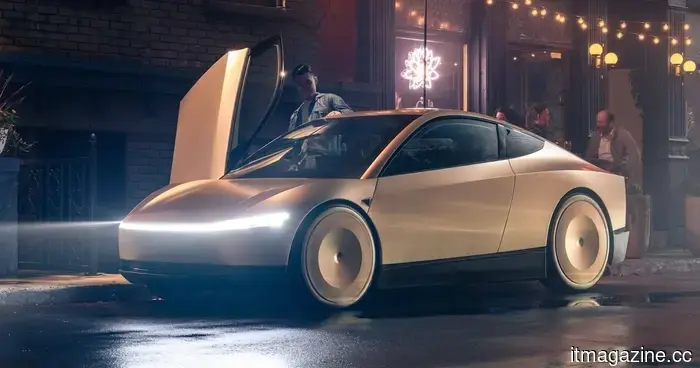 Tesla's Cybercab has started production. Let's hope it can truly drive autonomously this time.
Tesla's Cybercab has begun mass production at Gigafactory Texas; however, the self-driving robotaxi still relies on FSD software that experiences crashes at a rate four times greater than human drivers.
Tesla's Cybercab has started production. Let's hope it can truly drive autonomously this time.
Tesla's Cybercab has begun mass production at Gigafactory Texas; however, the self-driving robotaxi still relies on FSD software that experiences crashes at a rate four times greater than human drivers.
Tesla has begun production of the Cybercab. Let's hope it can genuinely operate autonomously this time.
Tesla's Cybercab has commenced mass production at Gigafactory Texas; however, the self-driving robotaxi still relies on FSD software that experiences failures four times more frequently than human drivers.