
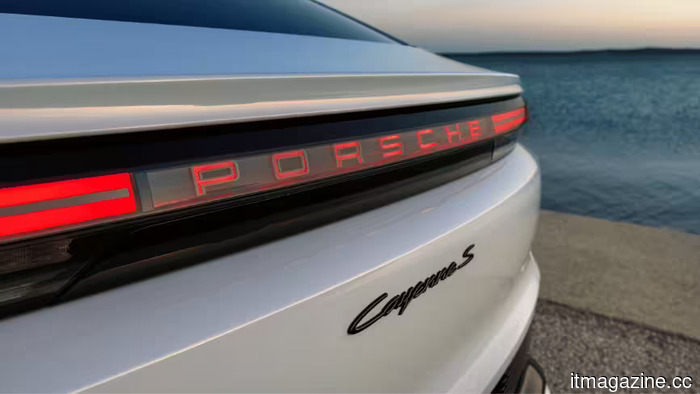
Porsche Cayenne Coupe Electric makes its debut featuring 1,139 hp and a range of 669 km as the company steps back from its all-electric strategy.
Summary: Porsche introduced the Cayenne Coupe Electric at Auto China in Beijing, featuring a powerful 1,139 hp electric SUV capable of accelerating from 0 to 60 mph in 2.4 seconds, offering a WLTP range of up to 669 km, and supporting rapid charging in just 16 minutes, starting at a price of $113,800. This launch coincides with a challenging financial year for Porsche, marked by a 93% drop in operating profit, its first quarterly loss, a new CEO, and a withdrawal from its ambitious target of achieving 80% electric vehicle sales by 2030. The Cayenne Coupe Electric will be available alongside internal combustion engine (ICE) and plug-in hybrid (PHEV) variants indefinitely, reflecting Porsche's realization that the market for premium electric vehicles is smaller than previously anticipated.
Porsche unveiled the Cayenne Coupe Electric at Auto China in Beijing, featuring 1,139 horsepower in its Turbo variant, capable of reaching 60 mph in 2.4 seconds and equipped with a 113-kilowatt-hour battery that offers a range of up to 669 km on the WLTP cycle. It can charge from 10% to 80% in under 16 minutes at a rate of up to 400 kilowatts and starts at $113,800 before an additional $2,350 delivery fee. This vehicle is the most powerful production SUV Porsche has ever produced and stands as one of the most capable electric vehicles across all segments. However, it is being launched in a context of significant financial strain, including a 93% operating profit decline, a leadership change, a retreat from its 80% EV target for 2030, and a commitment to continue offering combustion engines "well into the next decade." While the product itself is impressive, the surrounding strategy shows caution in every aspect.
The Cayenne Coupe Electric is built on the Premium Platform Electric, a robust 800-volt architecture co-developed by Porsche and Audi within the Volkswagen Group, the same platform that supports the Macan Electric and Audi Q6 e-tron. It comes in three versions: the base model produces 435 horsepower and 615 pound-feet of torque, accelerates to 60 mph in 4.5 seconds, and has a top speed of 143 mph for $113,800. The Cayenne S Coupe Electric offers 657 horsepower and 796 pound-feet, sprints to 60 mph in 3.6 seconds, reaches 155 mph, and costs $131,200. The Turbo variant generates 1,139 horsepower and 1,106 pound-feet in overboost, accelerates to 60 mph in just 2.4 seconds, hits 162 mph, and starts at $168,000. All variants feature dual electric motors and all-wheel drive, as well as standard adaptive two-chamber air suspension, an adaptive rear spoiler, a panoramic glass roof, and Porsche's Sport Chrono Package. Notably, the Coupe's drag coefficient is 0.23, compared to 0.25 for the Cayenne Electric SUV and 0.35 for the internal combustion Cayenne, resulting in an additional 18 km of range for the Coupe.
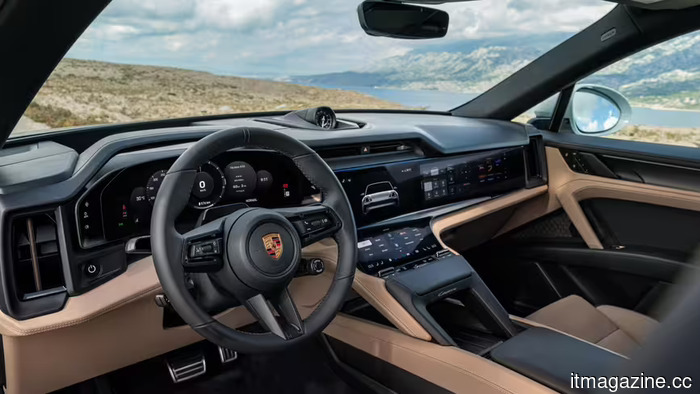
The battery modules are produced at Porsche's Smart Battery Shop in Horna Streda, Slovakia, about an hour from the VW Group's Bratislava plant, where final assembly occurs alongside ICE and hybrid Cayenne models on a flexible production line. The 14.5-inch curved touchscreen is a first for any Porsche vehicle. The NACS charging port, which is standard for North America, interfaces with Tesla's Supercharger network and any CCS-compatible DC fast charger. According to Porsche, the car can gain 300 kilometers of range in just ten minutes when connected to a sufficiently powerful charging station. Sales are expected to begin in late summer 2026, and all three trims are available for order now. Historically, approximately 40% of Cayenne buyers opt for the Coupe body style, prompting Porsche to offer both options.
Porsche's financial results for 2025 were dismal compared to its historical performance. Revenue dropped to 36.3 billion euros from 40.1 billion in 2024, and operating profit plummeted to 413 million euros from 5.6 billion euros, resulting in a margin of just 1.1%. In Q3 2025, Porsche reported its first quarterly loss, amounting to negative 1.1 billion euros. Oliver Blume, who had been Porsche's CEO while also overseeing the Volkswagen Group, stepped down from the Porsche role at the beginning of 2026, with Michael Leiters, the former McLaren Automotive CEO, taking over. Leiters' mandate includes reducing costs, restoring margins, and significantly reversing the strategic overcommitment to electrification that led to the financial difficulties.
Blume acknowledged that Porsche “misjudged the situation” when
Other articles
 The myth of EV range anxiety has just been shattered by a billion miles of real-world evidence.
Recurrent's evaluation of more than one billion miles of electric vehicle driving data reveals that range loss is minimal for contemporary electric cars, with the typical vehicle maintaining 95% of its initial range even after five years.
The myth of EV range anxiety has just been shattered by a billion miles of real-world evidence.
Recurrent's evaluation of more than one billion miles of electric vehicle driving data reveals that range loss is minimal for contemporary electric cars, with the typical vehicle maintaining 95% of its initial range even after five years.
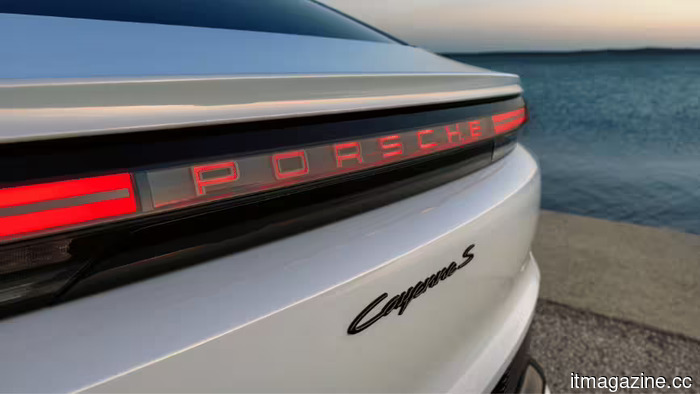 The Porsche Cayenne Coupe Electric makes its debut, boasting 1,139 horsepower and a range of 669 km, as the company shifts away from its all-electric strategy.
The Cayenne Coupe Electric delivers 1,139 horsepower, can be charged in 16 minutes, and has a starting price of $113,800. Porsche is introducing it alongside its internal combustion engine variants following a 93% drop in profits and a strategic pullback from electrification.
The Porsche Cayenne Coupe Electric makes its debut, boasting 1,139 horsepower and a range of 669 km, as the company shifts away from its all-electric strategy.
The Cayenne Coupe Electric delivers 1,139 horsepower, can be charged in 16 minutes, and has a starting price of $113,800. Porsche is introducing it alongside its internal combustion engine variants following a 93% drop in profits and a strategic pullback from electrification.
 Meta has finalized a multibillion-dollar agreement for Amazon's Graviton5 chips as the demand for AI computing exceeds its $135 billion capital expenditure budget.
Meta plans to implement tens of millions of Amazon Graviton5 CPU cores in AWS data centers for agentic AI. This agreement is part of a procurement initiative exceeding $200 billion that includes Nvidia, AMD, CoreWeave, Broadcom, and now a direct competitor.
How web intelligence is driving the next generation of AI infrastructure.
Web intelligence is advancing to accommodate the scale and intricacy of contemporary AI systems, transitioning from multimodal AI to LLM search and data pipelines.
Meta has finalized a multibillion-dollar agreement for Amazon's Graviton5 chips as the demand for AI computing exceeds its $135 billion capital expenditure budget.
Meta plans to implement tens of millions of Amazon Graviton5 CPU cores in AWS data centers for agentic AI. This agreement is part of a procurement initiative exceeding $200 billion that includes Nvidia, AMD, CoreWeave, Broadcom, and now a direct competitor.
How web intelligence is driving the next generation of AI infrastructure.
Web intelligence is advancing to accommodate the scale and intricacy of contemporary AI systems, transitioning from multimodal AI to LLM search and data pipelines.
 Meta reduces its workforce by 8,000 positions, while Microsoft presents its inaugural buyout offers as major tech companies shift their payroll budgets towards AI capital investments.
On the same day, Meta and Microsoft cut up to 23,000 jobs. Both companies announced record earnings and are reallocating the savings towards AI infrastructure valued in the hundreds of billions.
Meta reduces its workforce by 8,000 positions, while Microsoft presents its inaugural buyout offers as major tech companies shift their payroll budgets towards AI capital investments.
On the same day, Meta and Microsoft cut up to 23,000 jobs. Both companies announced record earnings and are reallocating the savings towards AI infrastructure valued in the hundreds of billions.
 Why RAM Prices Are High in 2026 — And What PC Buyers Need to Consider
RAM prices have increased significantly due to the demand from AI and supply limitations. Here’s an overview of the reasons for the rise, potential duration, and advice for PC builders moving forward.
Why RAM Prices Are High in 2026 — And What PC Buyers Need to Consider
RAM prices have increased significantly due to the demand from AI and supply limitations. Here’s an overview of the reasons for the rise, potential duration, and advice for PC builders moving forward.
Porsche Cayenne Coupe Electric makes its debut featuring 1,139 hp and a range of 669 km as the company steps back from its all-electric strategy.
The Cayenne Coupe Electric boasts 1,139 hp, can be charged in 16 minutes, and has a starting price of $113,800. Porsche is introducing it alongside internal combustion engine (ICE) variants following a 93% drop in profits and a strategic pullback from electrification.