
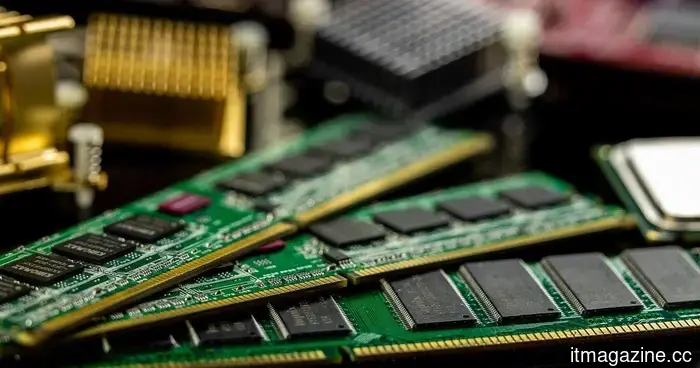
Why RAM Prices Are High in 2026 — And What PC Buyers Need to Consider
If you've been considering a PC build or browsing pre-built systems, you've probably encountered the same issue: RAM prices are exceptionally high. In some instances, prices have surged by as much as 500%, pushing overall system costs up and making builds more difficult to justify.
This is not a temporary change. It’s the consequence of several simultaneous factors, most of which are related to the rapidly changing demand for memory.
The rise in RAM prices is primarily driven by AI demand.
The swift expansion of AI, especially large language models, has greatly boosted the demand for memory. These systems depend on RAM for both training and inference. Training benefits from quicker data access compared to traditional storage solutions, while inference requires memory to maintain ongoing conversations and provide context in real time.
Each user interaction with an AI model needs memory allocation, even if just for a short period. When that demand scales up across millions of users, the overall memory requirement increases substantially.
Larger AI models are further escalating memory needs.
The increase in demand isn't merely due to more users engaging with AI; it's also because the AI models themselves necessitate more memory.
Context windows, which define how much information a model can process simultaneously, have significantly expanded. While high-end systems used to handle around 200,000 tokens, newer models are now exceeding one million. This change directly raises the memory required for every interaction.
Consumer RAM is competing with AI infrastructure.
Although consumer PCs do not utilize the same type of memory as AI data centers, they depend on the same production ecosystem.
AI systems utilize high bandwidth memory (HBM), which is faster and meant for large-scale workloads. However, HBM relies on the same silicon wafers, manufacturing facilities, and supply chains used for producing standard DRAM for consumer RAM modules.
As AI companies are prepared to pay higher prices, manufacturers are focusing on that demand, which reduces the availability of products for consumers.
Supply constraints are tightening the market.
On the supply side, there are only three major manufacturers: Micron, SK Hynix, and Samsung. This concentration limits the speed at which production can be scaled.
Micron has shifted its focus away from consumer RAM by closing its Crucial brand, reallocating resources to meet AI demand. Meanwhile, SK Hynix has reportedly sold out its production capacity for 2026, further limiting supply.
These constraints create a clear imbalance between supply and demand, pushing prices higher.
Why RAM prices might not decrease soon.
Even with plans to expand production capacity, these changes will take time. New fabrication plants take years to construct and become operational.
Current expectations indicate that substantial increases in supply may not reach consumers until 2027 or 2028. In the meantime, some projections suggest that prices could rise further, potentially by another 100% from current levels.
This makes the immediate outlook uncertain for buyers seeking quick relief.
There are early signs that demand might ease.
Some recent developments could alleviate pressure on the market, but they are still in the early stages.
Google has introduced a method called TurboQuant AI compression, which aims to reduce the memory requirements of AI models by up to six times. If similar techniques become more widely adopted, they could lower overall memory demand in data centers.
Market reactions to this announcement show that manufacturers are paying attention, although the long-term impact is still uncertain.
What PC builders should do at this moment.
For buyers, the choice depends on their priorities and timing.
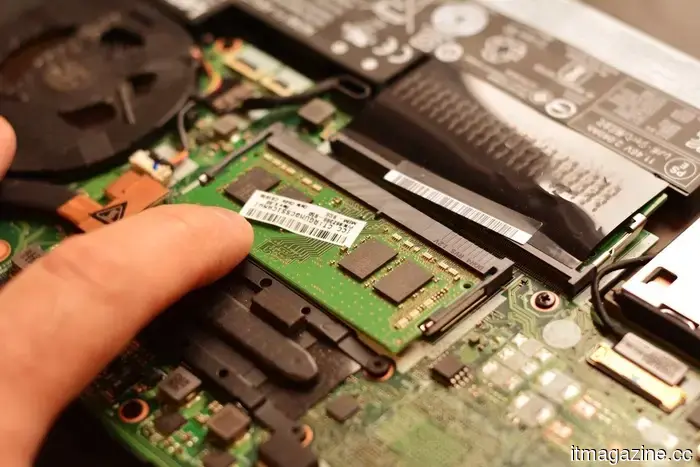
If cost is the primary concern, building on older platforms that use DDR4 memory is currently the most practical choice. DDR4 remains more affordable and is still readily available, especially in the second-hand market.
For those aiming for a high-end build with the latest components, waiting may not lead to better pricing in the near future. In fact, prices could increase further before stabilizing, making it difficult to predict the best time to make a purchase.
Will RAM prices ever return to previous levels?
Even if supply improves, RAM prices may not revert to former lows.
Markets typically recalibrate after sustained demand surges, particularly when higher pricing becomes normalized among both manufacturers and consumers. With AI continuing to create substantial demand and companies favoring higher-margin enterprise clients, baseline memory costs are likely to remain elevated compared to previous years.
Prices may decrease from their current extremes as new production capacity becomes available, but a complete return to pre-surge levels appears unlikely in the near future.
Other articles
 DeepSeeek V4 has been released, highlighting some groundbreaking victories against Gemini, ChatGPT, and Claude.
DeepSeek V4-Pro achieves a score of 3,206 on Codeforces, surpassing GPT-5.4 and Gemini, and is priced at $3.48 per million tokens compared to Claude's $25, positioning it as one of the most competitively priced frontier-class AI launches of 2026.
DeepSeeek V4 has been released, highlighting some groundbreaking victories against Gemini, ChatGPT, and Claude.
DeepSeek V4-Pro achieves a score of 3,206 on Codeforces, surpassing GPT-5.4 and Gemini, and is priced at $3.48 per million tokens compared to Claude's $25, positioning it as one of the most competitively priced frontier-class AI launches of 2026.
 How Denis Brovarnyy is bridging the AI skills gap through practical training.
Denis Brovarnyy established AIT Technology School to close the divide between education and practical AI employment. His approach emphasizes implementation rather than theory.
How Denis Brovarnyy is bridging the AI skills gap through practical training.
Denis Brovarnyy established AIT Technology School to close the divide between education and practical AI employment. His approach emphasizes implementation rather than theory.
Why RAM Prices Are High in 2026 — And What PC Buyers Need to Consider
RAM prices have increased significantly due to the demand from AI and supply limitations. Here’s an overview of the reasons for the rise, potential duration, and advice for PC builders moving forward.