
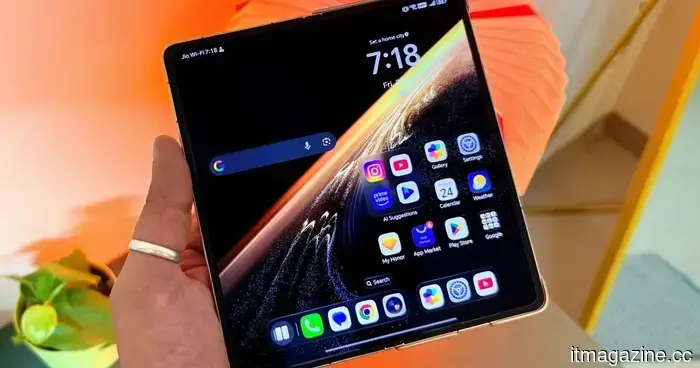
I recently transitioned to my first large foldable device, and I now understand the attraction.
For a long time, I viewed foldable phones as solutions without a real problem to solve. They tend to be costly, fragile, and often appear to be exerting extra effort to validate their existence. Although I've admired the engineering involved, I never understood how they would enhance my everyday life. To me, a standard flat phone seemed more practical — simpler, less expensive, and sufficient for nearly everything.
I was never particularly enthusiastic about foldables.
My skepticism partly stemmed from previous experiences. I had tested flip-style foldables and they didn't leave a favorable impression. The battery life of my Galaxy Z Flip 3 constantly worried me, making me hesitate to leave home without a charger.
Then there was the Motorola Razr+ 2023, which I managed to damage without even noticing how it happened. After those experiences, I dismissed foldables as merely an intriguing experiment that wasn't suited for me — and I had valid reasons for that.
What changed my perspective
It took a few years of closely monitoring the advancements in this technology, numerous discussions with colleagues brave enough to use a foldable daily, and watching an excessive number of durability test videos. However, the real turning point came when I finally decided to try a large, book-style foldable: the Honor Magic V6.
I anticipated more of the same compromises, but my opinion shifted quite quickly.
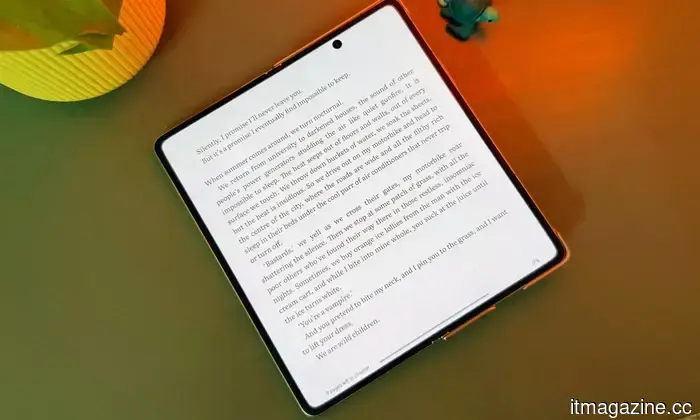
It won me over in subtle ways. Reading was the first aspect that resonated with me. I usually read on my phone during odd hours, often in short bursts that end up lasting longer than I intended. On a regular phone, reading can feel restrictive. You scroll more than necessary, and your eyes tire out quicker than expected.
On the foldable, it just felt better. The larger inner display allows the text to have ample space, making the experience feel more akin to holding a small book rather than peering into a narrow screen. I found myself reading for extended periods without realizing it, which clearly indicated that the device was enhancing my experience.
The next transformation was with video. While it doesn't compare to a TV or even a quality tablet, it makes casual viewing feel less like a compromise. Frames feel less restricted, subtitles are easier to read, and the overall experience is more immersive. Even considering the unavoidable black bars on some content, watching a movie on the larger screen was significantly more enjoyable than on my iPhone 16 Pro.
Choosing "one feature to rule them all" is challenging, but for me, it was multitasking on a book-style foldable phone. This is when the device stops feeling like just a novelty. Running two or even three apps side by side feels genuinely valuable.
The pivotal moment
With messages on one side and a browser or document on the other, notes open while I read in the Kindle app, or while a video plays on the left edge as I scroll through social media feeds.
I'm switching apps less frequently and maintaining my workflow more effectively. While the phone hasn’t fundamentally changed how I operate on the go, it has made completing tasks in real-time much less frustrating.
The compromises are still present
Despite this, my experience hasn’t been flawless. I still treat the device with extra care due to its price and fragile inner screen. The crease remains noticeable, and app optimization can be erratic, particularly in games where the user interface doesn't always adjust properly. At times, it still feels like a phone's UI stretched over a larger surface.
Nevertheless, the essential experience functions well. It enhances the activities I already engage in. Transitioning back to a standard phone now would feel like taking a step backward, even if opting for book-style foldables will end up being pricier than I would prefer. Thankfully, that’s an issue for my future self to deal with.


Other articles
 I've just moved to my first major foldable device, and I now understand the attraction.
After years of doubt and frustrating experiences with flip phones, transitioning to a book-style foldable finally resonated with me. Whether I'm reading books, watching videos, or multitasking, I've discovered that the larger screen enhances my daily activities in ways that are difficult to overlook.
I've just moved to my first major foldable device, and I now understand the attraction.
After years of doubt and frustrating experiences with flip phones, transitioning to a book-style foldable finally resonated with me. Whether I'm reading books, watching videos, or multitasking, I've discovered that the larger screen enhances my daily activities in ways that are difficult to overlook.
 The EU's efforts to enhance child safety have hit a roadblock as the ePrivacy derogation comes to an end, an age verification application has been compromised, and the CSA Regulation remains stalled in trilogue discussions.
The ePrivacy derogation ended on April 3, the EU age verification application was compromised in just minutes, and the CSA Regulation is still at a standstill. Europe's child protection measures rely on data that its privacy regulations prohibit.
The EU's efforts to enhance child safety have hit a roadblock as the ePrivacy derogation comes to an end, an age verification application has been compromised, and the CSA Regulation remains stalled in trilogue discussions.
The ePrivacy derogation ended on April 3, the EU age verification application was compromised in just minutes, and the CSA Regulation is still at a standstill. Europe's child protection measures rely on data that its privacy regulations prohibit.
 The future of vehicle diagnostics: Driving the transition to electric vehicles.
The global automotive sector is experiencing one of the most significant transformations in its history. The shift towards electrification is speeding up, emissions regulations are becoming stricter in key markets, and vehicles are quickly transitioning into software-defined platforms. However, alongside the focus on electric vehicles (EVs), another change is subtly altering the automotive ecosystem: the advancement of vehicle diagnostics. Rather [...]
The future of vehicle diagnostics: Driving the transition to electric vehicles.
The global automotive sector is experiencing one of the most significant transformations in its history. The shift towards electrification is speeding up, emissions regulations are becoming stricter in key markets, and vehicles are quickly transitioning into software-defined platforms. However, alongside the focus on electric vehicles (EVs), another change is subtly altering the automotive ecosystem: the advancement of vehicle diagnostics. Rather [...]
 The era of unsightly solar panels may finally be behind us. Welcome the vibrant artistic tiles!
Scientists at Germany's Fraunhofer Institute have created ShadeCut, a technology that uses patterned colored films on solar panels to resemble roof tiles, bricks, or personalized designs.
X-Energy secures $1.02 billion in a historic nuclear initial public offering, with the Amazon-supported reactor developer experiencing a 31% jump upon its debut on Nasdaq.
X-Energy's IPO of $1.02 billion saw demand that was 15 times greater than the shares available and was priced 21% higher than its initial range. This is notable given that the same company was unable to secure a SPAC deal at $1 billion in 2023. The demand for AI data centers has significantly altered the landscape.
The era of unsightly solar panels may finally be behind us. Welcome the vibrant artistic tiles!
Scientists at Germany's Fraunhofer Institute have created ShadeCut, a technology that uses patterned colored films on solar panels to resemble roof tiles, bricks, or personalized designs.
X-Energy secures $1.02 billion in a historic nuclear initial public offering, with the Amazon-supported reactor developer experiencing a 31% jump upon its debut on Nasdaq.
X-Energy's IPO of $1.02 billion saw demand that was 15 times greater than the shares available and was priced 21% higher than its initial range. This is notable given that the same company was unable to secure a SPAC deal at $1 billion in 2023. The demand for AI data centers has significantly altered the landscape.
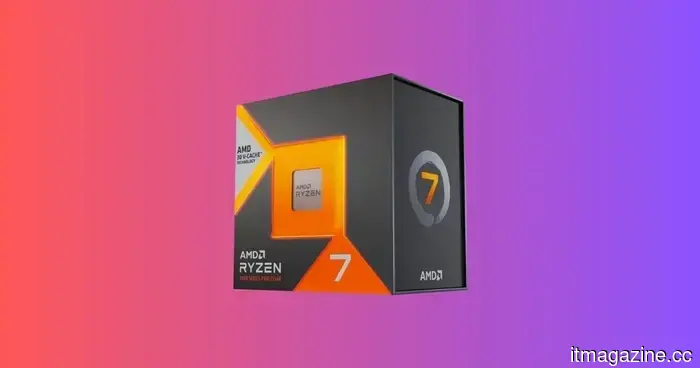 One of the top gaming CPUs ever produced has just seen a price drop of $60: the AMD Ryzen 7 7800X3D is now available for $388.
Since its release, the AMD Ryzen 7 7800X3D has consistently ranked as the top gaming CPU, and currently priced at $388.98, it is $60 lower than its original list price of $449. For those constructing or enhancing an AM5 system with a focus on gaming performance, the Ryzen 7 7800X3D continues to be the ideal processor, and this discount makes the […]
One of the top gaming CPUs ever produced has just seen a price drop of $60: the AMD Ryzen 7 7800X3D is now available for $388.
Since its release, the AMD Ryzen 7 7800X3D has consistently ranked as the top gaming CPU, and currently priced at $388.98, it is $60 lower than its original list price of $449. For those constructing or enhancing an AM5 system with a focus on gaming performance, the Ryzen 7 7800X3D continues to be the ideal processor, and this discount makes the […]
I recently transitioned to my first large foldable device, and I now understand the attraction.
After years of doubt and letdowns with flip phones, transitioning to a book-style foldable finally made sense for me. Whether I'm reading books, watching videos, or multitasking, the larger screen has significantly enhanced my daily usage in ways that are difficult to overlook.