
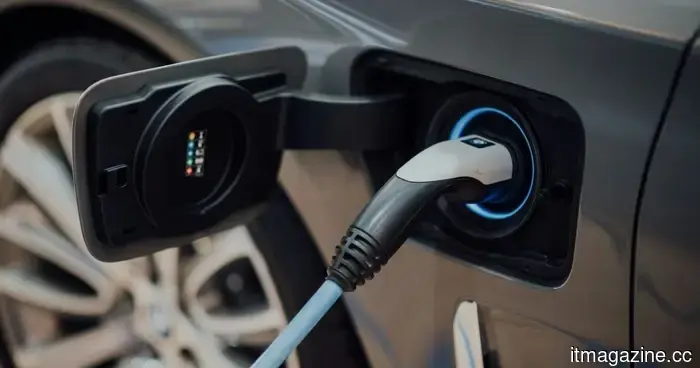
The future of vehicle diagnostics: Driving the transition to electric vehicles.
The global automotive sector is undergoing one of the most significant transformations in its history. Electrification is speeding up, emissions regulations are becoming stricter in key markets, and vehicles are quickly turning into software-defined platforms.
However, beyond the news about electric vehicles (EVs), another shift is subtly transforming the automotive landscape: the advancement of vehicle diagnostics.
Instead of a straightforward shift from internal combustion engines (ICE) to electric propulsion, the industry is entering a dual-technology era where advanced ICE vehicles and rapidly developing EV architectures coexist. This scenario is altering the expectations for technicians, workshops, and the diagnostic tools they use.
In this context, diagnostics has evolved beyond mere troubleshooting. It has become a fundamental infrastructure layer of contemporary automotive maintenance, enabling technicians to analyze the vast amounts of data generated by today's vehicles.
ICE Vehicles: More Digital Than Ever
Despite the swift rise of electrification, ICE vehicles will continue to represent a significant portion of the global fleet for the foreseeable future. The International Energy Agency reports that the global vehicle fleet has surpassed 1.4 billion vehicles, with ICE and hybrid vehicles expected to make up more than half of this fleet well into the 2030s (IEA, 2024).
Simultaneously, combustion vehicles have developed well beyond their mechanical foundations.
In the early 1990s, an average vehicle was equipped with fewer than 10 electronic control units (ECUs). In contrast, today’s modern passenger vehicles typically feature 70–150 ECUs, with high-end models often exceeding 200 control modules overseeing powertrain functions, safety systems, infotainment, and connectivity (McKinsey & Company, 2023).
These systems utilize increasingly advanced in-vehicle networks such as CAN, LIN, FlexRay, and Automotive Ethernet, creating intricate electronic architectures that must work cohesively for safe vehicle operation.
Several factors are contributing to this rise in electronic complexity:
- Stricter global emissions regulations, such as Euro 6 and the upcoming Euro 7 standards
- Widespread implementation of Advanced Driver Assistance Systems (ADAS)
- More sophisticated engine and transmission management strategies
- Connected infotainment, telematics, and over-the-air software systems
ADAS technologies, in particular, have altered service procedures. Components like radar sensors, cameras, and ultrasonic systems require precise calibration for proper functioning. Even routine repairs, like replacing a windshield or fixing a bumper, may necessitate advanced calibration processes supported by professional diagnostic tools.
At the same time, vehicles are producing unprecedented amounts of operational data. Connected cars can generate up to 25 gigabytes of data per hour from their sensors and control systems. For technicians, this indicates that conventional troubleshooting approaches are no longer adequate. Basic code readers lack the capability to interpret encrypted gateways, cross-module interactions, or advanced communication protocols.
Modern diagnostic platforms must now accommodate:
- Comprehensive multi-system scanning across numerous ECUs
- Real-time sensor and parameter analysis
- Module coding and software updates
- Secure access to manufacturer-protected systems
In summary, contemporary ICE vehicles have transformed into digital ecosystems on wheels, necessitating diagnostic tools capable of navigating increasingly intricate electronic architectures.
EVs Present a New Diagnostic Framework
While ICE vehicles are becoming more electronically advanced, EVs introduce a brand-new diagnostic structure focused on high-voltage energy systems and battery management. The uptake of EVs has surged dramatically. According to the International Energy Agency, worldwide EV sales surpassed 14 million units in 2023, expanding the global EV fleet to over 40 million vehicles (IEA, 2024).
Unlike combustion vehicles, EV diagnostics emphasize monitoring electrical and electrochemical systems rather than combustion processes or emissions management.
Key EV subsystems that require diagnostic monitoring comprise:
- High-voltage lithium-ion battery packs
- Battery Management Systems (BMS)
- Electric motor controllers and inverters
- Onboard chargers and DC-DC converters
- Battery thermal management systems
Most EV platforms operate on 400-volt architectures, while next-generation systems are moving towards 800-volt platforms to facilitate quicker charging and improved efficiency (Deloitte, 2023). The complexity of battery packs is significant; a single EV battery may consist of thousands of lithium-ion cells organized into modules, each continuously monitored by the BMS to ensure safe operation and maintain balanced performance.
Consequently, EV diagnostics focuses on indicators such as:
- State of Charge (SOC) – real-time energy availability
- State of Health (SOH) – long-term battery deterioration
- Cell voltage balancing
- Thermal management efficiency
Additionally, EV powertrains are predominantly software-controlled. Many service issues arise not from hardware malfunctions but from software calibration discrepancies, firmware bugs, or communication failures among control modules.
This transition signals a wider change in the automotive industry. As noted by McKinsey & Company: “The vehicle is rapidly becoming a software-defined platform, where functionality is increasingly dictated by software rather than hardware.”
For workshops and technicians, this implies that diagnostics must increasingly incorporate electrical
Other articles
 The future of vehicle diagnostics: Facilitating the shift to electric vehicles
The global automotive sector is undergoing one of the most significant transformations in its history. The shift towards electrification is gaining momentum, emissions standards are becoming more stringent in key markets, and vehicles are swiftly transitioning into software-defined platforms. However, in addition to the attention on electric vehicles (EVs), a quieter transformation is taking place that is redefining the automotive landscape: the advancement of vehicle diagnostics.
The future of vehicle diagnostics: Facilitating the shift to electric vehicles
The global automotive sector is undergoing one of the most significant transformations in its history. The shift towards electrification is gaining momentum, emissions standards are becoming more stringent in key markets, and vehicles are swiftly transitioning into software-defined platforms. However, in addition to the attention on electric vehicles (EVs), a quieter transformation is taking place that is redefining the automotive landscape: the advancement of vehicle diagnostics.
 The EU's initiative for child safety has hit a roadblock as the ePrivacy derogation has lapsed, an age verification application was compromised, and the CSA Regulation is stalled in trilogue discussions.
The ePrivacy derogation ended on April 3, the EU age verification application was compromised within minutes, and the CSA Regulation is still at a standstill. Europe's child safety measures require the data that its privacy regulations prohibit.
The EU's initiative for child safety has hit a roadblock as the ePrivacy derogation has lapsed, an age verification application was compromised, and the CSA Regulation is stalled in trilogue discussions.
The ePrivacy derogation ended on April 3, the EU age verification application was compromised within minutes, and the CSA Regulation is still at a standstill. Europe's child safety measures require the data that its privacy regulations prohibit.
 The Fire TV Stick HD has quietly launched along with an adapter, but it's not fully prepared for prime usage.
Amazon's latest Gigabit Ethernet Adapter appears to be an enhancement for the Fire TV Stick HD, but there's an important hardware detail to consider.
The Fire TV Stick HD has quietly launched along with an adapter, but it's not fully prepared for prime usage.
Amazon's latest Gigabit Ethernet Adapter appears to be an enhancement for the Fire TV Stick HD, but there's an important hardware detail to consider.
 One of the top gaming CPUs ever produced has just seen a price drop of $60: the AMD Ryzen 7 7800X3D is now available for $388.
Since its release, the AMD Ryzen 7 7800X3D has consistently ranked as the top gaming CPU, and currently priced at $388.98, it is $60 lower than its original list price of $449. For those constructing or enhancing an AM5 system with a focus on gaming performance, the Ryzen 7 7800X3D continues to be the ideal processor, and this discount makes the […]
One of the top gaming CPUs ever produced has just seen a price drop of $60: the AMD Ryzen 7 7800X3D is now available for $388.
Since its release, the AMD Ryzen 7 7800X3D has consistently ranked as the top gaming CPU, and currently priced at $388.98, it is $60 lower than its original list price of $449. For those constructing or enhancing an AM5 system with a focus on gaming performance, the Ryzen 7 7800X3D continues to be the ideal processor, and this discount makes the […]
 I've just moved to my first major foldable device, and I now understand the attraction.
After years of doubt and frustrating experiences with flip phones, transitioning to a book-style foldable finally resonated with me. Whether I'm reading books, watching videos, or multitasking, I've discovered that the larger screen enhances my daily activities in ways that are difficult to overlook.
I've just moved to my first major foldable device, and I now understand the attraction.
After years of doubt and frustrating experiences with flip phones, transitioning to a book-style foldable finally resonated with me. Whether I'm reading books, watching videos, or multitasking, I've discovered that the larger screen enhances my daily activities in ways that are difficult to overlook.
 The value of the US government's stake in Intel has reached $36 billion. This outcome was not part of any plans made in Washington.
The U.S. government’s 9.9% stake in Intel, obtained for $8.9 billion through converted CHIPS Act funds, has risen in value to $36 billion following a surge in Q1 earnings. There is currently no exit strategy in place.
The value of the US government's stake in Intel has reached $36 billion. This outcome was not part of any plans made in Washington.
The U.S. government’s 9.9% stake in Intel, obtained for $8.9 billion through converted CHIPS Act funds, has risen in value to $36 billion following a surge in Q1 earnings. There is currently no exit strategy in place.
The future of vehicle diagnostics: Driving the transition to electric vehicles.
The global automotive sector is experiencing one of the most significant transformations in its history. The shift towards electrification is speeding up, emissions regulations are becoming stricter in key markets, and vehicles are quickly transitioning into software-defined platforms. However, alongside the focus on electric vehicles (EVs), another change is subtly altering the automotive ecosystem: the advancement of vehicle diagnostics. Rather [...]