
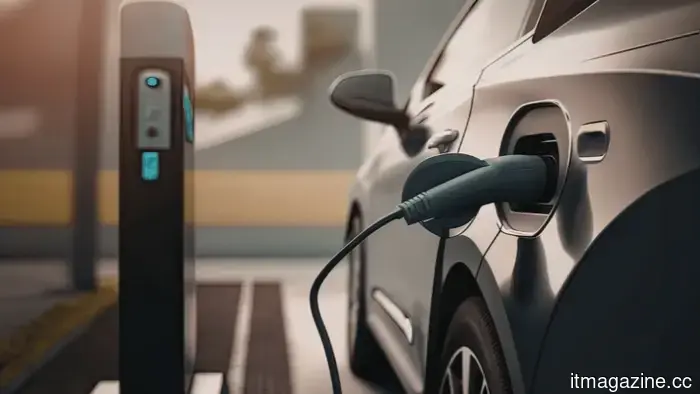
Chinese electric vehicle reviews are surging on US TikTok and YouTube, as the 100% tariffs do not hinder the demand for BYD, Xiaomi, and Zeekr.
The United States has placed 100% tariffs on Chinese electric vehicles (EVs) to prevent their entry into the American market. However, platforms like TikTok and YouTube are undermining that strategy. A recent survey from AlixPartners, which included 9,000 potential EV buyers, revealed that 58% had encountered Chinese EVs on TikTok, 76% of those aged 18 to 25 were aware of Chinese EV brands, and 69% of Gen Z car shoppers reported they were “more likely” to consider purchasing one. The vehicles they are seeing are not currently available in the U.S., yet interest continues to rise.
According to Bloomberg on Monday, reviews of vehicles from BYD, Xiaomi, and Zeekr are dominating American social media, with content creators noting that any reference to a Chinese car triggers increased engagement. “The moment I talk about a Chinese car, the views on my videos soar,” one creator shared with Bloomberg. A video titled “I drove the cheap Chinese cars that are illegal in the USA. Now I know why” has garnered nearly two million views. This trend aligns with a broader cultural shift among Gen Z, referred to as “Chinamaxxing,” showcasing Chinese infrastructure, tech, and consumer goods, which Fortune characterized as more of a critique of America than an endorsement of Beijing.
What Americans are observing
The reviews are clear and assertive. Marques Brownlee, a leading tech YouTuber in the U.S., tested the Xiaomi SU7 Max for two weeks and described it as “a $42,000 car that feels like a $75,000 car,” highlighting cabin technology that makes Western EV infotainment appear outdated. InsideEVs tested the BYD Seagull in Suzhou, calling the $8,000 car “scary good,” stating it “didn’t feel cheap or bad at all.” Their critique of the Zeekr 007, a competitor to the Tesla Model 3 costing $36,000, was more straightforward: “This shows we’re done.” After evaluating a dozen Chinese EVs, InsideEVs concluded simply: “Western automakers are done for.”
The specific models driving this engagement vary from the BYD Yangwang U9, a $250,000 electric hypercar that can physically jump, which went viral when YouTube creator IShowSpeed tried to purchase one during a tour in China that attracted eight million concurrent viewers; to the BYD Seagull, an affordable small EV that does not exist in the American market. Xiaomi’s SU7 Ultra has achieved the Nurburgring record as the fastest electric executive car at 7:04.957. Zeekr’s 7X, a luxury SUV starting at $38,014, led one reviewer to declare, “Everything will change from here on out.”
The price disparity is striking. The average price of a new car in the U.S. exceeds $48,000, while Chinese manufacturers are providing feature-rich EVs priced between $8,000 and $42,000, with technology, build quality, and performance consistently rated on par with or surpassing Western models that cost twice as much.
The framework behind the content
The surge in social media attention is driven both organically and through infrastructure. The organic aspect is genuine: IShowSpeed’s interest during his China tour stemmed from his natural curiosity, American dissatisfaction with car prices is authentic, and creators report that Chinese car content simply performs better on platforms. However, there exists a systematic content pipeline as well.
DCar Studio, the main operation facilitating test drives of Chinese EVs for American influencers in Los Angeles, is the U.S. branch of Dongchedi, a Chinese automotive trading and content platform with 35.7 million monthly active users. Dongchedi, which operates under ByteDance, the parent company of TikTok, received $600 million in funding at a valuation of $3 billion in 2024. In November, Electrek published an article titled “We tested these 4 Chinese EVs you can’t buy in the US (but don’t ask us how),” acknowledging DCar Studio for the opportunity. This means that a company owned by the same Chinese conglomerate that oversees TikTok is systematically supplying American creators with Chinese EV content, which they then disseminate on TikTok. AlixPartners automotive consultant Dan Hearsch identified “the TikTok problem” as a potential national security risk.
The statistics behind the brands
In 2025, BYD sold 2.26 million battery electric vehicles, surpassing Tesla’s 1.64 million and becoming the leading EV seller globally for the first time. The company exported 1.04 million vehicles and aims to achieve 1.3 to 1.6 million international sales in 2026. BYD is also establishing factories in Hungary, Brazil, Turkey, and Thailand, and has sold over one million Seagull vehicles
Other articles
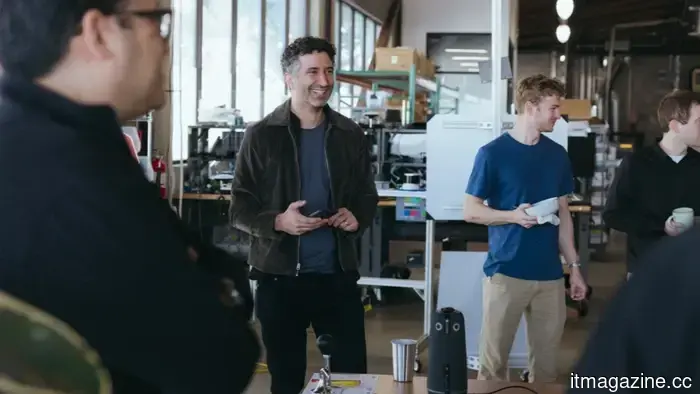 Humble secures $24 million to develop a truck without a cab that runs on electric power.
Humble has come out of stealth mode with a $24 million seed funding round and has introduced the Humble Hauler, an electric autonomous truck without cables, created for dock-to-dock freight transportation.
Humble secures $24 million to develop a truck without a cab that runs on electric power.
Humble has come out of stealth mode with a $24 million seed funding round and has introduced the Humble Hauler, an electric autonomous truck without cables, created for dock-to-dock freight transportation.
 Prego set aside the pasta and created a $20 gadget to capture your family meals.
Prego has dedicated years to perfecting the sauce that gathers families around the table. Now, it aims to capture the moments that unfold when they arrive — which could be seen as either genuinely heartwarming or somewhat unusual, depending on the nature of your family dinners.
Prego set aside the pasta and created a $20 gadget to capture your family meals.
Prego has dedicated years to perfecting the sauce that gathers families around the table. Now, it aims to capture the moments that unfold when they arrive — which could be seen as either genuinely heartwarming or somewhat unusual, depending on the nature of your family dinners.
 Eight Sleep Pod review: Can improved sleep enhance your life?
The Eight Sleep Pod, featuring adjustable temperature control and biometric monitoring, is a premium investment that greatly enhances sleep quality.
Eight Sleep Pod review: Can improved sleep enhance your life?
The Eight Sleep Pod, featuring adjustable temperature control and biometric monitoring, is a premium investment that greatly enhances sleep quality.
 Season 5 of The Boys has been released, and the series remains a commentary on contemporary America.
While The Boys focuses on superheroes, the popular Prime Video series has never seemed more reflective of real-world America than it does with the release of season 5.
Season 5 of The Boys has been released, and the series remains a commentary on contemporary America.
While The Boys focuses on superheroes, the popular Prime Video series has never seemed more reflective of real-world America than it does with the release of season 5.
 Finally, Microsoft will save you from the embarrassment of raising your hand unintentionally in Teams.
One of the most frequent frustrations in Teams is accidentally clicking Raise Hand instead of sending an emoji reaction, but Microsoft is finally addressing this issue.
Finally, Microsoft will save you from the embarrassment of raising your hand unintentionally in Teams.
One of the most frequent frustrations in Teams is accidentally clicking Raise Hand instead of sending an emoji reaction, but Microsoft is finally addressing this issue.
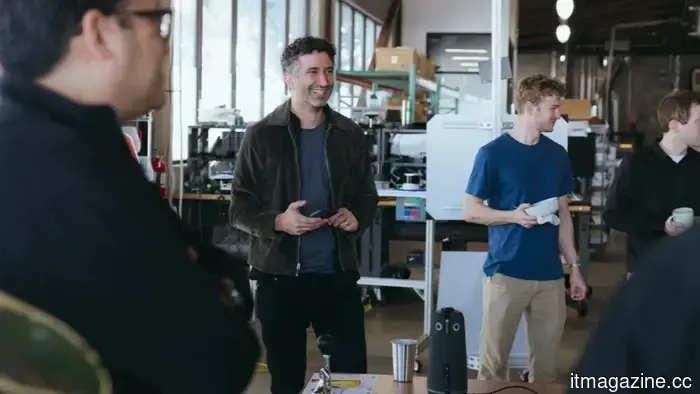 Humble secures $24 million to develop a cabless electric truck.
Humble has come out of stealth mode with a $24 million seed funding round and has introduced the Humble Hauler, an electric autonomous truck without cables, specifically designed for dock-to-dock freight transport.
Humble secures $24 million to develop a cabless electric truck.
Humble has come out of stealth mode with a $24 million seed funding round and has introduced the Humble Hauler, an electric autonomous truck without cables, specifically designed for dock-to-dock freight transport.
Chinese electric vehicle reviews are surging on US TikTok and YouTube, as the 100% tariffs do not hinder the demand for BYD, Xiaomi, and Zeekr.
58% of electric vehicle purchasers in the US have come across Chinese cars on TikTok, while 69% of Gen Z is open to the idea of buying one. The flow of content is facilitated by ByteDance. While tariffs hinder supply, they do not impede attention.