

Steam is essentially a monopoly in the PC gaming market, so why isn't there any outrage?
Open any gaming PC, and you're likely to find the blue Steam icon prominently displayed on the desktop. It's not hidden or optional; it's practically expected. Over the years, Steam has evolved from just another launcher into the primary storefront for PC gaming, becoming almost a built-in aspect of the experience.
The Monopoly No One Talks About
According to various estimates, including QuantumRun and IconEra, Steam holds around 70 to 80% of the PC digital distribution market. This isn't just a strong lead; it's nearly complete dominance. Additionally, it adheres to the familiar 30% revenue cut model, with discounts available at higher sales tiers. This same structure is employed by companies like Apple and Google, and it has faced criticism from developers for years.
In fact, a previous GDC survey showed that only 6% of developers believe Steam justifies its 30% cut. On the surface, this illustrates classic signs of a monopoly: significant market share, standard fees, and a platform that is deeply ingrained in user habits. Typically, these traits would spark backlash in most industries. However, the situation in PC gaming is quite different.
“Valve is the only major store still holding onto the payment tie and 30% junk fee,” – Tim Sweeney, CEO, Epic Games.
Interestingly, Steam is not alone in the market. The Epic Games Store made a bold entrance with a much lower revenue cut of 12% and a regular offering of free games, including major titles that usually have higher price tags. Microsoft did something similar in 2021, reducing the Windows Store fee from 30% to 12% for developers.
While that appears to be a winning strategy, there’s also Microsoft with its Xbox app and Game Pass, which has established a solid foothold in the subscription market. Publishers like Ubisoft and Electronic Arts have also sought to draw users to their own launchers to manage distribution and revenue.
Varun Mirchandani / Digital Trends
Despite this competition, user behavior has not changed significantly. Gamers claim their free games on Epic, install additional launchers when necessary, and utilize Game Pass for certain titles. Yet, when it comes to purchasing games and building a library, they overwhelmingly return to Steam. The competition exists, but it hasn’t made a meaningful impact on user habits.
Steam has encountered its share of challenges
It's not entirely accurate to say Steam has had a trouble-free journey. There have been instances where the community voiced strong dissent. Prior to 2015, the absence of a proper refund system was a significant concern, prompting Valve to establish the now-standard two-hour refund policy.
Similarly, the paid mods initiative for “The Elder Scrolls V: Skyrim” resulted in a considerable backlash, leading to a quick reversal. Developers have expressed worries about issues like discoverability, visibility, and the contentious 30 percent revenue cut, which remains a debated subject even today.
Steam
However, an interesting trend emerges: these controversies create noise, Valve responds or adapts, and things eventually calm down. There has never been a widespread migration away from Steam due to these issues. Despite complaints, users tend to stick around. This cycle has occurred often enough to become part of the platform’s identity.
Why Gamers Don’t Mind
The simplest and most significant reason is that Steam functions effectively. This goes beyond merely launching games; it encompasses the entire PC gaming experience as a cohesive ecosystem. Let's start with performance and reliability.
Steam's servers rank among the most reliable in the industry.
Downloads are quick, updates are managed smoothly, and outages are infrequent. While the client isn't the lightest software available, it is stable, predictable, and rarely becomes an obstacle. This alone gives it an advantage over various competing launchers that still grapple with basic usability.
Steam Server Status SteamStat.US
Then there’s the feature set, where Steam quietly surpasses all others. Cloud saves have been a standard feature for years. While achievements are relatively simple, they are deeply integrated within the platform. The Steam Workshop makes modding accessible to even casual players by turning complex installations into simple, one-click processes.
Remote Play allows users to stream games to other devices or even play co-op with friends who don’t own the games. Controller support is another highlight, enabling players to customize inputs in ways that most platforms do not attempt.
Steam
Over time, these features begin to feel essential rather than simply additional. Even Steam Chat is regaining popularity as an effective alternative to Discord since the latter has started requiring ID verification. This is where competitors face challenges.
The Epic Games Store might provide more favorable revenue terms for developers, but it still lacks many features that contribute to a cohesive ecosystem. The Xbox app excels in subscription services but fails to offer the same sense of ownership or permanence.
Other launchers serve as tools, while Steam feels like a home.
Steam
Sales play a significant role as well. Steam’s seasonal events have transformed into culturally significant moments


Other articles
 A Google Pixel laptop could be in the works, but is there really a demand for it?
A new Google Pixel laptop may be under development, but past experiences, increasing hardware expenses, and the presence of a $599 MacBook Neo indicate it could fail to launch successfully.
A Google Pixel laptop could be in the works, but is there really a demand for it?
A new Google Pixel laptop may be under development, but past experiences, increasing hardware expenses, and the presence of a $599 MacBook Neo indicate it could fail to launch successfully.
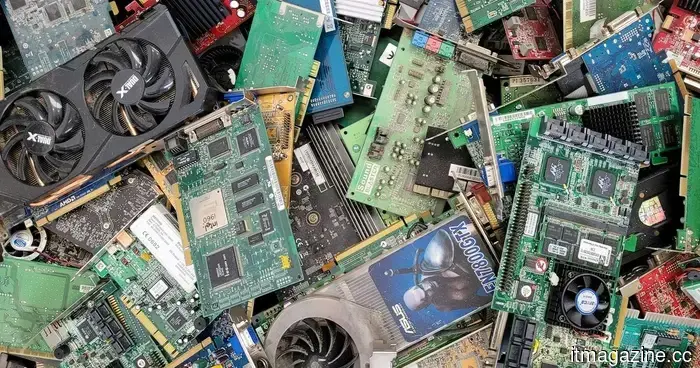 As if the situation wasn't challenging enough, AI is set to exacerbate the global e-waste problem.
The expansion of AI may result in an additional 5 million metric tons of electronic waste by 2030, due to swift hardware upgrades and the growth of data centers elevating environmental effects.
As if the situation wasn't challenging enough, AI is set to exacerbate the global e-waste problem.
The expansion of AI may result in an additional 5 million metric tons of electronic waste by 2030, due to swift hardware upgrades and the growth of data centers elevating environmental effects.
 I’ve started using “Ask Maps,” and it has completely transformed my experience with Google Maps.
I've begun using this AI feature on Google Maps, and I truly can't return to the traditional method now.
I’ve started using “Ask Maps,” and it has completely transformed my experience with Google Maps.
I've begun using this AI feature on Google Maps, and I truly can't return to the traditional method now.
 The App Store is alive with new applications in 2026, and it appears that AI is playing a significant role in this development.
The number of app launches is rapidly increasing worldwide as AI tools simplify the process for creators to develop and release mobile applications.
The App Store is alive with new applications in 2026, and it appears that AI is playing a significant role in this development.
The number of app launches is rapidly increasing worldwide as AI tools simplify the process for creators to develop and release mobile applications.
 A humanoid robot outperformed the human half-marathon world record by 7 minutes during a race in Beijing, which featured 112 teams.
Honor's Lightning robot finished the Beijing half-marathon in 50:26, surpassing the human record of 57:20, while 112 teams and over 300 robots highlighted China's $138 billion humanoid sector.
A humanoid robot outperformed the human half-marathon world record by 7 minutes during a race in Beijing, which featured 112 teams.
Honor's Lightning robot finished the Beijing half-marathon in 50:26, surpassing the human record of 57:20, while 112 teams and over 300 robots highlighted China's $138 billion humanoid sector.
.jpg) The top films available on Amazon Prime Video (April 2026)
This month's top films on Amazon Prime Video feature Crime 101, Pretty Lethal, The Menu, Super 8, The Great Escape, Sinners, and several others.
The top films available on Amazon Prime Video (April 2026)
This month's top films on Amazon Prime Video feature Crime 101, Pretty Lethal, The Menu, Super 8, The Great Escape, Sinners, and several others.
Steam is essentially a monopoly in the PC gaming market, so why isn't there any outrage?
Open any gaming PC, and you're likely to find the blue Steam icon prominently displayed on the desktop. It's not tucked away, nor is it merely an option; it's almost a given. Over time, Steam has evolved from being simply another launcher to becoming the primary storefront for PC gaming, effectively integrated into the overall experience. The Monopoly Nobody [...]