

Steam essentially operates as a monopoly in the PC gaming market, so why isn't there any outrage?
If you open any gaming PC, the blue Steam icon is likely visible right on the desktop. It’s not hidden or seen as optional; it's almost considered a standard. Over time, Steam has evolved from a mere launcher into the primary storefront for PC gaming, almost appearing as an integrated component of the gaming experience.
The Silent Monopoly
Estimates from sources like QuantumRun and IconEra suggest that Steam controls approximately 70% to 80% of the PC digital distribution market. This isn't just a strong lead; it's near total control. It employs the familiar 30% revenue cut model, with reductions for reaching higher sales thresholds. This structure is similar to those of Apple and Google and has faced criticism from developers for years.
A prior GDC survey showed that only 6% of developers believe Steam deserves its 30% cut. On paper, this fits the description of a monopoly: high market share, a standardizing fee, and a platform deeply ingrained in user practices. In most sectors, this would lead to backlash. However, something quite different has occurred in PC gaming.
“Valve is the only major store still clinging to the payment tie and 30% nonsense fee” – Tim Sweeney, CEO, Epic Games
What’s intriguing is that Steam is not the only player in this space. The Epic Games Store aggressively entered the market with a significantly lower 12% revenue share and consistently offers free games, including high-profile titles that usually would cost a substantial amount. Microsoft also took action in 2021 by reducing the Windows Store fee from 30% to 12% for developers.
This sounds like a winning approach. Additionally, Microsoft’s Xbox app and Game Pass have established a robust presence in the subscription sector. Publishers like Ubisoft and Electronic Arts have also attempted to draw users to their own launchers to manage distribution and revenue.
Varun Mirchandani / Digital Trends
Despite this, user behavior has not changed significantly. Players claim their free games on Epic and install other launchers as needed, using Game Pass for specific titles. However, when it comes to purchasing games and building a collection, they consistently revert to Steam. Competition exists, but it hasn't meaningfully shifted habits.
Steam Has Faced Challenges
It's important to note that Steam has experienced its share of difficulties. There have been instances of significant community backlash. Before 2015, the absence of a proper refund system was a notable complaint, which ultimately prompted Valve to implement the now-standard two-hour refund policy.
Similarly, the paid mods trial for “The Elder Scrolls V: Skyrim” generated substantial negative feedback, leading to a swift reversal. Developers have voiced concerns about discoverability, visibility, and, naturally, the ongoing debate regarding the 30% revenue cut.
Steam
Yet an interesting trend emerges. These controversies generate noise, Valve adjusts in response, and eventually, things return to normal. There has never been a widespread migration away from Steam due to these challenges. People may voice complaints, but they remain loyal users. This cycle has recurred enough to become a fundamental aspect of the platform’s identity.
Why Gamers Don’t Mind
The simplest and perhaps most significant explanation is that Steam works. Not just for launching games, but in how it creates a cohesive ecosystem for PC gaming. Let's examine performance and reliability.
Steam's servers rank among the most reliable in the industry.
Downloads are quick, updates are smoothly managed, and outages are infrequent. Although the client is not the lightest software available, it remains stable, predictable, and seldom obstructive. This alone gives it an edge over several competitors that struggle with basic user-friendliness.
Steam Server Status SteamStat.US
Then there's the robust feature set, where Steam has quietly outpaced the competition. Cloud saves have been standard for years. Achievements, while straightforward, are well-integrated. The Steam Workshop simplifies modding, allowing casual players to navigate complex installations with one-click processes.
Remote Play enables users to stream games to other devices or play co-op with friends who don't own the game. Controller support is another highlight, enabling players to adjust inputs in ways most platforms do not even attempt.
Steam
Over time, these features evolve from being seen as extras to becoming perceived as necessities. Even Steam Chat is regaining popularity as a strong alternative to Discord, especially since Discord implemented ID verification. Competitors struggle with this aspect.
While the Epic Games Store may present more favorable revenue terms for developers, it lacks many of these ecosystem-level features. The Xbox app excels in terms of subscriptions but doesn't provide the same sense of ownership or permanence.
Other launchers come off as simply tools. Steam feels like home.
Steam
Sales also play a significant role. Steam's seasonal events have turned into major gaming moments. The Summer Sale and Winter Sale are not merely discount periods; they are events eagerly anticipated by players. They generate excitement comparable to Amazon’s Prime Day sales, if not exceeding it.
Deep discounts


Other articles
 I’ve started using “Ask Maps,” and it has completely transformed my experience with Google Maps.
I've begun using this AI feature on Google Maps, and I truly can't return to the traditional method now.
I’ve started using “Ask Maps,” and it has completely transformed my experience with Google Maps.
I've begun using this AI feature on Google Maps, and I truly can't return to the traditional method now.
 Robots recently completed the Beijing half-marathon at a speed faster than the current world record holder.
A robot created by Honor recently completed a half-marathon in Beijing in 50 minutes and 26 seconds, surpassing the human world record of 57 minutes.
Robots recently completed the Beijing half-marathon at a speed faster than the current world record holder.
A robot created by Honor recently completed a half-marathon in Beijing in 50 minutes and 26 seconds, surpassing the human world record of 57 minutes.
 A leak regarding the iPhone 18 Pro suggests a visually appealing color option that is already available on the Kindle.
A leak regarding the iPhone 18 Pro has unveiled a new Dark Cherry color, presenting a high-end, subdued appearance akin to Kindle devices, along with other understated color choices.
A leak regarding the iPhone 18 Pro suggests a visually appealing color option that is already available on the Kindle.
A leak regarding the iPhone 18 Pro has unveiled a new Dark Cherry color, presenting a high-end, subdued appearance akin to Kindle devices, along with other understated color choices.
 Robots recently completed the Beijing half-marathon quicker than the current world record holder.
A robot created by Honor recently completed a half-marathon in Beijing in 50 minutes and 26 seconds, surpassing the human world record of 57 minutes.
Robots recently completed the Beijing half-marathon quicker than the current world record holder.
A robot created by Honor recently completed a half-marathon in Beijing in 50 minutes and 26 seconds, surpassing the human world record of 57 minutes.
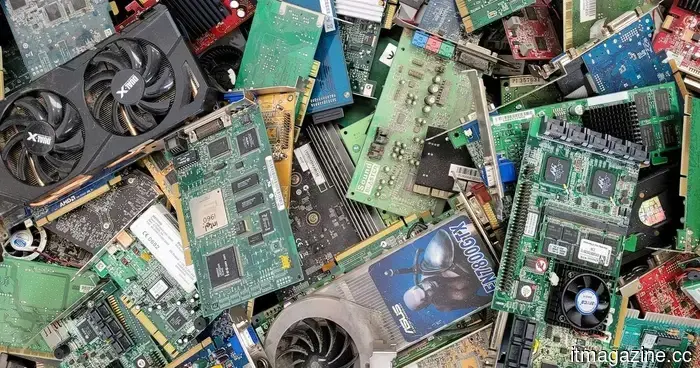 As if the situation wasn't already challenging, AI is on the verge of exacerbating the worldwide e-waste crisis.
The expansion of AI could contribute an additional 5 million metric tons of e-waste by 2030, driven by fast-paced hardware upgrades and the growth of data centers, which will amplify environmental effects.
As if the situation wasn't already challenging, AI is on the verge of exacerbating the worldwide e-waste crisis.
The expansion of AI could contribute an additional 5 million metric tons of e-waste by 2030, driven by fast-paced hardware upgrades and the growth of data centers, which will amplify environmental effects.
 Google is in discussions with Marvell Technology to develop new AI inference chips as part of its collaboration with the Broadcom TPU program.
Google is in talks with Marvell Technology regarding two new chips for AI inference, bringing a third design partner into its TPU supply chain as sales of custom ASICs are projected to increase by 45% in 2026.
Google is in discussions with Marvell Technology to develop new AI inference chips as part of its collaboration with the Broadcom TPU program.
Google is in talks with Marvell Technology regarding two new chips for AI inference, bringing a third design partner into its TPU supply chain as sales of custom ASICs are projected to increase by 45% in 2026.
Steam essentially operates as a monopoly in the PC gaming market, so why isn't there any outrage?
Open any gaming PC, and it's likely that the blue Steam icon is prominently displayed on the desktop. It's not concealed, nor is it a choice—it's nearly a given. Over the years, Steam has evolved from merely another launcher to the primary marketplace for PC gaming, functioning almost as an integral aspect of the experience. The Monopoly Nobody […]