

A Google Pixel laptop could be in the works, but is there really a demand for it?
It seems that a new addition is coming to the Pixel family, enhancing its revitalized smartphone range. Recent code analysis of the latest Android beta indicates that Google may be preparing to unveil a new Pixel laptop soon. The last laptop Google released was the Pixelbook Go in 2019, which was a more affordable iteration of the Pixelbook launched in 2017.
Both the Pixelbook and the Pixelbook Go, along with the earlier Chromebook Pixel models, did not gain significant popularity with users or achieve commercial success. Ultimately, this led to Google's exit from the laptop market and a pivot toward its Pixel smartphones.
The landscape appears to be changing, and it looks like ChromeOS is nearing its end.
Snippets found in Google's software indicate that we might finally witness Google's latest effort with a laptop, but this might not be based on the expected Chromebook format. Instead, it could serve as the flagship for an entirely new category of devices operating on Aluminium OS. However, launching a Google Pixel laptop does not seem plausible at this time, as various factors hinder its success. As a famous wrestling personality would say, "let me talk to ya" about this!
Google's past struggles with laptop launches
To be fair, Google does not have a strong history with laptops. Over the past decade, the company has made several attempts, including the Chromebook Pixel in 2013, an upgraded version in 2015, the Google Pixelbook in 2017, and the Pixelbook Go in 2019.
None of these laptops made a significant impact on the computing market or established long-lasting industry trends, primarily due to two key issues: pricing and the operating system they used.
A history of poor pricing at Google
Device model | Price starting at
--- | ---
Chromebook Pixel (2013) | $1,299
Chromebook Pixel (2015) | $999
Pixelbook | $999
Pixelbook Go | $649
As illustrated in the table, all of Google’s laptops were priced at a premium, typically around the $1,000 mark. With that kind of money, buyers could opt for a powerful Windows laptop or even a MacBook Air. Why would anyone choose to pay so much for a laptop running ChromeOS?
The Pixelbook Go was the only exception, launching at approximately $649. While our review praised its portable design, specifications, and outstanding battery life, the conclusion remained unchanged: the software limitations hindered its appeal, as buyers could get a fully capable Windows PC at that price.
I personally spent $1,649 on the high-end version with the Core i7, and it now sits unused in my drawer. It's not that I don’t want to keep it operational; the laptop is exceedingly slow, and despite countless hard resets, it can barely manage to run Chrome without issues, runs hot, and its touchscreen has stopped responding.
The state of ChromeOS in 2026
That occurred nearly a decade ago, but what’s the situation now? Has ChromeOS advanced enough to compete with other desktop operating systems? Unfortunately, the answer is no. It appears Google has left the operating system in a stagnant state without significant upgrades.
While there have been incremental updates, nothing substantial has emerged to make it a viable contender. It remains a browser-based system with minimal support for popular creative and productivity applications. With the discontinuation of Google Stadia, gaming is now almost non-existent on ChromeOS.
Conversely, Linux has made remarkable strides, operating on similar low-powered hardware while supporting gaming and most widely used creative and productivity software. In fact, Linux usage has surged among hardcore gamers on Steam. Yes, ChromeOS offers ease of use, but that’s its only advantage.
What about the forthcoming Aluminium OS?
However, there is a glimmer of hope on the horizon. Google is developing a new operating system called Aluminium OS, anticipated to launch in 2026. This OS aims to integrate Android and ChromeOS into a cohesive platform.
Constructed from the ground up on Android, Aluminium OS promises native compatibility with all Play Store applications, complete with adequate keyboard and mouse support as well as desktop-level window management capabilities. It will also feature multi-desktop support.
The standout feature of this OS will be the Gemini AI, which is expected to be integrated into the core of the system, representing a notable upgrade from ChromeOS. However, Aluminium OS might face its own set of challenges if ChromeOS is any indication.
Rachit Agarwal / Digital Trends
First, it would necessitate more powerful hardware to support AI functionalities. Ideally, it would require a processor equipped with a robust AI accelerator chip (NPU) to handle on-device AI tasks, such as translation, photo editing with generative AI, scam detection, and more—without needing an internet connection.
Second, being Android-based, it is unlikely to fully support traditional desktop applications. While it may run them via a translation layer—similar to what Apple did with


Other articles
 Is Minecraft cross-platform? An explanation of Bedrock, Java, and console cross-play.
If you’re wondering whether you can play one of the most popular games in the world online with friends on a different platform, we have the answer for you right here.
Is Minecraft cross-platform? An explanation of Bedrock, Java, and console cross-play.
If you’re wondering whether you can play one of the most popular games in the world online with friends on a different platform, we have the answer for you right here.
 I've been utilizing "Ask Maps," and it has completely transformed my experience with Google Maps.
I began using this AI option on Google Maps, and now I find it hard to return to the previous method.
I've been utilizing "Ask Maps," and it has completely transformed my experience with Google Maps.
I began using this AI option on Google Maps, and now I find it hard to return to the previous method.
 Steam is essentially a monopoly in the PC gaming market, so why isn't there any outrage?
Open any gaming PC, and you're likely to find the blue Steam icon prominently displayed on the desktop. It's not tucked away, nor is it merely an option; it's almost a given. Over time, Steam has evolved from being simply another launcher to becoming the primary storefront for PC gaming, effectively integrated into the overall experience. The Monopoly Nobody [...]
Steam is essentially a monopoly in the PC gaming market, so why isn't there any outrage?
Open any gaming PC, and you're likely to find the blue Steam icon prominently displayed on the desktop. It's not tucked away, nor is it merely an option; it's almost a given. Over time, Steam has evolved from being simply another launcher to becoming the primary storefront for PC gaming, effectively integrated into the overall experience. The Monopoly Nobody [...]
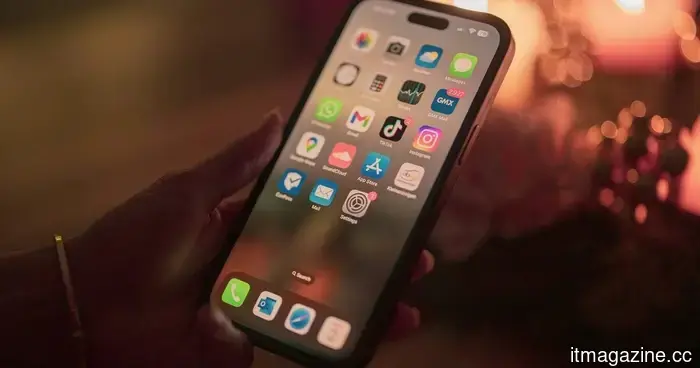 Apple is introducing a straightforward feature that iPhones have required for years.
Apple is evaluating undo and redo buttons for customizing the Home Screen in iOS 27 and iPadOS 27, with the goal of making it easier to modify app and widget arrangements.
Apple is introducing a straightforward feature that iPhones have required for years.
Apple is evaluating undo and redo buttons for customizing the Home Screen in iOS 27 and iPadOS 27, with the goal of making it easier to modify app and widget arrangements.
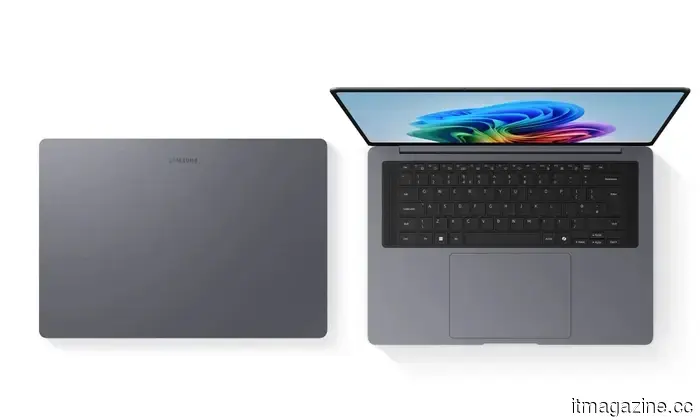 I had a MacBook Air for three years, but now I'm loyal to the Galaxy Book6 Pro.
The Galaxy Book6 Pro has impressed me to such an extent that returning to my MacBook Air M2 feels like a step down — and I have my justifications for this.
I had a MacBook Air for three years, but now I'm loyal to the Galaxy Book6 Pro.
The Galaxy Book6 Pro has impressed me to such an extent that returning to my MacBook Air M2 feels like a step down — and I have my justifications for this.
.jpg) Top films available on Amazon Prime Video (April 2026)
This month, the top movies available on Amazon Prime Video feature Crime 101, Pretty Lethal, The Menu, Super 8, The Great Escape, Sinners, and others.
Top films available on Amazon Prime Video (April 2026)
This month, the top movies available on Amazon Prime Video feature Crime 101, Pretty Lethal, The Menu, Super 8, The Great Escape, Sinners, and others.
A Google Pixel laptop could be in the works, but is there really a demand for it?
A new Google Pixel laptop may be under development, but past experiences, increasing hardware expenses, and the presence of a $599 MacBook Neo indicate it could fail to launch successfully.