

As if the situation wasn't challenging enough, AI is set to exacerbate the global e-waste problem.
New report underscores an escalating environmental issue
AI is already transforming how we operate globally, but it is also inadvertently exacerbating one of our major environmental challenges. This time, the focus isn't on energy usage, but on hardware. Each advanced AI model carries a tangible cost.
AI is poised to intensify the e-waste dilemma
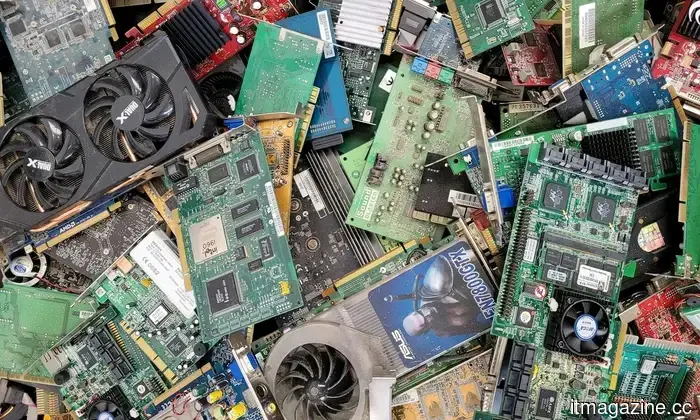
A study published in Nature Computational Science (via Rest of World) suggests that the swift growth of AI could result in an additional 1.2 to 5 million metric tons of e-waste by 2030. The explanation is straightforward: AI depends on high-performance equipment such as GPUs and specialized servers, which have a relatively short lifespan. Most of this technology is replaced every 2 to 5 years, leading to a rapid disposal of outdated hardware as newer, faster systems come into play.
This trend is occurring on a large scale. As companies compete to expand data centers and develop more robust models, the demand for hardware increases, alongside the accumulation of outdated machines.
This is a global challenge, not just a tech issue
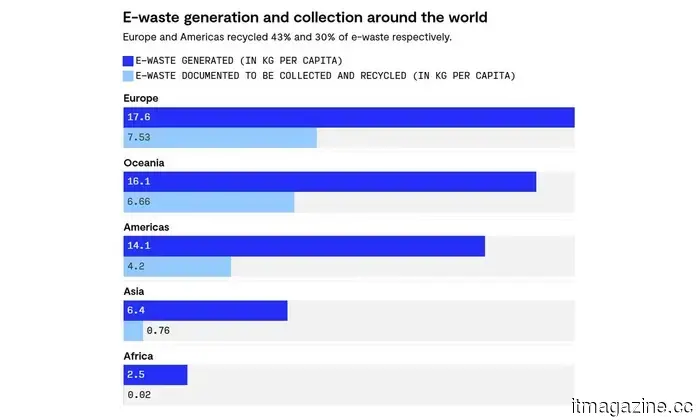
E-waste is currently one of the fastest-growing waste categories worldwide, generating millions of tonnes each year. Alarmingly, a significant portion of this waste is not correctly recycled. Inadequate disposal can release harmful substances like lead and mercury into the environment, posing serious threats to ecosystems and public health. Uncomfortably, most of this waste is sent to lower-income nations, where recycling often takes place under hazardous conditions. This means that although the advantages of AI are widespread, the resulting environmental burden is not evenly distributed.
At its core, while AI may seem like a purely digital advancement, it is creating a substantial and tangible environmental impact. Without changes to this pattern, that impact will continue to grow.
Varun is an experienced tech journalist and editor, boasting over eight years in consumer technology media. His experience encompasses…
Humanoid robots outperform human world record holder in Beijing half-marathon
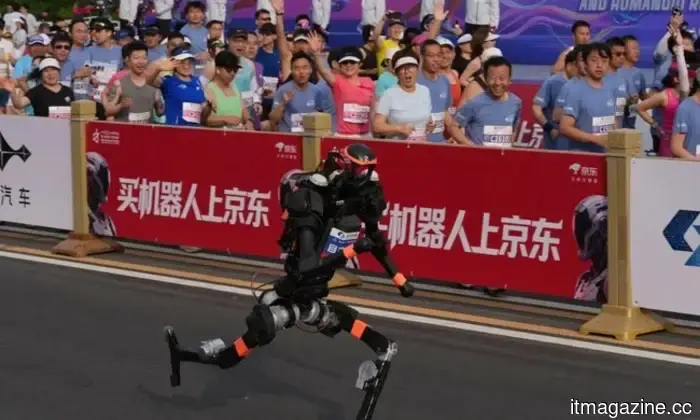
A humanoid robot has completed a half-marathon quicker than the current world record holder. This might not seem noteworthy at first glance, but considering that last year, the fastest robot in Beijing's humanoid robot half-marathon finished in two hours and 40 minutes, this marks a significant breakthrough. According to the Associated Press, the leading robot in this year’s Beijing half-marathon finished in 50 minutes and 26 seconds, effortlessly surpassing the human world record of 57 minutes set recently by Jacob Kiplimo.
Read more
Smart glasses are discovering an unexpected market — Korean drama and theater
Every year, millions enjoy Korean content without understanding the language. They stream shows with subtitles, read translated lyrics, and find alternative solutions. However, live theater has presented a unique challenge — you can't pause or rewind. A startup in Korea believes it has solved this issue, and Yuroy Wang was among the first users. The 22-year-old retail worker from Taipei, a K-pop enthusiast who loves Korean culture but doesn’t speak the language, attended "The Second Chance Convenience Store," a touring play adapted from a bestselling Korean novel in Taiwan. He anticipated supertitles, but instead received a pair of AI-powered translation glasses that displayed real-time dialogue directly on the lenses. "As soon as I learned they were available, I couldn't wait to test them," he said. Wang is part of a growing audience realizing that smart glasses, a tech category that has struggled for years to find a mainstream purpose, may have discovered a niche in live Korean theater.
How do the glasses function?
Amazon believes you appreciate AI, prompting the launch of a dedicated storefront for AI-powered devices
While searching for a new laptop — one equipped with a better processor, another boasting more RAM, and a third prominently labeled "AI-powered," you might feel uncertain about what that entails. Amazon has taken notice of your interest in the latter and has initiated a solution. The company has debuted an AI Store on Amazon.in — a specialized storefront that collects AI-enabled devices from various categories, including smartphones, laptops, refrigerators, and washing machines. Instead of sifting through specifications to discern which "AI feature" is genuinely beneficial, this store clarifies the offerings for you.
What the AI store entails




Other articles
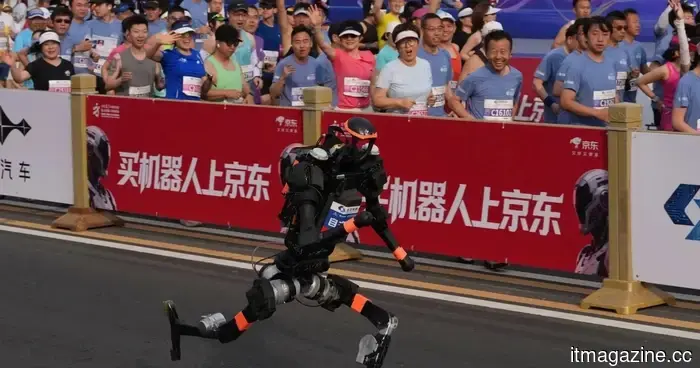 Robots have completed the Beijing half-marathon in a time quicker than the current world record holder.
A robot created by Honor recently completed a half-marathon in Beijing in 50 minutes and 26 seconds, surpassing the human world record of 57 minutes.
Robots have completed the Beijing half-marathon in a time quicker than the current world record holder.
A robot created by Honor recently completed a half-marathon in Beijing in 50 minutes and 26 seconds, surpassing the human world record of 57 minutes.
 I've been utilizing "Ask Maps," and it has completely transformed my experience with Google Maps.
I began using this AI option on Google Maps, and now I find it hard to return to the previous method.
I've been utilizing "Ask Maps," and it has completely transformed my experience with Google Maps.
I began using this AI option on Google Maps, and now I find it hard to return to the previous method.
 The upcoming series of Macs from Apple may have a longer wait, and you can attribute that to AI.
Apple's soon-to-be-released Mac Studio and MacBook Pro may face delays because of worldwide memory shortages caused by the increasing demand for AI hardware.
The upcoming series of Macs from Apple may have a longer wait, and you can attribute that to AI.
Apple's soon-to-be-released Mac Studio and MacBook Pro may face delays because of worldwide memory shortages caused by the increasing demand for AI hardware.
 AI is now becoming part of the Skynet discussion within social media hype circles.
An increasing number of "AI doom influencers" is influencing public views as real-world events heighten worries regarding advanced AI technologies.
AI is now becoming part of the Skynet discussion within social media hype circles.
An increasing number of "AI doom influencers" is influencing public views as real-world events heighten worries regarding advanced AI technologies.
 I’ve started using “Ask Maps,” and it has completely transformed my experience with Google Maps.
I've begun using this AI feature on Google Maps, and I truly can't return to the traditional method now.
I’ve started using “Ask Maps,” and it has completely transformed my experience with Google Maps.
I've begun using this AI feature on Google Maps, and I truly can't return to the traditional method now.
 A leak regarding the iPhone Fold design indicates that Apple is making a savvy move.
A leak of the iPhone Fold case showcases a slim, book-style design featuring a broader shape and a display reminiscent of a tablet, highlighting Apple's polished take on foldable devices.
A leak regarding the iPhone Fold design indicates that Apple is making a savvy move.
A leak of the iPhone Fold case showcases a slim, book-style design featuring a broader shape and a display reminiscent of a tablet, highlighting Apple's polished take on foldable devices.
As if the situation wasn't challenging enough, AI is set to exacerbate the global e-waste problem.
The expansion of AI may result in an additional 5 million metric tons of electronic waste by 2030, due to swift hardware upgrades and the growth of data centers elevating environmental effects.