
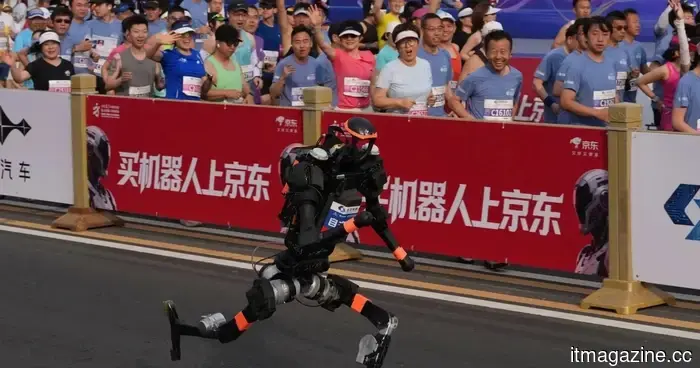
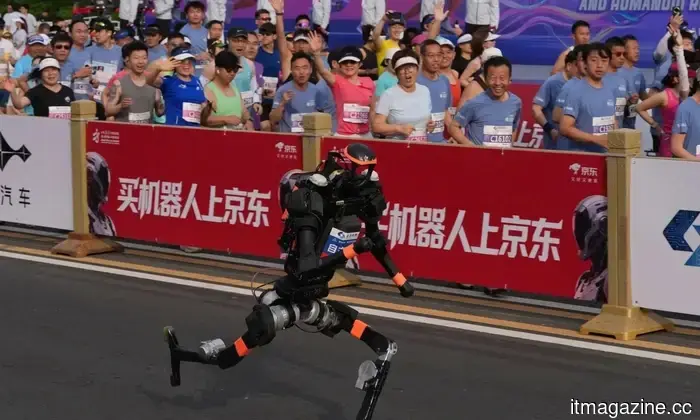
Robots recently completed the Beijing half-marathon at a speed faster than the current world record holder.
Andy Wong / AP
A humanoid robot has successfully completed a half-marathon faster than the current world record holder. Initially, this may not sound remarkable, but given that the fastest robot in last year’s Beijing humanoid robot half-marathon took two hours and 40 minutes, this achievement is significant.
According to the Associated Press, this year's winning robot completed the Beijing half-marathon in 50 minutes and 26 seconds, easily surpassing the human world record of 57 minutes recently achieved by Jacob Kiplimo.
This represents a remarkable advancement in just one year, stirring considerable discussion.
Who created the winning robot?
The robot that won was developed by Honor, the Chinese smartphone manufacturer renowned for its unconventional and innovative devices. Yes, the same company known for its phones is now producing robots that can outpace elite human athletes.
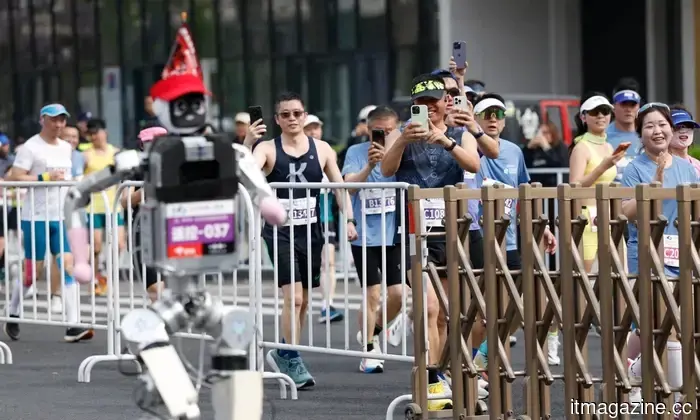
However, there’s an interesting detail. The winning robot was not the fastest one on the course. Another robot finished in 48 minutes and 19 seconds, but it was controlled remotely. The top-ranking robot ran the race autonomously, and the final standings were determined using a weighted scoring system that took this into account.
Andy Wong / AP
Approximately 40% of the robots in the race operated autonomously, while the remaining 60% were remotely controlled. The event was not without its challenges; one robot stumbled at the start, and another crashed into a barrier.
Is it justifiable to compare robots and humans?
Truthfully, probably not. Yet, this comparison has been made for a long time. It was a significant milestone when IBM's Deep Blue was the first computer to defeat world chess champion Garry Kasparov, and when DeepMind’s AlphaGo started to triumph over top human Go players.
If we consider folklore, the competition between machines and humans dates back to the 1870s with the legend of John Henry, who raced against a steam-powered drilling machine to demonstrate human superiority. He won the contest but ultimately lost his life in the process.
Regardless of one's perspective, it’s undeniable how far robots have advanced in just a decade, which evokes both excitement and apprehension.
Rachit is an experienced technology journalist with over seven years of covering the consumer tech landscape.
As if the situation wasn't already critical, AI is poised to exacerbate the global e-waste crisis
A recent report highlights an escalating environmental issue
AI is revolutionizing various aspects of life, but it is also quietly intensifying one of our most pressing environmental challenges. This time, it's not about energy usage; it's about the physical hardware. Every advanced AI model incurs a tangible cost.
AI is set to significantly worsen the e-waste situation.
Read more
Smart glasses are carving out an unexpected niche in Korean drama and theater
Each year, millions engage with Korean content without understanding the language. They stream shows with subtitles, read translated lyrics, and find alternative methods to connect. However, live theater has posed a unique challenge—there's no option to pause or rewind. A Korean startup believes it has found a solution, and Yuroy Wang was among the first to test it. The 22-year-old retail worker from Taipei, who is a K-pop enthusiast and loves Korean culture but speaks no Korean, attended "The Second Chance Convenience Store," a touring play adapted from a bestselling Korean novel. He anticipated supertitles but instead received a pair of AI-powered glasses that translated the dialogue in real-time onto the lenses. "As soon as I heard they were available, I couldn't wait to try them," he remarked. Wang is part of a growing demographic discovering that smart glasses, a technology category that has struggled for widespread relevance for years, may have found their purpose in live Korean theater.
How do the glasses function?
Read more
Amazon believes you are interested in AI, so it has introduced a specialized storefront for AI-driven gadgets
While you’re searching for a new laptop—where one offers a superior processor, another has additional RAM, and a third boasts "AI-powered" prominently—you might not fully understand what that entails. Noticing your hesitation on the latter, Amazon has reacted. The company has unveiled an AI Store on Amazon.in—a dedicated platform that collects AI-enabled devices from various categories, including smartphones, laptops, refrigerators, and washing machines. Thus, instead of sifting through specifications to determine which "AI feature" is genuinely beneficial, the store clarifies it for you.
What exactly is the AI store?
Read more



Other articles
 The upcoming release of Apple's next generation of Macs may take longer than expected, and AI is to blame for this delay.
Apple's forthcoming Mac Studio and MacBook Pro may experience delays because of worldwide memory shortages caused by the increasing demand for AI hardware.
The upcoming release of Apple's next generation of Macs may take longer than expected, and AI is to blame for this delay.
Apple's forthcoming Mac Studio and MacBook Pro may experience delays because of worldwide memory shortages caused by the increasing demand for AI hardware.
 A Google Pixel laptop could be in development, but is there really a demand for it?
A new Google Pixel laptop may be under development, but historical trends, increasing hardware expenses, and the $599 MacBook Neo indicate that it could face an unpromising launch.
A Google Pixel laptop could be in development, but is there really a demand for it?
A new Google Pixel laptop may be under development, but historical trends, increasing hardware expenses, and the $599 MacBook Neo indicate that it could face an unpromising launch.
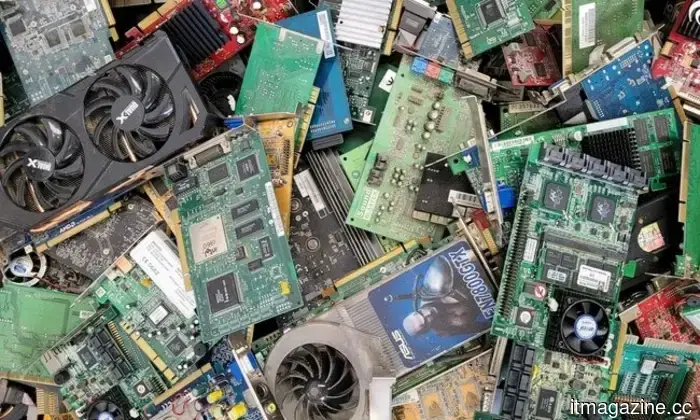
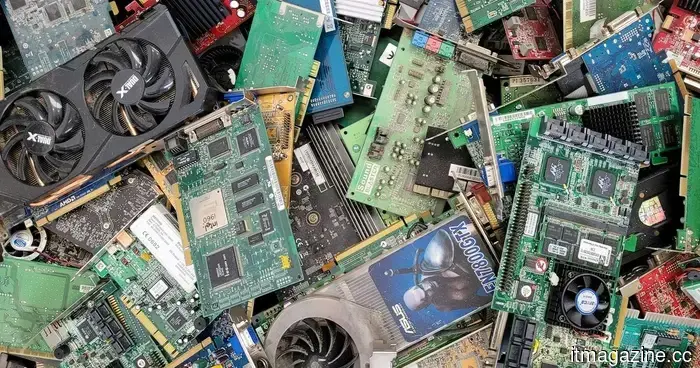 As if the situation wasn't challenging enough, AI is set to exacerbate the global e-waste problem.
The expansion of AI may result in an additional 5 million metric tons of electronic waste by 2030, due to swift hardware upgrades and the growth of data centers elevating environmental effects.
As if the situation wasn't challenging enough, AI is set to exacerbate the global e-waste problem.
The expansion of AI may result in an additional 5 million metric tons of electronic waste by 2030, due to swift hardware upgrades and the growth of data centers elevating environmental effects.
 The App Store is alive with new applications in 2026, and it appears that AI is playing a significant role in this development.
The number of app launches is rapidly increasing worldwide as AI tools simplify the process for creators to develop and release mobile applications.
The App Store is alive with new applications in 2026, and it appears that AI is playing a significant role in this development.
The number of app launches is rapidly increasing worldwide as AI tools simplify the process for creators to develop and release mobile applications.
 I’ve started using “Ask Maps,” and it has completely transformed my experience with Google Maps.
I've begun using this AI feature on Google Maps, and I truly can't return to the traditional method now.
I’ve started using “Ask Maps,” and it has completely transformed my experience with Google Maps.
I've begun using this AI feature on Google Maps, and I truly can't return to the traditional method now.
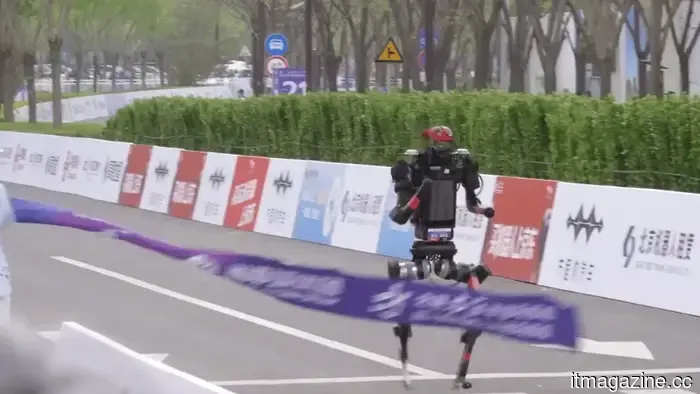 A humanoid robot surpassed the human half-marathon world record by 7 minutes during a race in Beijing that featured 112 teams.
Honor's Lightning robot finished the Beijing half-marathon in a time of 50:26, surpassing the human record of 57:20, while 112 teams and over 300 robots highlighted China's $138 billion humanoid industry.
A humanoid robot surpassed the human half-marathon world record by 7 minutes during a race in Beijing that featured 112 teams.
Honor's Lightning robot finished the Beijing half-marathon in a time of 50:26, surpassing the human record of 57:20, while 112 teams and over 300 robots highlighted China's $138 billion humanoid industry.
Robots recently completed the Beijing half-marathon at a speed faster than the current world record holder.
A robot created by Honor recently completed a half-marathon in Beijing in 50 minutes and 26 seconds, surpassing the human world record of 57 minutes.