
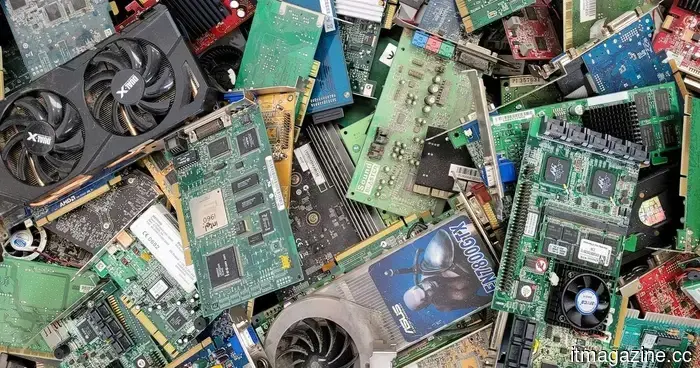
As if the situation wasn't already challenging, AI is on the verge of exacerbating the worldwide e-waste crisis.
New report underscores a growing environmental issue
AI is transforming the way the world operates, but it is also quietly exacerbating one of our major environmental challenges. This time, the concern isn’t about energy consumption, but rather the hardware, as every advanced AI model comes with a tangible environmental cost.
AI is on the verge of intensifying the e-waste dilemma
A study published in Nature Computational Science (via Rest of World) indicates that the swift growth of AI could generate an additional 1.2 to 5 million metric tons of e-waste by 2030. The explanation is straightforward: AI requires high-performance hardware such as GPUs and specialized servers, which have a limited lifespan. Most of this equipment is replaced every 2 to 5 years, resulting in older hardware being rapidly discarded as newer, more efficient systems emerge.
This situation is occurring on a large scale. As companies compete to develop larger data centers and train more powerful models, the demand for hardware continues to rise, leading to an accumulation of obsolete machines.
This is a global issue, not just a technological one
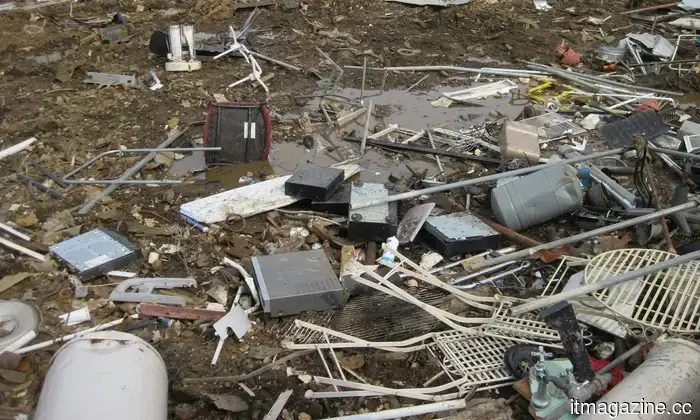
E-waste is one of the fastest-growing waste streams worldwide, with tens of millions of tonnes produced annually. The troubling reality is that a significant portion of this waste is not recycled properly. Mismanagement can leak harmful substances like lead and mercury into the environment, creating serious threats to both ecosystems and human health. Furthermore, most of this waste ultimately ends up in lower-income nations, where recycling often occurs in unsafe conditions. This means that while the advantages of AI are shared globally, the environmental impacts are not distributed equally.
At the end of the day, although AI may seem like a digital advancement, it is creating a substantial physical footprint. If current trends persist, this footprint is poised to increase.
Varun is a seasoned technology journalist and editor with over eight years of experience in consumer tech media. His work covers…
Robots just completed the Beijing half-marathon quicker than the world record holder
A humanoid robot has run a half-marathon faster than the current world record holder. It may not seem remarkable initially, but after last year's event where the fastest robot finished in two hours and 40 minutes, this is a significant milestone. According to the Associated Press, the winning robot in this year's Beijing half-marathon finished in 50 minutes and 26 seconds, easily surpassing the human world record of 57 minutes, recently achieved by Jacob Kiplimo.
Smart glasses are discovering an unexpected niche—Korean drama and theater performances
Every year, millions enjoy Korean content without understanding the language. They watch shows with subtitles, read translated lyrics, and find workarounds. Live theater presents a unique challenge, as there’s no option to pause or rewind. A Korean startup believes it has found a solution, and Yuroy Wang was among the first to test it. The 22-year-old retail worker from Taipei, a K-pop enthusiast who loves Korean culture but doesn't know the language, attended "The Second Chance Convenience Store," a touring play based on a best-selling Korean novel. Expecting to see supertitles, he instead received a pair of chunky black-framed AI-powered glasses that translated the dialogue in real-time directly onto the lenses. "As soon as I learned they were available, I couldn't wait to try them," he stated. Wang is part of a growing audience discovering that smart glasses, a technology category that has struggled to find widespread acceptance for years, may have found their niche in live Korean theater.
How the glasses operate
Amazon believes you love AI, prompting the launch of a specialized storefront for AI-enabled devices
While searching for a new laptop—one has a superior processor, another has more RAM, and a third boldly states "AI-powered"—you might feel uncertain about what that means. Amazon has noticed your hesitation with the latter and has taken action. The company has recently introduced an AI Store on Amazon.in—a dedicated section that gathers AI-enabled gadgets across various categories, including smartphones, laptops, refrigerators, and washing machines. Instead of sifting through technical specifications to determine which "AI feature" is genuinely beneficial, the store simplifies the process for you.



Other articles
 A leak regarding the iPhone Fold design indicates that Apple is making strategic decisions.
A leak of the iPhone Fold case shows a slim, book-style design featuring a broader form factor and a tablet-like screen, highlighting Apple's polished take on foldable technology.
A leak regarding the iPhone Fold design indicates that Apple is making strategic decisions.
A leak of the iPhone Fold case shows a slim, book-style design featuring a broader form factor and a tablet-like screen, highlighting Apple's polished take on foldable technology.
 AI has sidelined Windows laptops in the competition with the MacBook.
Windows laptops have finally become intriguing, but AI became the misguided selling feature at the most inopportune time.
AI has sidelined Windows laptops in the competition with the MacBook.
Windows laptops have finally become intriguing, but AI became the misguided selling feature at the most inopportune time.
 Tinder aims to verify your humanity by having you look into an orb. Yes, you read that correctly.
Tinder now offers a way for you to verify that you're human by scanning your irises using a physical orb device created by Sam Altman's World.
Tinder aims to verify your humanity by having you look into an orb. Yes, you read that correctly.
Tinder now offers a way for you to verify that you're human by scanning your irises using a physical orb device created by Sam Altman's World.
 A Google Pixel laptop could be in development, but is there really a demand for it?
A new Google Pixel laptop may be under development, but historical trends, increasing hardware expenses, and the $599 MacBook Neo indicate that it could face an unpromising launch.
A Google Pixel laptop could be in development, but is there really a demand for it?
A new Google Pixel laptop may be under development, but historical trends, increasing hardware expenses, and the $599 MacBook Neo indicate that it could face an unpromising launch.
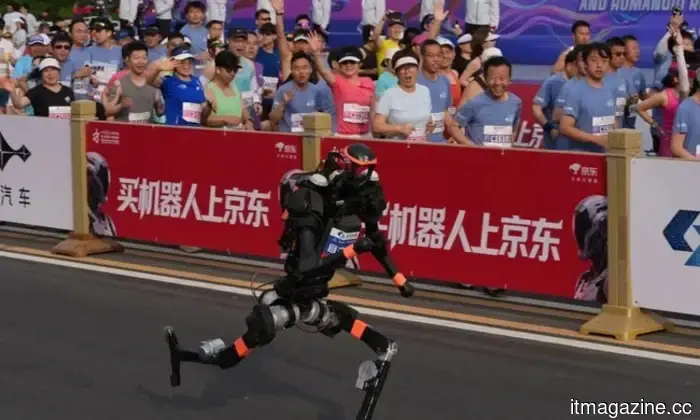
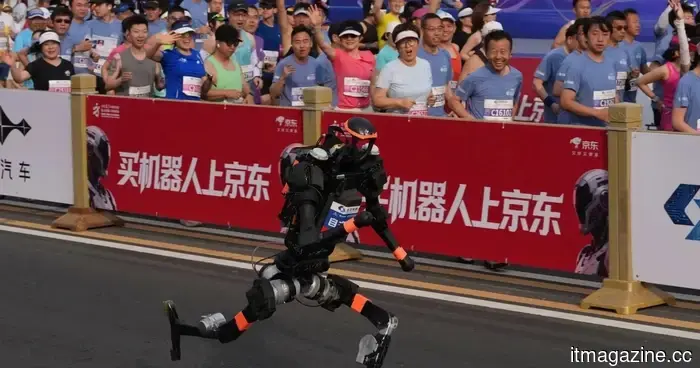 Robots have completed the Beijing half-marathon in a time quicker than the current world record holder.
A robot created by Honor recently completed a half-marathon in Beijing in 50 minutes and 26 seconds, surpassing the human world record of 57 minutes.
Robots have completed the Beijing half-marathon in a time quicker than the current world record holder.
A robot created by Honor recently completed a half-marathon in Beijing in 50 minutes and 26 seconds, surpassing the human world record of 57 minutes.
.jpg) The top films available on Amazon Prime Video (April 2026)
This month's top films on Amazon Prime Video feature Crime 101, Pretty Lethal, The Menu, Super 8, The Great Escape, Sinners, and several others.
The top films available on Amazon Prime Video (April 2026)
This month's top films on Amazon Prime Video feature Crime 101, Pretty Lethal, The Menu, Super 8, The Great Escape, Sinners, and several others.
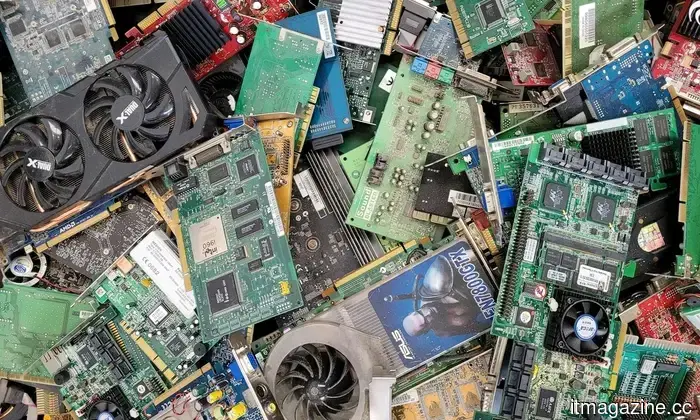
As if the situation wasn't already challenging, AI is on the verge of exacerbating the worldwide e-waste crisis.
The expansion of AI could contribute an additional 5 million metric tons of e-waste by 2030, driven by fast-paced hardware upgrades and the growth of data centers, which will amplify environmental effects.