

AI has sidelined Windows laptops in the competition with the MacBook.
The Windows laptop market appears more crowded than ever before, with numerous brands, a variety of chips, a surge in AI labeling, and a plethora of “next-gen” promises. Yet, amidst all this activity, the segment seems more constrained than in years past.
This is the paradox of the current AI PC landscape. AI is meant to initiate a significant upgrade cycle that revitalizes Windows laptops, but ironically, it is making them more challenging to buy, particularly in the budget segment. Amidst this confusion, Apple’s MacBook lineup emerges as the simplest and most straightforward option in the market.
The core problem is that AI has not merely added features to Windows laptops; it has also raised the baseline for entry.
AI raises expectations, but it may have raised them excessively
The shift became evident with Microsoft's Copilot+ PC initiative. The company has linked its most prominent AI functionalities to a new category of Windows devices that incorporate NPUs with over 40 TOPS, while 16GB of RAM is quickly becoming the standard minimum for this entire category.
This may seem like mere progress in specifications, but it alters the market landscape significantly.
For many years, the strength of Windows laptops lay in their accessibility: there was always a reasonable starting point. Consumers could opt for a lower-priced model and upgrade later if they required more power. However, AI complicates this dynamic. Laptops lacking the right chip, sufficient memory, or an NPU risk feeling disconnected from the “true” future of Windows that Microsoft promotes heavily.
Thus, AI is evolving from a supplementary feature to a hardware gatekeeper.
New baseline makes budget Windows laptops look inferior
The situation becomes particularly problematic in the entry-level or budget category. The AI era has rendered 8GB laptops seemingly outdated almost instantaneously. This isn’t because they suddenly struggle with basic tasks like browsing or document editing; rather, they now seem underpowered for the computing capabilities that Windows is advocating. Local AI applications require more memory, background features need additional capacity, and NPUs necessitate appropriate underlying silicon.
As a result, the Windows market continues to trend upward in pricing.
More RAM, improved chips, and AI-optimized hardware incur higher costs. Consequently, many Windows laptops are now positioned in a premium tier before they have truly earned premium credibility. On the surface, Microsoft is promoting a more sophisticated future, but in practice, it also makes the lower segment of the laptop market appear less appealing, less relevant, and harder to justify.
Apple maintains a straightforward narrative
This is precisely where Apple excels.
The MacBook does not require consumers to master a technical vocabulary. Apple isn’t asking you to navigate TOPS, NPU categories, or whether your device qualifies for upcoming feature releases. Instead, it offers a sleek laptop with long battery life, satisfactory everyday performance, and a purchasing experience that most can comprehend in under a minute.
This level of clarity and simplicity is often more important than what tech enthusiasts might admit.
Apple’s unified memory approach may still frustrate specification purists, but the average buyer is not invested in online debates over memory configurations. They want a machine that feels responsive, lasts a long time, and doesn’t necessitate a complex analysis to determine the right model. Even with just 8GB of RAM, the A18-equipped MacBook Neo has demonstrated impressive memory efficiency and overall performance.
AI has made Windows laptops more advanced… and more cumbersome
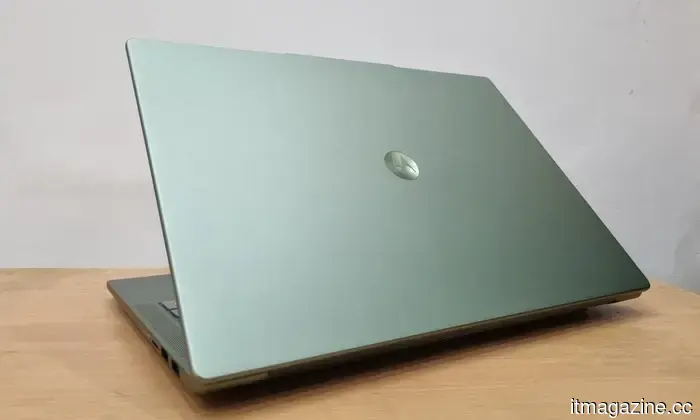
To clarify, this isn’t to suggest that Windows laptops are suddenly inferior—they are not. There are indeed outstanding AI PCs available from Intel, AMD, Qualcomm, and Microsoft’s hardware collaborators. Some of these devices are genuinely exciting and visually appealing.
However, the overall narrative of the market remains chaotic. While AI has indeed enhanced the capabilities of Windows laptops, it has also made them pricier, more diverse, and increasingly reliant on consumers grasping which specifications are most relevant.
Apple's edge is not in underpricing the entire PC market; it doesn’t need to. In a space saturated with AI labeling, heightened hardware demands, and increasingly costly “modern” laptops, the MacBook simply appears more straightforward to understand.


Other articles
 Robots have completed the Beijing half-marathon in a time quicker than the current world record holder.
A robot created by Honor recently completed a half-marathon in Beijing in 50 minutes and 26 seconds, surpassing the human world record of 57 minutes.
Robots have completed the Beijing half-marathon in a time quicker than the current world record holder.
A robot created by Honor recently completed a half-marathon in Beijing in 50 minutes and 26 seconds, surpassing the human world record of 57 minutes.
 I’ve started using “Ask Maps,” and it has completely transformed my experience with Google Maps.
I've begun using this AI feature on Google Maps, and I truly can't return to the traditional method now.
I’ve started using “Ask Maps,” and it has completely transformed my experience with Google Maps.
I've begun using this AI feature on Google Maps, and I truly can't return to the traditional method now.
 The upcoming release of Apple's next generation of Macs may take longer than expected, and AI is to blame for this delay.
Apple's forthcoming Mac Studio and MacBook Pro may experience delays because of worldwide memory shortages caused by the increasing demand for AI hardware.
The upcoming release of Apple's next generation of Macs may take longer than expected, and AI is to blame for this delay.
Apple's forthcoming Mac Studio and MacBook Pro may experience delays because of worldwide memory shortages caused by the increasing demand for AI hardware.
 The App Store is alive with new applications in 2026, and it appears that AI is playing a significant role in this development.
The number of app launches is rapidly increasing worldwide as AI tools simplify the process for creators to develop and release mobile applications.
The App Store is alive with new applications in 2026, and it appears that AI is playing a significant role in this development.
The number of app launches is rapidly increasing worldwide as AI tools simplify the process for creators to develop and release mobile applications.
 Is Minecraft cross-platform? An explanation of Bedrock, Java, and console cross-play.
If you’re wondering whether you can play one of the most popular games in the world online with friends on a different platform, we have the answer for you right here.
Is Minecraft cross-platform? An explanation of Bedrock, Java, and console cross-play.
If you’re wondering whether you can play one of the most popular games in the world online with friends on a different platform, we have the answer for you right here.
.jpg) Top films available on Amazon Prime Video (April 2026)
This month, the top movies available on Amazon Prime Video feature Crime 101, Pretty Lethal, The Menu, Super 8, The Great Escape, Sinners, and others.
Top films available on Amazon Prime Video (April 2026)
This month, the top movies available on Amazon Prime Video feature Crime 101, Pretty Lethal, The Menu, Super 8, The Great Escape, Sinners, and others.
AI has sidelined Windows laptops in the competition with the MacBook.
Windows laptops have finally become intriguing, but AI became the misguided selling feature at the most inopportune time.