

The Intel Core Series 3 processors have arrived, offering greater performance at a reduced cost.
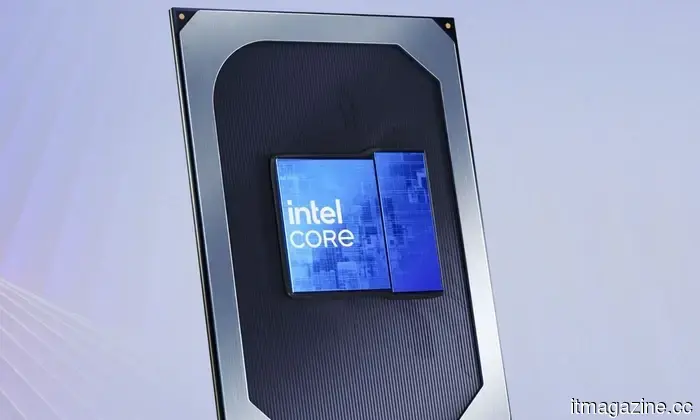
Intel has recently introduced its new Core Series 3 mobile processors, aimed at the next generation of budget-friendly laptops. The objective of these new chips is to provide a more contemporary base for these affordable notebooks without elevating their prices to premium levels.
The formal announcement of this new lineup is targeted at value-conscious customers, educational institutions, small businesses, and essential edge devices. Notably, these chips are built upon the same broader architecture as Intel’s robust new Core Ultra Series 3 family. This means they utilize Intel’s 18A process node, incorporate a hybrid CPU architecture, offer AI-ready capabilities, and provide updated connectivity for more economical systems.
Intel aims to enhance the expectations for everyday computing with its #IntelCore Series 3 mobile processors—intended to revolutionize computing for schools, small enterprises, and cost-conscious buyers while delivering desirable features at an unparalleled scale. Read the press release:… pic.twitter.com/sPHcLNE7jF— Intel (@intel) April 16, 2026
According to Intel, the Core Series 3 is its inaugural hybrid AI-ready Core Series processor, supporting up to 40 platform TOPS. It also provides advanced connectivity options with up to two Thunderbolt 4 ports, Wi-Fi 7, and Bluetooth 6.
The company is making significant value assertions compared to older PCs, claiming the Core Series 3 offers up to 47% improved single-thread performance, up to 41% enhanced multi-thread performance, and up to 2.8 times better GPU AI performance compared to an average five-year-old PC. Compared to the previous-gen Core 7 150U, Intel claims it allows for up to 2.1 times faster creation and productivity, 64% lower processor power consumption, and up to 2.7 times AI GPU performance.
Why these remain friendly for everyday laptops
Internally, the Intel Core Series 3 platform can support up to 2 Cougar Cove P-cores and 4 Darkmont LP E-cores, in addition to NPU 5, Xe graphics, support for LPDDR5X-7467 and DDR5-6400 memory, and a design that focuses on battery longevity and lower-cost system constructions. Intel also notes that the platform is compatible with either UFS 3.0 or Gen 4 SSD storage, depending on the system design.
In essence, the Intel Core Series 3 is set to elevate the next generation of affordable laptops by improving areas such as battery life, responsiveness, video calling, basic AI tasks, and fundamental creative work, making them feel less inferior.
Intel
Intel Core Series 3 processor specifications
Processor Cores / Threads Max Turbo (GHz) NPU TOPS Xe-cores GPU TOPS Base & Max Power
Intel Core 7 3606 / 64.8 1722 115W-35W
Intel Core 7 3506 / 64.8 1722 115W-35W
Intel Core 5 3306 / 64.6 1622 15W-35W
Intel Core 5 3206 / 64.6 1622 15W-35W
Intel Core 5 3156 / 64.4 1521 15W-35W
Intel Core 3 3045 / 54.3 1519 15W-35W
When will they be available?
Intel indicates that over 70 designs from OEM partners are forthcoming, with availability commencing on April 16, 2026, for consumer and commercial systems, while edge devices will start shipping in the second quarter of 2026. The extensive list of partners includes Acer, Asus, Dell, HP, Lenovo, MSI, Samsung, and others.
While the announcement appears promising on paper, due to the ongoing price increases across the industry, we will need to wait for the upcoming laptop releases to determine if they offer true value for consumers.
Other articles
 Canva can now automate repetitive tasks and assist you in creating interactive experiences without the need for coding.
Canva is launching automation features that enable users to schedule tasks such as weekly content creation and meeting briefings to operate automatically. Furthermore, its enhanced no-code tools permit users to create and improve interactive experiences using straightforward prompts.
Canva can now automate repetitive tasks and assist you in creating interactive experiences without the need for coding.
Canva is launching automation features that enable users to schedule tasks such as weekly content creation and meeting briefings to operate automatically. Furthermore, its enhanced no-code tools permit users to create and improve interactive experiences using straightforward prompts.
 Stockholm's BioLamina obtains a €20 million loan from the EIB.
BioLamina has obtained a €20 million loan from the EIB to enhance its laminin protein technologies utilized in stem cell therapies and animal-free drug safety evaluations.
Stockholm's BioLamina obtains a €20 million loan from the EIB.
BioLamina has obtained a €20 million loan from the EIB to enhance its laminin protein technologies utilized in stem cell therapies and animal-free drug safety evaluations.
 The AI mode in Chrome receives a significant enhancement aimed at reducing the need for switching between tabs.
Google's AI Mode enhancement for Chrome enables you to browse websites and conduct searches simultaneously, allowing you to pose follow-up questions without losing your spot or opening an additional tab.
The AI mode in Chrome receives a significant enhancement aimed at reducing the need for switching between tabs.
Google's AI Mode enhancement for Chrome enables you to browse websites and conduct searches simultaneously, allowing you to pose follow-up questions without losing your spot or opening an additional tab.
 The AI feature in Chrome receives a significant enhancement to reduce the need for switching between tabs.
The AI Mode upgrade for Google Chrome allows you to browse websites and conduct searches simultaneously, enabling you to ask follow-up questions without having to lose your spot or open an additional tab.
The AI feature in Chrome receives a significant enhancement to reduce the need for switching between tabs.
The AI Mode upgrade for Google Chrome allows you to browse websites and conduct searches simultaneously, enabling you to ask follow-up questions without having to lose your spot or open an additional tab.
 A $400 discount on the Samsung Galaxy Z Fold7 makes the most ambitious Android phone of 2025 significantly more accessible.
The Samsung Galaxy Z Fold7 is currently priced at $1,719.99 due to a limited-time offer, which provides a $400 discount from its original price of $2,119.99, and this deal is for the 512GB version that is worth waiting for. Foldable smartphones have significantly advanced in the past two generations, and the Z Fold7 strongly supports the case for the viability of this design.
A $400 discount on the Samsung Galaxy Z Fold7 makes the most ambitious Android phone of 2025 significantly more accessible.
The Samsung Galaxy Z Fold7 is currently priced at $1,719.99 due to a limited-time offer, which provides a $400 discount from its original price of $2,119.99, and this deal is for the 512GB version that is worth waiting for. Foldable smartphones have significantly advanced in the past two generations, and the Z Fold7 strongly supports the case for the viability of this design.
 The upcoming Pixel phone may feature a luminous back, based on insights from Android 17’s code.
Google is developing a new feature named Pixel Glow that utilizes soft lights on the back of your device to alert you without illuminating the screen.
The upcoming Pixel phone may feature a luminous back, based on insights from Android 17’s code.
Google is developing a new feature named Pixel Glow that utilizes soft lights on the back of your device to alert you without illuminating the screen.
The Intel Core Series 3 processors have arrived, offering greater performance at a reduced cost.
Intel's latest Core Series 3 processors are designed for budget-friendly laptops, yet they still feature hybrid architecture, AI-capable performance, Wi-Fi 7, and unexpectedly modern specifications.