
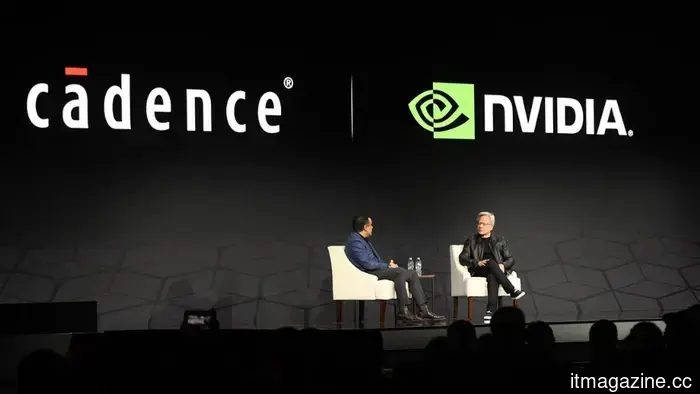
The partnership between Cadence and Nvidia in the field of robotics.
The two companies revealed an enhanced partnership during a Cadence conference in Santa Clara on Wednesday. Their objective is to improve the accuracy of robot training data to expedite the deployment of physical AI systems in the real world.
Cadence Design Systems and Nvidia have come together to address one of the most enduring challenges in robotics: the disparity between how robots learn in computer simulations and their actual performance in physical environments. The collaboration, presented by both companies’ CEOs at the Cadence conference in Santa Clara, California, merges Cadence’s high-fidelity physics simulation engines with Nvidia’s AI training platforms, which encompass its Isaac open-source simulation libraries and Cosmos open-world models.
Cadence is primarily recognized as a leading supplier of software for designing advanced computing chips. However, it also develops physics engines that simulate interactions among real-world materials, the deformation of metals, fluid dynamics, and surface contact.
These simulations are utilized in aerospace, automotive, and semiconductor design, but are now being repurposed to address a new challenge: producing the training data necessary for robot AI systems to learn object handling and physical navigation.
Training robots in a simulated environment is faster and more cost-effective than training them in reality, but the usefulness of the training data is limited by the accuracy of the physics engine.
"The more accurate the generated training data is, the better the model will be," stated Cadence CEO Anirudh Devgan at the Santa Clara conference.
Nvidia CEO Jensen Huang clearly outlined the partnership’s extent: “We’re working with you across the board on robotic systems.”
The integrated system will connect Cadence’s multiphysics simulation with Nvidia’s model training pipelines, deploying the results on Nvidia’s Jetson robotics and edge AI hardware.
This will create a streamlined workflow that encompasses world-model training, physics simulation, and real-world deployment feedback, all coordinated by AI agents throughout the process.
This announcement is part of Nvidia's broader strategy of forming deep simulation partnerships in the field of industrial engineering. The company has also announced collaborations with Siemens and Dassault Systèmes to develop industrial AI platforms and virtual twins.
For Cadence, venturing into robotics signifies a substantial extension of its simulation software into the AI infrastructure layer at a time when there is a rapidly increasing need for precise robot training data.
Other articles
 You can now purchase physical books through the Spotify app.
Spotify is now allowing users in the U.S. and U.K. to purchase physical books through its app, moving beyond audiobooks with features such as Page Match, Recaps, and Charts to enhance the reading experience.
You can now purchase physical books through the Spotify app.
Spotify is now allowing users in the U.S. and U.K. to purchase physical books through its app, moving beyond audiobooks with features such as Page Match, Recaps, and Charts to enhance the reading experience.
 Adobe Firefly AI will allow you to make edits in creative software simply by speaking your instructions.
Adobe's latest Firefly AI Assistant allows you to express your needs, taking care of everything from Photoshop, Premiere, Lightroom, Illustrator, and beyond, all within a single chat interface.
Adobe Firefly AI will allow you to make edits in creative software simply by speaking your instructions.
Adobe's latest Firefly AI Assistant allows you to express your needs, taking care of everything from Photoshop, Premiere, Lightroom, Illustrator, and beyond, all within a single chat interface.
 Musk is urging chip suppliers to act at 'light speed' for his Terafab AI.
Reports indicate that Musk's teams reached out to Applied Materials, Tokyo Electron, and Lam Research regarding his Terafab AI chip project.
Musk is urging chip suppliers to act at 'light speed' for his Terafab AI.
Reports indicate that Musk's teams reached out to Applied Materials, Tokyo Electron, and Lam Research regarding his Terafab AI chip project.
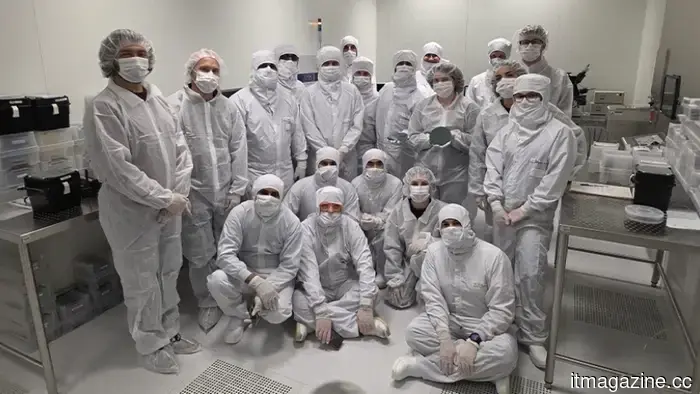 The Italian deeptech company specializing in graphene-based optical chips has secured €211 million in funding.
CamGraPhIC, a subsidiary of 2D Photonics, has received EU approval for a €211M grant from Italy to industrialize optical interconnects based on graphene for artificial intelligence.
The Italian deeptech company specializing in graphene-based optical chips has secured €211 million in funding.
CamGraPhIC, a subsidiary of 2D Photonics, has received EU approval for a €211M grant from Italy to industrialize optical interconnects based on graphene for artificial intelligence.
 Apple discreetly warned that it might remove Grok from the App Store due to deepfake nude content.
In January, Apple warned that it would take Grok off the App Store due to issues with non-consensual deepfakes. The company rejected the initial solution proposed by xAI.
Apple discreetly warned that it might remove Grok from the App Store due to deepfake nude content.
In January, Apple warned that it would take Grok off the App Store due to issues with non-consensual deepfakes. The company rejected the initial solution proposed by xAI.
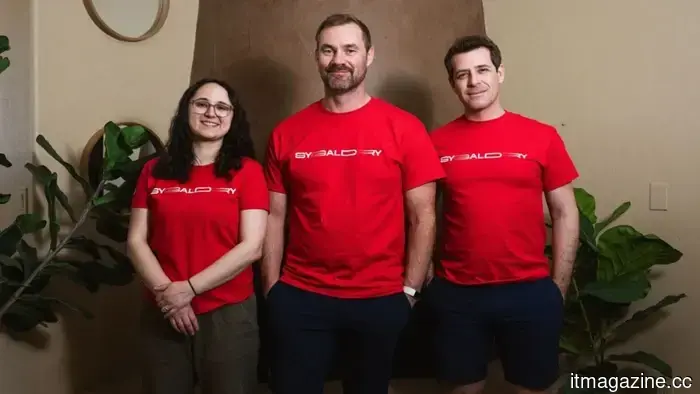 Sygaldry Technologies has secured $105 million in a Series A funding round.
Sygaldry, under the leadership of Chad Rigetti, the founder of Rigetti Computing, has secured $139 million to develop AI servers powered by quantum acceleration. The funding round was led by Breakthrough Energy Ventures.
Sygaldry Technologies has secured $105 million in a Series A funding round.
Sygaldry, under the leadership of Chad Rigetti, the founder of Rigetti Computing, has secured $139 million to develop AI servers powered by quantum acceleration. The funding round was led by Breakthrough Energy Ventures.
The partnership between Cadence and Nvidia in the field of robotics.
Cadence and Nvidia are strengthening their AI collaboration to bridge the sim-to-real gap in robotics by integrating physics engines with Nvidia's Isaac and Cosmos models.