

AI dating seems effective, but I'm not entirely sold on the idea.
Artificial intelligence is progressively infiltrating various aspects of daily life, and dating might be the next frontier. A new generation of AI "agents" is being created to mimic personalities, engage with others, and even assist users in discovering potential romantic partners – all without requiring users to do the initial groundwork.
As reported by WIRED, researchers and developers are working on systems that generate personalized AI agents, or “digital twins,” meant to embody individuals in virtual scenarios. These agents can communicate, hold dialogues, and evaluate compatibility on a scale unattainable for humans alone.
AI Agents Could Transform the Matching Process
One prototype, named Pixel Societies, enables AI agents to replicate social interactions within a virtual environment. Each agent is constructed using a large language model and trained on user-provided data, including personality traits, interests, and public information.
The objective is for these agents to “experience” numerous social interactions concurrently, effectively evaluating compatibility across hundreds or even thousands of situations. Developers believe this could help reveal significant connections that traditional dating apps might overlook.
Instead of browsing through profiles or composing messages, users could depend on their AI counterparts to conduct the initial screening and interactions.
The Importance of This Change
Modern dating apps are frequently seen as time-consuming and emotionally taxing. The process of matching, communicating, and sustaining conversations demands effort, and achieving success is far from certain.
AI agents strive to alleviate this burden. By automating initial interactions, they could allow users to concentrate solely on the most promising matches. Some developers even suggest that this method could lessen screen time, as users would engage less frequently with apps.
Simultaneously, this technology signifies a wider trend: delegating more personal aspects of life to AI systems.
The Limitations of Algorithmic Compatibility
Despite the potential, experts are cautious about the efficacy of these systems. Research indicates that predicting compatibility based solely on data such as interests, values, or preferences is challenging.
Human relationships typically flourish through shared experiences and face-to-face interactions rather than set criteria. Consequently, AI-generated matches may not always lead to authentic chemistry in real life.
Concerns about accuracy also persist. AI agents can misrepresent users, fabricate details, or behave differently from the individual they aim to represent, particularly when trained with limited information.
Implications for Users
For users, AI-powered dating could streamline the process of finding matches, but it also prompts questions about authenticity. If an AI is managing the communication, it can be harder to determine whether interactions genuinely represent the real individual behind the profile.
There is also the danger of becoming too reliant on these systems. While AI can aid in filtering and communication, it cannot entirely replicate the unpredictability and subtleties of human connection.
Future Developments
The idea of AI agents in dating is still in its infancy, with current systems primarily being prototypes and experimental platforms. Nonetheless, interest in this area is rapidly increasing.
Developers are investigating methods to enhance these systems, boost accuracy, and incorporate them into actual dating platforms. Concurrently, discussions regarding ethics, transparency, and user control are becoming more critical.
If these challenges are surmounted, AI agents could significantly alter the dating landscape in the coming years. However, the fundamental question remains unanswered: can algorithms genuinely comprehend human chemistry, or merely simulate it?


Other articles
 You can now place a pre-order for Amazon’s fashionable Ember Artline TVs.
Pre-orders for the Amazon Ember Artline TVs are now available in the US and Canada. Amazon's response to the "art TV" trend includes a 1.5-inch slim design, a matte QLED display, and an enhanced Fire TV experience, starting at a price of $899.
You can now place a pre-order for Amazon’s fashionable Ember Artline TVs.
Pre-orders for the Amazon Ember Artline TVs are now available in the US and Canada. Amazon's response to the "art TV" trend includes a 1.5-inch slim design, a matte QLED display, and an enhanced Fire TV experience, starting at a price of $899.
 This upcoming phone will convert your photos into videos more quickly and without the typical AI errors.
Honor's upcoming AI Image to Video 2.0 feature is expected to launch alongside the new Honor 600 series. This feature operates entirely on the device and resolves the common issues you've encountered when generating AI videos.
This upcoming phone will convert your photos into videos more quickly and without the typical AI errors.
Honor's upcoming AI Image to Video 2.0 feature is expected to launch alongside the new Honor 600 series. This feature operates entirely on the device and resolves the common issues you've encountered when generating AI videos.
 Acer Swift Air 16 with a large screen and lightweight
Acer has announced the launch of the Swift Air 16 ultrabook in Russia. The main feature of the model is a 16-inch OLED screen in a metal casing, which weighs only 1.1 kg. The manufacturer calls it "a new standard of mobility," but let's take a look at what it actually offers without the hype.
Acer Swift Air 16 with a large screen and lightweight
Acer has announced the launch of the Swift Air 16 ultrabook in Russia. The main feature of the model is a 16-inch OLED screen in a metal casing, which weighs only 1.1 kg. The manufacturer calls it "a new standard of mobility," but let's take a look at what it actually offers without the hype.
 Google has released a new Android Canary build, featuring a variety of user interface changes.
The newest Android Canary build from Google brings two minor adjustments: a more welcoming empty notification shade and a tidier app long-press menu.
Google has released a new Android Canary build, featuring a variety of user interface changes.
The newest Android Canary build from Google brings two minor adjustments: a more welcoming empty notification shade and a tidier app long-press menu.
 The Lord of the Rings: The Hunt for Gollum has unveiled its cast, and it's absolutely fantastic.
Warner Bros. has announced the all-star lineup for The Lord of the Rings: The Hunt for Gollum.
The Lord of the Rings: The Hunt for Gollum has unveiled its cast, and it's absolutely fantastic.
Warner Bros. has announced the all-star lineup for The Lord of the Rings: The Hunt for Gollum.
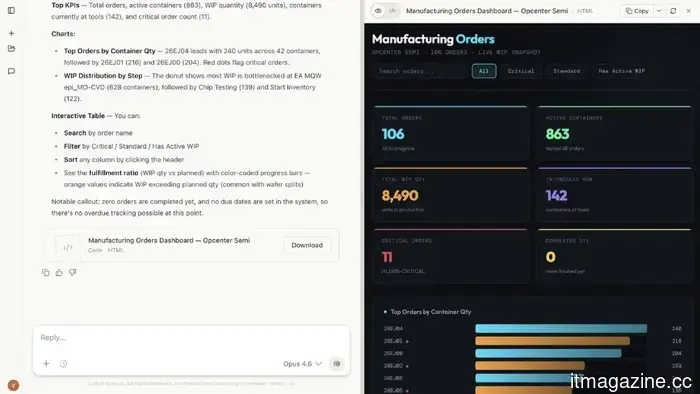 Athena aims to introduce agentic AI into the semiconductor manufacturing environment.
Athena Technology Solutions has introduced FabOrchestrator, an AI platform that autonomously manages reporting, support, and configuration for manufacturing execution systems (MES) in semiconductor factories.
Athena aims to introduce agentic AI into the semiconductor manufacturing environment.
Athena Technology Solutions has introduced FabOrchestrator, an AI platform that autonomously manages reporting, support, and configuration for manufacturing execution systems (MES) in semiconductor factories.
AI dating seems effective, but I'm not entirely sold on the idea.
AI agents are being created to manage dating interactions, prompting concerns regarding authenticity and compatibility.