
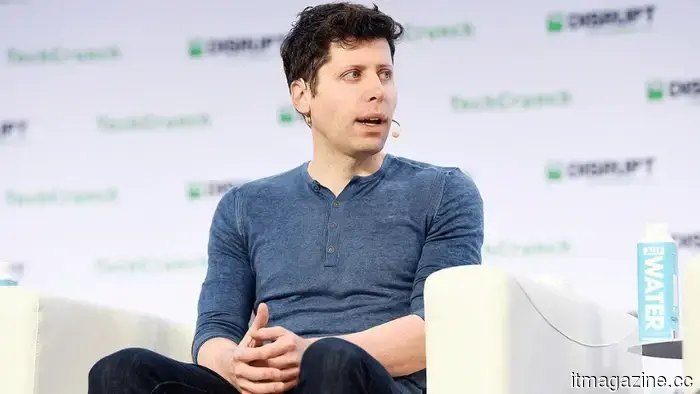
OpenAI's valuation of $852 billion is facing criticism from its investors.
Some investors believe that OpenAI has altered its product roadmap twice within six months, raising concerns about potential distractions as it approaches an IPO anticipated for Q4 2026. OpenAI's new Chief Revenue Officer has accused Anthropic of inflating its $30 billion run rate by $8 billion due to its method of accounting for cloud partner revenue. Both companies assert that they adhere to standard accounting practices.
OpenAI's valuation of $852 billion is under scrutiny from some investors as the company shifts its strategy towards the enterprise market, as reported by the Financial Times on Tuesday. The worries revolve around a period of notable strategic instability: OpenAI has amended its product roadmap twice in six months—first due to competitive pressure from Google, and then from Anthropic—leading to the discontinuation of various initiatives, including the Sora video generation launch and an 'adult' chatbot.
Some investors expressed to the FT that these rapid changes might expose the company to threats from Anthropic and a revitalized Google, even as it prepares for a possible IPO as early as the fourth quarter of 2026. One initial backer of OpenAI criticized the company's focus, stating, “You have ChatGPT, a billion-user business expanding at 50-100 percent annually; why are you discussing enterprise and code? It’s a fundamentally unfocused organization.”
Jai Das, president of Sapphire Ventures and not an investor in either company, went so far as to label OpenAI as “the Netscape of AI,” drawing a parallel to the once-dominant browser company that was eventually overtaken by Microsoft and absorbed by AOL.
An investor who has supported both firms indicated that to back OpenAI’s latest funding round, they would need to project an IPO valuation of $1.2 trillion or more. OpenAI’s leadership firmly countered these criticisms. Chief Financial Officer Sarah Friar highlighted the recent $122 billion fundraising, noted as the largest private round in Silicon Valley's history, supported by investors such as SoftBank, Amazon, Nvidia, Andreessen Horowitz, Sequoia Capital, and Thrive Capital among over 25 others, as proof of investor confidence.
“The idea that investors are unsupportive of our strategy is against the facts,” Friar stated. “Our fundraising, the largest ever, was oversubscribed, completed in record time and backed by a wide range of global investors.” Additionally, Friar informed CNBC that enterprise now makes up 40% of OpenAI’s overall revenue and is projected to equal its consumer business by the end of 2026.
OpenAI is also aiming for 30 gigawatts of computing capacity by 2030 and informed investors last week that it has already secured 8 gigawatts, a figure it claims Anthropic won’t reach until the end of 2027.
The core of the competitive apprehension lies in Anthropic’s revenue trend. The creator of Claude saw its annualized run rate increase from about $9 billion at the close of 2025 to $30 billion by the end of March 2026, largely fueled by demand for its coding tools. OpenAI reported reaching $25 billion in annualized revenue in February. This apparent difference instigated a notably assertive reaction from OpenAI’s new chief revenue officer, Denise Dresser, who was appointed in December 2025 after previously serving as CEO of Slack.
In an internal memo circulated to staff on Sunday, Dresser accused Anthropic of exaggerating its run rate by approximately $8 billion. This accusation hinges on a recognized accounting difference: Anthropic accounts for the total revenue generated through its cloud distribution partners, Amazon Web Services and Google Cloud, on a gross basis, while OpenAI reports its revenue share from Microsoft on a net basis, subtracting the partner’s share before recognition.
Both accounting methods are acceptable under US GAAP. If Dresser's analysis is accurate, it would mean Anthropic's comparable run rate is closer to $22 billion rather than $30 billion. Anthropic contested this characterization. A source close to the company told the FT that Anthropic “recognizes gross revenue on sales through partners because it is the principal in the transaction and its cloud partners serve as the distribution channel,” aligning with standard reasoning for gross recognition in accounting terms.
Dresser's memo acknowledged that Anthropic's “coding focus provided them with an initial foothold” in the enterprise space but argued that a narrow, developer-centric stance could become a liability as AI moves beyond engineering teams. “You do not want to be a single-product company in a platform war,” the memo stated. Furthermore, it outlined OpenAI’s priorities for Q2: securing the enterprise model layer with a new model codenamed ‘Spud’, establishing its Frontier agent platform, expanding through a newly announced Amazon partnership, and creating a deployment engine referred to as DeployCo.
Other articles
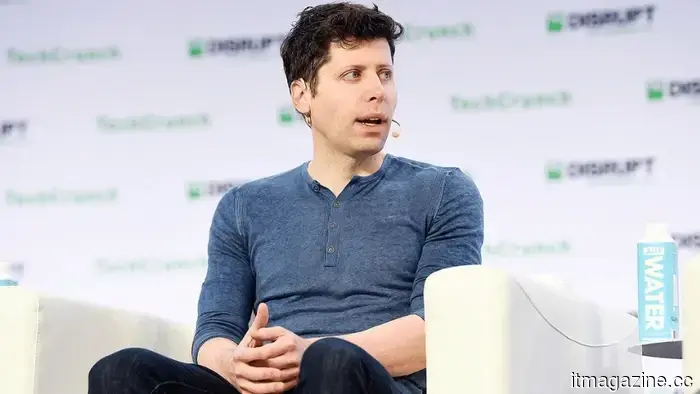 The $852 billion valuation of OpenAI is being questioned by its own investors.
Certain investors in OpenAI are raising doubts about its $852 billion valuation as the company updates its roadmap. A leaked memo alleges that Anthropic has exaggerated its $30 billion run rate by $8 billion.
The $852 billion valuation of OpenAI is being questioned by its own investors.
Certain investors in OpenAI are raising doubts about its $852 billion valuation as the company updates its roadmap. A leaked memo alleges that Anthropic has exaggerated its $30 billion run rate by $8 billion.
 Beatbot Sora 70 Review: The Wireless 4-in-1 Robot That Effectively Cleans Your Tanning Ledge
The Beatbot Sora 70 avoids flashy technology and offers practical features that effectively ensure a clean pool.
Beatbot Sora 70 Review: The Wireless 4-in-1 Robot That Effectively Cleans Your Tanning Ledge
The Beatbot Sora 70 avoids flashy technology and offers practical features that effectively ensure a clean pool.
 Hexagon has purchased Waygate Technologies for $1.45 billion.
Hexagon has reached an agreement to purchase Waygate Technologies from Baker Hughes for $1.45 billion in cash. Waygate produces $630 million in revenue.
Hexagon has purchased Waygate Technologies for $1.45 billion.
Hexagon has reached an agreement to purchase Waygate Technologies from Baker Hughes for $1.45 billion in cash. Waygate produces $630 million in revenue.
 Hexagon purchases Waygate Technologies for $1.45 billion.
Hexagon has consented to purchase Waygate Technologies from Baker Hughes in a cash transaction valued at $1.45 billion. Waygate reports revenue of $630 million.
Hexagon purchases Waygate Technologies for $1.45 billion.
Hexagon has consented to purchase Waygate Technologies from Baker Hughes in a cash transaction valued at $1.45 billion. Waygate reports revenue of $630 million.
 Why contemporary work environments are reconsidering hydration and its impact on employee performance.
Learn why ensuring proper hydration is increasingly important in today's work environments and how enhanced access to water can boost employee productivity, concentration, and overall effectiveness.
Why contemporary work environments are reconsidering hydration and its impact on employee performance.
Learn why ensuring proper hydration is increasingly important in today's work environments and how enhanced access to water can boost employee productivity, concentration, and overall effectiveness.
 Amazon has reached an agreement to purchase Globalstar in a deal valued at $11.6 billion.
Amazon has reached an agreement to purchase Globalstar in a deal valued at $11.6 billion and will assume control of the Emergency SOS feature on iPhone. The Amazon Leo D2D service is set to launch in 2028.
Amazon has reached an agreement to purchase Globalstar in a deal valued at $11.6 billion.
Amazon has reached an agreement to purchase Globalstar in a deal valued at $11.6 billion and will assume control of the Emergency SOS feature on iPhone. The Amazon Leo D2D service is set to launch in 2028.
OpenAI's valuation of $852 billion is facing criticism from its investors.
Several investors in OpenAI are raising doubts about its $852 billion valuation as the company updates its plans. A confidential memo suggests that Anthropic has exaggerated its $30 billion run rate by $8 billion.