
Amazon has reached an agreement to purchase Globalstar in a deal valued at $11.6 billion.
Amazon and Apple have entered into a separate agreement that enables Amazon Leo to continue providing satellite features for the iPhone and Apple Watch. This agreement grants Amazon access to the necessary spectrum, infrastructure, and operational expertise to launch direct-to-device satellite services starting in 2028, effectively condensing years of development into one deal.
On Tuesday, Amazon announced it would acquire Globalstar in a deal valued at approximately $11.6 billion, confirming weeks of prior speculation. According to the agreement, Globalstar shareholders can choose to receive either $90 per share in cash or Amazon stock, capped at the same value, which represents a 23.5% premium over Globalstar’s closing price on Monday. Cash elections will be limited to 40% of the total shares, with any excess automatically converted to stock. The transaction is anticipated to close in 2027, pending regulatory approvals.
About 58% of Globalstar’s voting power has already endorsed the deal through written consent. In addition to the acquisition, Amazon and Apple have signed a separate agreement for Amazon Leo, which will continue to support satellite features on the iPhone and Apple Watch, such as Emergency SOS via satellite, Messages, Find My, and Roadside Assistance.
Currently, Globalstar provides these services for iPhone 14 models and later, as well as the Apple Watch Ultra 3, under a collaboration that included Apple’s $1.5 billion investment in Globalstar in 2024, granting Apple roughly a 20% equity stake and the rights to 85% of Globalstar’s network capacity.
The complexity surrounding the Apple agreement was a key issue before the announcement, as no acquisition could move forward without addressing the functionality of critical safety features on the iPhone. The dual announcement resolves this matter.
What Amazon is essentially acquiring is spectrum and time. Globalstar possesses internationally recognized L-band and S-band spectrum licenses, which are unique radio frequencies essential for direct-to-device (D2D) services, allowing mobile phones to connect directly to satellites without additional hardware.
Amazon Leo currently operates approximately 180 to 200 satellites in orbit, while SpaceX’s Starlink has over 10,000. Amazon has pledged around $17 billion in capital to develop Leo and is under FCC pressure to meet a mid-2026 deployment deadline.
By acquiring Globalstar’s operational infrastructure, ground station network spanning 24 global gateways, and licensed spectrum in over 120 countries, Amazon effectively condenses years of internal development into one transaction.
Starting in 2028, Amazon Leo plans to launch its next-generation D2D satellite system, which aims to provide voice, data, and messaging directly to mobile phones and cellular devices with significantly improved spectrum efficiency compared to existing systems.
Globalstar's existing satellite fleet, along with new satellites being produced by MDA Space, will work in conjunction with Amazon Leo’s broadband system to create a cohesive network. Amazon asserts that the complete Leo network will have sufficient capacity to accommodate hundreds of millions of customer endpoints worldwide.
Globalstar, which has been in operation for over three decades, became profitable in 2025 with $273 million in revenue. Its CEO, Paul Jacobs, characterized the deal as a natural progression of the company’s long-term vision for connecting users anytime, anywhere.
Apple’s Greg Joswiak highlighted the success of the Emergency SOS service, which has saved lives, including a scout troop stranded during winter in British Columbia and a woman rescued after her car went off a 250-foot cliff in Colorado, confirming that Amazon and Apple have a long-standing relationship through AWS.
Other articles
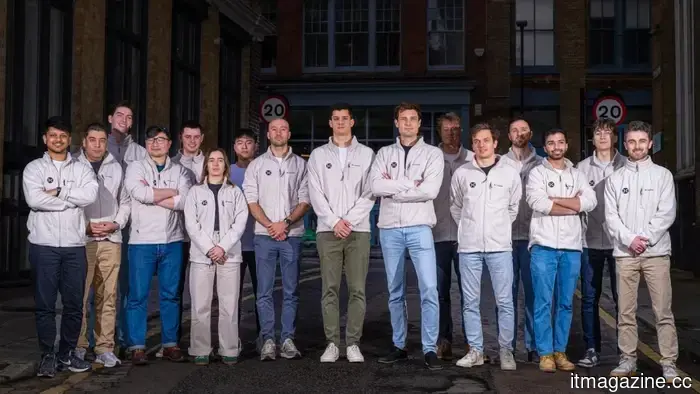 Helical secures $10 million in seed funding to develop bio foundation models into functional systems.
Helical has secured $10 million to develop the application layer that ensures the reproducibility of bio foundation models in pharmaceutical research and development. The application is already in use with Pfizer.
Helical secures $10 million in seed funding to develop bio foundation models into functional systems.
Helical has secured $10 million to develop the application layer that ensures the reproducibility of bio foundation models in pharmaceutical research and development. The application is already in use with Pfizer.
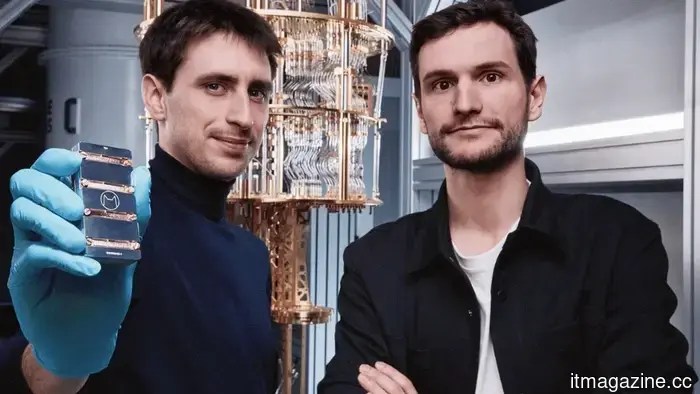 France is wagering €500 million that quantum computing is the technological competition Europe can ultimately triumph in.
Five startups from France are vying for €500 million in government funding to develop fault-tolerant quantum computers, with Alice & Bob's cat qubits becoming a strong competitor against their US counterparts.
France is wagering €500 million that quantum computing is the technological competition Europe can ultimately triumph in.
Five startups from France are vying for €500 million in government funding to develop fault-tolerant quantum computers, with Alice & Bob's cat qubits becoming a strong competitor against their US counterparts.
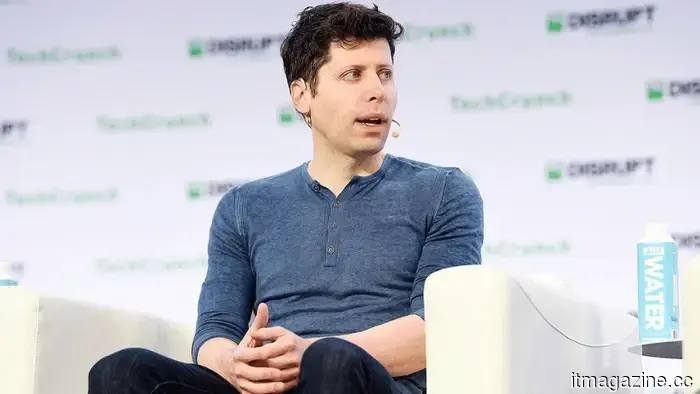 OpenAI's valuation of $852 billion is being questioned by its investors.
Certain investors in OpenAI are raising concerns about its valuation of $852 billion as the company updates its strategic plan. A leaked memo claims that Anthropic has exaggerated its run rate of $30 billion by $8 billion.
OpenAI's valuation of $852 billion is being questioned by its investors.
Certain investors in OpenAI are raising concerns about its valuation of $852 billion as the company updates its strategic plan. A leaked memo claims that Anthropic has exaggerated its run rate of $30 billion by $8 billion.
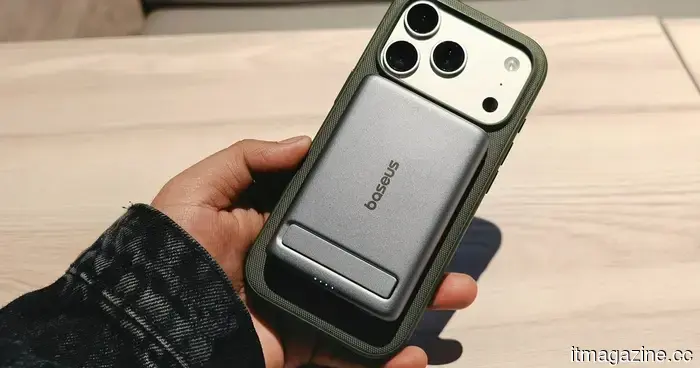 Baseus PicoGo AM31 Qi2 power bank review: I've finally discovered my ideal companion for the iPhone.
The Baseus Picogo AM31 Qi2 Power Bank provides sufficient power to get your phone through the final hours of the day, along with numerous additional features and a compact design.
Baseus PicoGo AM31 Qi2 power bank review: I've finally discovered my ideal companion for the iPhone.
The Baseus Picogo AM31 Qi2 Power Bank provides sufficient power to get your phone through the final hours of the day, along with numerous additional features and a compact design.
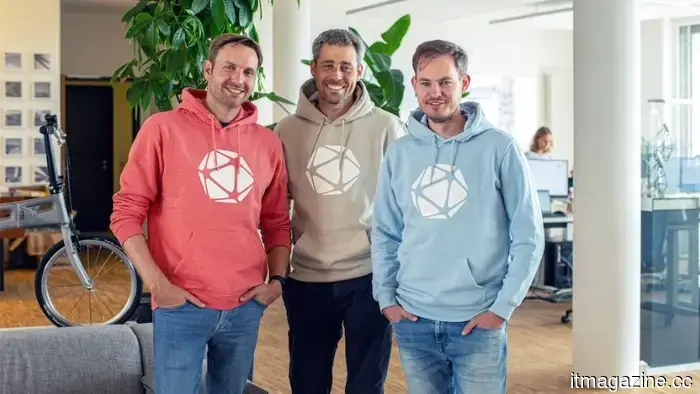 Synera secures $40 million to integrate agentic AI into engineering processes.
Synera has secured $40 million in a Series B funding round to expand its agentic AI platform for engineering, which is already utilized by NASA, BMW, Airbus, Volvo Trucks, and Hyundai.
Synera secures $40 million to integrate agentic AI into engineering processes.
Synera has secured $40 million in a Series B funding round to expand its agentic AI platform for engineering, which is already utilized by NASA, BMW, Airbus, Volvo Trucks, and Hyundai.
 Why contemporary work environments are reconsidering hydration and its impact on employee performance.
Learn why ensuring proper hydration is increasingly important in today's work environments and how enhanced access to water can boost employee productivity, concentration, and overall effectiveness.
Why contemporary work environments are reconsidering hydration and its impact on employee performance.
Learn why ensuring proper hydration is increasingly important in today's work environments and how enhanced access to water can boost employee productivity, concentration, and overall effectiveness.
Amazon has reached an agreement to purchase Globalstar in a deal valued at $11.6 billion.
Amazon has reached an agreement to purchase Globalstar in a deal valued at $11.6 billion and will assume control of the Emergency SOS feature on iPhone. The Amazon Leo D2D service is set to launch in 2028.