
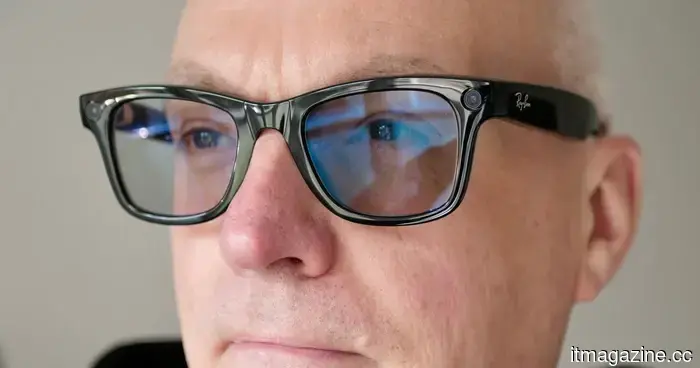
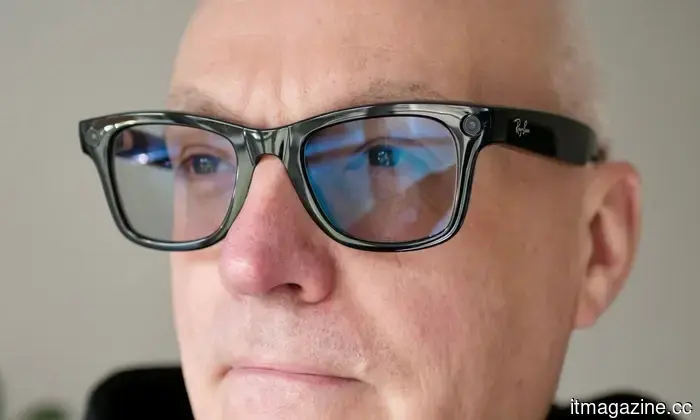
Meta is integrating facial recognition technology into its glasses, and civil rights organizations are expressing their dissatisfaction with this development.
Picture entering a room and someone's glasses silently determining your identity. This is what civil liberties organizations are striving to thwart.
A coalition of more than 70 civil rights, domestic violence, reproductive rights, and LGBTQ+ organizations—including the ACLU, Fight for the Future, Access Now, and others—has addressed a letter to Meta CEO Mark Zuckerberg urging the company to abandon a rumored facial recognition feature intended for its Meta Ray-Ban smart glasses before it reaches the market.
As reported by Wired, the feature, internally referred to as “Name Tag,” would enable users to point their glasses at a stranger and retrieve information about them through Meta’s AI assistant. Engineers are reportedly considering two versions: one that identifies contacts already linked to the user on Meta platforms, and a broader version capable of recognizing anyone with a public Facebook or Instagram account.
The civil rights coalition contends that no amount of design adjustments or opt-out options can render this feature safe. Individuals on the street cannot consent to being identified, and the coalition warns that this technology could be exploited by stalkers, abusers, and law enforcement agencies.
Why does the timing raise concerns?
What exacerbates this situation is a leaked internal memo from Meta dating back to May 2025. According to the NY Times, the company allegedly mentioned its intention to launch amidst a "dynamic political environment," where civil society groups would be distracted. The coalition has labeled this as “vile behavior,” and justifiably so.
Meta Ray-Bans are already under scrutiny due to investigations revealing that the smart glasses were capturing video footage of users' most private moments for AI training purposes. The proposed facial recognition feature adds another layer of intrusion into user privacy.
Should you be concerned?
If you possess a pair of Ray-Ban Meta glasses, be aware that the current hardware has the capacity to capture video without detection. Adding facial recognition could imply that anyone you pass by might, in theory, be silently identified and connected to a database of personal information, enabling other Meta Ray-Ban users to do the same to you.
I hold little optimism for privacy and security from a company like Meta. This venture seems to tread into uncharted territory and could have the potential to cause real-world harm to individuals.
Meta has responded by asserting that it does not currently provide this feature and would adopt a “very thoughtful approach” before launching anything. Whether this commitment is genuine remains to be seen.
Rachit is an experienced tech journalist with over seven years of experience in the consumer technology sector.
This Android smartwatch app is a lifesaver if your daily commute leaves you tired and drowsy.
A new Wear OS transit alarm utilizes GPS and wrist notifications, allowing you to nap without worrying about missing your stop.
Long commutes can easily lead to dozing off at the worst times, especially when delays and transfers disrupt your schedule. Sleep&Arrive, a new Android smartwatch app now available on Google Play, is designed to tackle this issue by using your location to wake you as you approach your destination, rather than relying on a conventional alarm.
This concept is particularly beneficial for public transit users, where arrival times can fluctuate enough that a standard alarm may become unreliable. The app also integrates with Wear OS, enabling the wake-up alert to come through your wrist, which is much more discreet than a phone ringing loudly in a quiet train compartment.
Recent heart research provides yet another compelling reason to take smartwatches seriously.
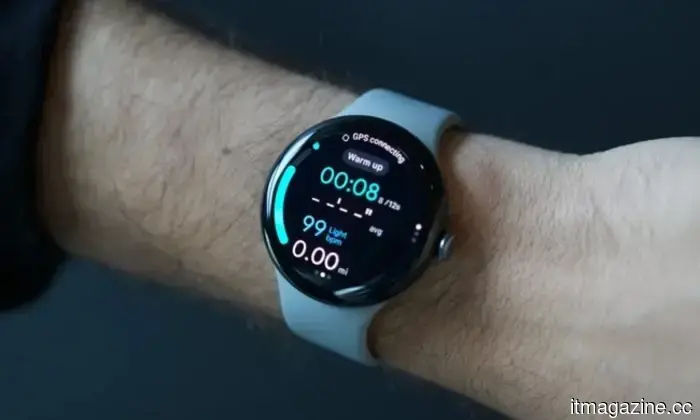
Receiving alerts about irregular heartbeats from your smartwatch could be more significant than you might realize.
Smartwatches have improved considerably in detecting atrial fibrillation, the most prevalent heart rhythm disorder globally, affecting almost 38 million people. Nonetheless, many individuals dismiss these alerts, presuming that since they feel fine, it isn’t a significant concern. New research presented at EHRA 2026 in Paris suggests this may be a mistake worth reevaluating.
The study is a post-hoc analysis of two extensive Swedish screening initiatives, STROKESTOP and STROKESTOP II, which involved adults aged 75 to 76 being screened for atrial fibrillation using an ECG. Researchers tracked the participants over several years to identify who went on to develop heart failure.
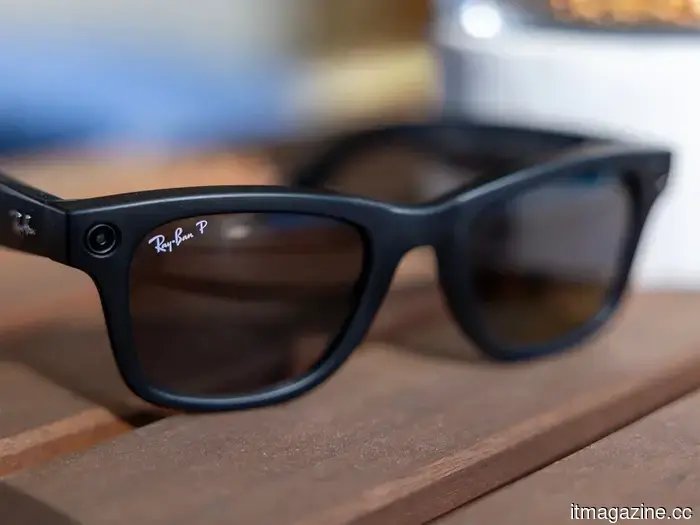
Apple's smart glasses may escape the unsettling reputation of Meta Ray-Bans by employing a clever design with a light indicator.
I appreciate Apple's privacy strategy — although it won't resolve all issues.
Apple's forthcoming smart glasses could navigate one of the major challenges facing the category—privacy concerns—by rethinking something as simple as the camera indicator light. A recent Bloomberg report states that the company is developing display-free smart glasses focusing on everyday functionality but with a design approach that might make them feel less intrusive than current models.
The device, internally codenamed N50, is anticipated to debut around 2026 or 2027 and will likely serve more as a companion to the iPhone rather than a standalone augmented reality solution. Instead of featuring a display, the glasses are expected to utilize




Other articles
 Google Home is receiving numerous enhancements to refine your interactions with Gemini.
Google is tackling the annoyance of being interrupted mid-sentence with the new updates for Gemini for Home, alongside a few useful enhancements.
Google Home is receiving numerous enhancements to refine your interactions with Gemini.
Google is tackling the annoyance of being interrupted mid-sentence with the new updates for Gemini for Home, alongside a few useful enhancements.
 Roblox enhances child safety by introducing new account types that restrict chat and access to games.
Roblox's recent safety overhaul goes beyond a simple policy change. It represents a fundamental redesign of the platform's functionality for the millions of children under 16, featuring age-appropriate game accessibility and automatic chat controls.
Roblox enhances child safety by introducing new account types that restrict chat and access to games.
Roblox's recent safety overhaul goes beyond a simple policy change. It represents a fundamental redesign of the platform's functionality for the millions of children under 16, featuring age-appropriate game accessibility and automatic chat controls.
 Stanford's yearly AI report reveals a divide between those immersed in AI and the general public.
The 2026 AI Index from Stanford reveals a significant disagreement between AI specialists and the general public regarding almost all aspects of AI's future. Just 10% of Americans feel more enthusiasm than apprehension about it.
Stanford's yearly AI report reveals a divide between those immersed in AI and the general public.
The 2026 AI Index from Stanford reveals a significant disagreement between AI specialists and the general public regarding almost all aspects of AI's future. Just 10% of Americans feel more enthusiasm than apprehension about it.
 If you have the DIY tools available, you can create a multi-colored MacBook Neo for yourself.
With Apple's Self Service Repair program, MacBook Neo users could potentially replace parts with different colors, allowing them to design a custom two-tone laptop.
If you have the DIY tools available, you can create a multi-colored MacBook Neo for yourself.
With Apple's Self Service Repair program, MacBook Neo users could potentially replace parts with different colors, allowing them to design a custom two-tone laptop.
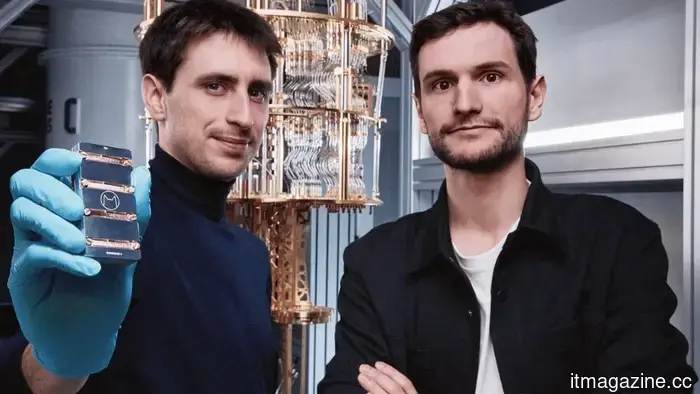 France is investing €500 million, believing that quantum computing is the technological competition that Europe can ultimately succeed in.
Five French startups are vying for €500 million in government funding to develop fault-tolerant quantum computers, with Alice & Bob's cat qubits proving to be a strong competitor against their US counterparts.
France is investing €500 million, believing that quantum computing is the technological competition that Europe can ultimately succeed in.
Five French startups are vying for €500 million in government funding to develop fault-tolerant quantum computers, with Alice & Bob's cat qubits proving to be a strong competitor against their US counterparts.
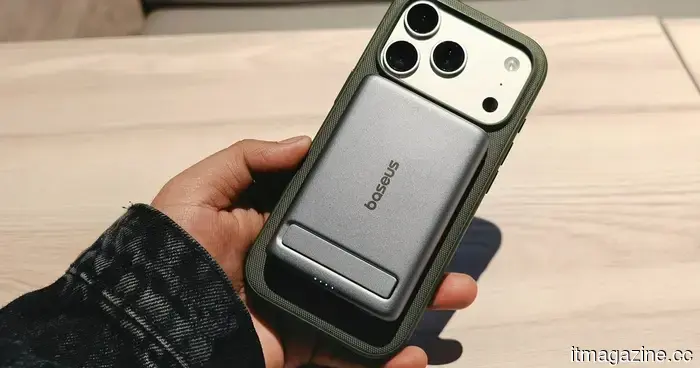 Baseus PicoGo AM31 Qi2 power bank review: I've finally discovered my ideal companion for the iPhone.
The Baseus Picogo AM31 Qi2 Power Bank provides sufficient power to get your phone through the final hours of the day, along with numerous additional features and a compact design.
Baseus PicoGo AM31 Qi2 power bank review: I've finally discovered my ideal companion for the iPhone.
The Baseus Picogo AM31 Qi2 Power Bank provides sufficient power to get your phone through the final hours of the day, along with numerous additional features and a compact design.
Meta is integrating facial recognition technology into its glasses, and civil rights organizations are expressing their dissatisfaction with this development.
More than 70 civil rights organizations are urging Meta to abandon its proposed facial recognition feature for Ray-Ban smart glasses before it is launched, labeling it as a device for stalkers and surveillance.