

SiFive secures $400 million in Series G funding, achieving a valuation of $3.65 billion in the last financing round prior to its IPO.
In summary: SiFive, the RISC-V chip intellectual property company established by Berkeley engineers behind the open-source instruction set architecture, secured $400 million in an oversubscribed Series G on April 9, 2026, valuing the company at $3.65 billion. The funding round was led by Atreides Management and included participation from Nvidia, Apollo Global Management, D1 Capital Partners, Point72 Turion, T. Rowe Price Investment Management, Capital Group, Prosperity7 Ventures, and Sutter Hill Ventures. CEO Patrick Little indicated this marks the last private funding round before an initial public offering.
Open Source, Closed Competition
RISC-V (pronounced "risk five") is an open-source instruction set architecture developed at the University of California, Berkeley, starting in 2010. It dictates how a processor interprets and executes instructions and is distinct from proprietary architectures like those of Arm Holdings and Intel, as it can be freely implemented, extended, and commercialized without royalties or usage limits. SiFive was founded in 2015 by three of the project's main architects—Krste Asanović, Andrew Waterman, and Yunsup Lee—alongside David Patterson, a Turing Award winner and co-author of the key textbook on computer architecture. The company’s business model resembles that of Arm: it designs CPU intellectual property and licenses it to customers for use in their own silicon, rather than manufacturing chips itself. The key distinction is that SiFive’s designs operate on an architecture that is not controlled by any single entity.
This independence gained commercial significance in March 2026 when Arm introduced its AGI CPU, its inaugural in-house silicon product in 35 years, with Meta and OpenAI as initial clients. This shift transformed Arm from a neutral IP licensor to a company with hardware ambitions, creating vertical conflicts that typically lead technology buyers toward open-standard options, while also generating increased urgency for a competitor free from any proprietary architecture ties. In 2021, Intel made a separate attempt to enter this space by offering over $2 billion to acquire SiFive, a deal that ultimately fell through due to valuation disagreements. Subsequently, in April 2026, Intel became a foundry partner with Elon Musk’s Terafab, committing its 18A process node to a $25 billion AI compute facility supported by Tesla, SpaceX, and xAI, thus leaving the RISC-V IP licensing sphere without Intel as a potential acquirer or competitor.
The Series G: Who Invested, and Why
The $400 million Series G was spearheaded by Atreides Management, a Boston-based investment firm managed by Gavin Baker, who gained recognition managing Fidelity’s OTC Portfolio before founding Atreides in 2019. New investors include Nvidia, Apollo Global Management, D1 Capital Partners, Point72 Turion, and T. Rowe Price Investment Management, alongside existing shareholders Prosperity7 Ventures, Capital Group, and Sutter Hill Ventures. The round, which closed oversubscribed, raises SiFive's total valuation to $3.65 billion, up from $2.5 billion set during Series F in March 2022. Nvidia's involvement represents both a technical and financial endorsement: in January 2026, SiFive announced plans to integrate NVLink Fusion into its high-performance data centre platform, allowing RISC-V-based CPUs to connect directly to Nvidia GPUs through a coherent, high-bandwidth interconnect that minimizes latency and enhances system utilization for large-scale AI inference. This compatibility positions SiFive’s CPU IP to operate with Nvidia's Vera Rubin platform, announced at GTC 2026, which targets agentic AI workloads.
The wider investment landscape reflects an increasing demand for custom silicon from hyperscale companies. In its April 2026 shareholder letter, Amazon pledged $50 billion to its Trainium chip initiative, framing in-house AI silicon as a crucial infrastructure element rather than an enhancement. A similar strategy is evident in the partnership among Google, Anthropic, and Broadcom for custom AI computation, utilizing specialized ASICs to mitigate reliance on commodity processors for hyperscale inference tasks. SiFive offers hyperscale clients a third option: fully customizable RISC-V CPU IP, architecturally independent, based on an open standard that cannot be monopolized. “Hyperscale customers have made it very clear that it is time to hasten the availability of open standard alternatives for the data centre,” stated CEO Patrick Little. “Their consistent request is for customizable CPU solutions in IP form that will allow them to significantly differentiate their data centre computing solutions.”
What the Capital Will Build
SiFive has identified three priority areas for deploying the Series G funding. The largest portion will be allocated to advanced research and development, aimed at enhancing the roadmap of high-performance scalar, vector, and matrix RISC-V CPU IP, accelerator cores, and system IP for data centre applications. The second area will focus on software ecosystem development, including ongoing efforts to adapt CUDA,
Other articles
 Microsoft wants you to understand that Copilot AI serves purposes beyond just entertainment.
Microsoft seems to be working to resolve a troubling inconsistency regarding its Copilot AI. This comes after a recent internal document portrayed the AI as significantly less effective than what the company's advertising implies. Users have pointed out that the terms of use for Microsoft’s Copilot contained a disclaimer stating that the service is intended for “entertainment purposes only,” which added […]
Microsoft wants you to understand that Copilot AI serves purposes beyond just entertainment.
Microsoft seems to be working to resolve a troubling inconsistency regarding its Copilot AI. This comes after a recent internal document portrayed the AI as significantly less effective than what the company's advertising implies. Users have pointed out that the terms of use for Microsoft’s Copilot contained a disclaimer stating that the service is intended for “entertainment purposes only,” which added […]
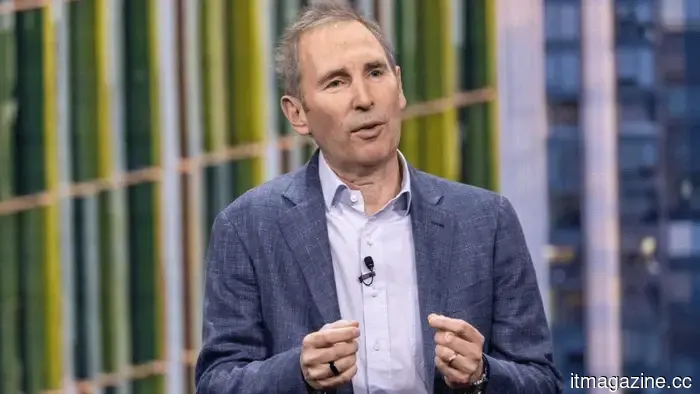 Amazon Leo aims for a commercial launch in mid-2026 as the enterprise beta is now operational.
Amazon Leo, previously known as Project Kuiper, began its enterprise beta on April 8, aiming for a commercial launch in mid-2026. The initiative includes three tiers of terminals and 22 new rocket contracts.
Amazon Leo aims for a commercial launch in mid-2026 as the enterprise beta is now operational.
Amazon Leo, previously known as Project Kuiper, began its enterprise beta on April 8, aiming for a commercial launch in mid-2026. The initiative includes three tiers of terminals and 22 new rocket contracts.
 Tired of dull email apps? Avec transforms your inbox into an enjoyable and effortless experience.
Avec est une nouvelle application de messagerie iOS qui transforme le nettoyage de la boîte de réception en une routine de balayage de cartes, tout en offrant des réponses vocales et des fonctionnalités d'IA pour rendre la gestion des emails moins fastidieuse.
Tired of dull email apps? Avec transforms your inbox into an enjoyable and effortless experience.
Avec est une nouvelle application de messagerie iOS qui transforme le nettoyage de la boîte de réception en une routine de balayage de cartes, tout en offrant des réponses vocales et des fonctionnalités d'IA pour rendre la gestion des emails moins fastidieuse.
 Tired of dull email applications? Avec transforms your inbox into a swiping, mess-clearing tool.
Avec est une nouvelle application de messagerie iOS qui transforme le nettoyage de la boîte de réception en une routine de balayage de cartes, offrant des réponses vocales et des fonctionnalités d'intelligence artificielle pour rendre les emails moins fastidieux.
Tired of dull email applications? Avec transforms your inbox into a swiping, mess-clearing tool.
Avec est une nouvelle application de messagerie iOS qui transforme le nettoyage de la boîte de réception en une routine de balayage de cartes, offrant des réponses vocales et des fonctionnalités d'intelligence artificielle pour rendre les emails moins fastidieux.
 Amazon's AI tool connects shelter dogs and cats with potential adopters as part of the Protect Playtime campaign.
Amazon, PetArmor, and Best Friends Animal Society have unveiled an AI pet-matching tool along with a generative video campaign aimed at decreasing the number of killings in US shelters.
Amazon's AI tool connects shelter dogs and cats with potential adopters as part of the Protect Playtime campaign.
Amazon, PetArmor, and Best Friends Animal Society have unveiled an AI pet-matching tool along with a generative video campaign aimed at decreasing the number of killings in US shelters.
 CoreWeave establishes a multi-year agreement with Anthropic, as nine out of ten leading AI model providers become part of its platform.
CoreWeave has finalized a multi-year agreement for GPU cloud services with Anthropic to support Claude at a production scale, marking its second significant AI infrastructure announcement within 48 hours.
CoreWeave establishes a multi-year agreement with Anthropic, as nine out of ten leading AI model providers become part of its platform.
CoreWeave has finalized a multi-year agreement for GPU cloud services with Anthropic to support Claude at a production scale, marking its second significant AI infrastructure announcement within 48 hours.
SiFive secures $400 million in Series G funding, achieving a valuation of $3.65 billion in the last financing round prior to its IPO.
SiFive, the RISC-V chip IP company, secured $400 million in an oversubscribed Series G round led by Atreides and supported by Nvidia, resulting in a valuation of $3.65 billion in anticipation of a forthcoming IPO.