
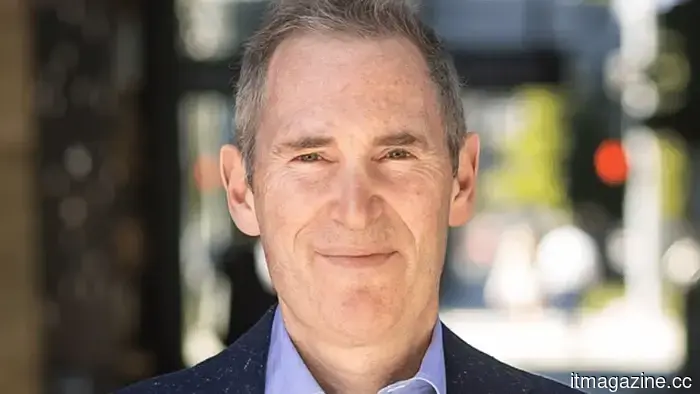
Jassy indicates that Amazon's chip division could have a value of $50 billion and suggests that there might be plans to sell them externally.
In summary: Andy Jassy's annual message to shareholders, released on April 9, 2026, indicates that Amazon's custom chip division, which includes Graviton, Trainium, and Nitro, is achieving over $20 billion in annual revenue and experiencing year-on-year growth at triple-digit rates. He suggests that if this business were marketed like Nvidia's, it could be valued at around $50 billion annually. Jassy also hints that Amazon might start selling these chips directly to external clients, defending the company's $200 billion capital expenditure plan for 2026 as being based on confirmed customer demand rather than guesswork.
“Not based on a guess”: the $200 billion investment
Jassy begins the financial portion of the letter by directly addressing the doubts surrounding Amazon's capital expenditures. He affirms, “We’re not investing around $200 billion in capex in 2026 based on a guess.” He emphasizes that Amazon aims to take an aggressive stance, asserting that their future business, operating income, and free cash flow will be significantly larger because of this investment. This is set against the backdrop of a company that experienced a decline in free cash flow from $38 billion to $11 billion last year, attributed to a $50.7 billion rise in capital expenditures mainly directed toward AI infrastructure.
His defense relies on existing customer commitments. Jassy notes that a considerable portion of the expected CapEx for 2026 has customer backing, referencing OpenAI’s pledge of over $100 billion to AWS. This commitment builds on a previous $38 billion partnership established in November 2025, and includes OpenAI utilizing about two gigawatts of Trainium capacity through AWS infrastructure. SoftBank, which owns a majority stake in OpenAI and has supported its infrastructure investments with a $40 billion bridge loan, effectively underwrites part of the demand Jassy cites as justification for his CapEx position.
A $50 billion chip business in plain sight
Amazon's custom silicon initiative encompasses three product lines. Graviton is a bespoke CPU that Jassy claims offers over 40% improved price-performance compared to similar x86 processors, which dominate the market. It is currently adopted by 98% of the top 1,000 EC2 clients, highlighting a significant shift in cloud computing economics over recent years. The demand is so high that two major AWS clients inquired about purchasing all available Graviton capacity for 2026, a request Amazon declined.
Trainium serves as the AI training and inference accelerator, marking Amazon's most direct challenge to Nvidia. Trainium2, which Jassy claims provides approximately 30% better price-performance than comparable GPU alternatives, has mostly sold out. Trainium3, launched in early 2026 and offering an additional 30 to 40% improvement over Trainium2, is nearly fully reserved, with companies like Uber migrating their workloads to it. Trainium4, expected to be widely available in about 18 months and featuring compatibility with Nvidia’s NVLink Fusion interconnect technology, has already seen significant reservations. Nitro, the custom networking and security chip that supports AWS's virtualization framework, completes the trio. Jassy states that together, these lines deliver more than $20 billion in annualized revenue, growing yearly at triple-digit rates. “If we were an independent chip company,” he writes, “our chips would be generating upwards of $50 billion in annual revenue.” Currently, this business operates solely within AWS; customers utilize Trainium and Graviton via EC2 instances instead of purchasing chips outright.
According to Jassy, at scale, Trainium will result in “savings of tens of billions of capex dollars annually, and a several hundred basis points operating margin advantage compared to relying on third-party chips for inference.” This assertion is vital to the investment rationale driving the $200 billion CapEx initiative: custom silicon not only serves as a competitive advantage but also creates a fundamental cost benefit that accumulates over time as the balance of inference to training in AI tasks continues to evolve.
The relationship with Nvidia and the “new shift”
Jassy carefully describes the competitive landscape with Nvidia. He states, “We maintain a strong partnership with NVIDIA and will always have customers choosing to use NVIDIA,” while also claiming that “virtually all AI up to now has relied on NVIDIA chips, but a new shift is underway.” He points out that customers are now seeking improved price-performance. Nvidia, which recorded $68.1 billion in revenue in the fourth quarter of 2025—a 73% year-on-year increase—entered 2026 with significant market power that Amazon's custom silicon is gradually eroding from within the AWS customer base rather than the broader market. The integration of NVLink Fusion into Trainium4 highlights that Amazon is creating connections rather than barriers: customers can use Trainium accelerators in conjunction with NVIDIA GPUs in the same system, maintaining flexibility for businesses heavily invested in NVIDIA’s software ecosystem.
However, the letter's most
Other articles
 Oracle names Hilary Maxson as CFO to oversee its $50 billion investment in AI data centers.
Hilary Maxson, who previously served as group CFO at Schneider Electric, is joining Oracle as the company announces the reduction of 30,000 jobs and pledges $50 billion for AI data center development.
Oracle names Hilary Maxson as CFO to oversee its $50 billion investment in AI data centers.
Hilary Maxson, who previously served as group CFO at Schneider Electric, is joining Oracle as the company announces the reduction of 30,000 jobs and pledges $50 billion for AI data center development.
 Oracle has named Hilary Maxson as CFO to oversee its $50 billion investment in AI data centers.
Hilary Maxson, who previously served as group CFO at Schneider Electric, is joining Oracle as the company announces the reduction of 30,000 jobs and a $50 billion investment in AI data center development.
Oracle has named Hilary Maxson as CFO to oversee its $50 billion investment in AI data centers.
Hilary Maxson, who previously served as group CFO at Schneider Electric, is joining Oracle as the company announces the reduction of 30,000 jobs and a $50 billion investment in AI data center development.
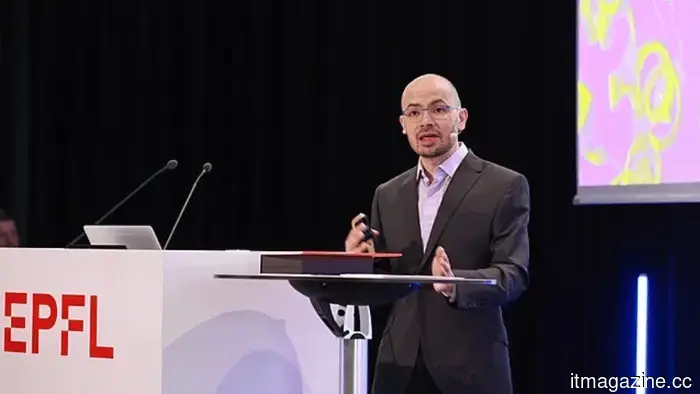 Demis Hassabis mentions that Google DeepMind needed to revisit its startup origins following the merger with Brain.
Hassabis mentions that after the merger with Brain, Google DeepMind needed to return to its startup origins and adopt a more resourceful approach, managing Isomorphic Labs as his second job starting at 10 PM.
Demis Hassabis mentions that Google DeepMind needed to revisit its startup origins following the merger with Brain.
Hassabis mentions that after the merger with Brain, Google DeepMind needed to return to its startup origins and adopt a more resourceful approach, managing Isomorphic Labs as his second job starting at 10 PM.
 How AI is changing hospitality operations while maintaining the human experience.
Arran Campolucci-Bordi describes how AI-powered systems are transforming hospitality operations, enhancing efficiency while maintaining human interaction as a central element.
How AI is changing hospitality operations while maintaining the human experience.
Arran Campolucci-Bordi describes how AI-powered systems are transforming hospitality operations, enhancing efficiency while maintaining human interaction as a central element.
 Google Cloud strengthens its AI infrastructure collaboration with Intel, focusing on Xeon processors and custom chips.
Google Cloud is enhancing its multi-year AI infrastructure collaboration with Intel by committing to Xeon 6 CPUs and co-developing specialized Infrastructure Processing Units.
Google Cloud strengthens its AI infrastructure collaboration with Intel, focusing on Xeon processors and custom chips.
Google Cloud is enhancing its multi-year AI infrastructure collaboration with Intel by committing to Xeon 6 CPUs and co-developing specialized Infrastructure Processing Units.
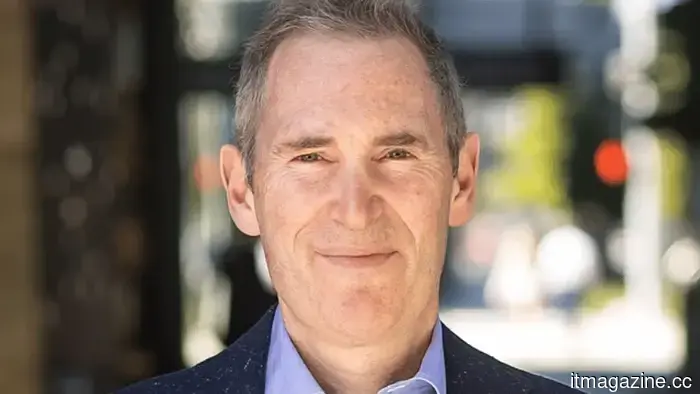 According to Jassy, Amazon's chip division could have a valuation of $50 billion, and he suggests that there may be plans to sell them to external customers.
In his 2026 shareholder letter, Andy Jassy disclosed that Amazon's Graviton, Trainium, and Nitro chips bring in over $20 billion annually and have the potential to be offered directly to third-party clients.
According to Jassy, Amazon's chip division could have a valuation of $50 billion, and he suggests that there may be plans to sell them to external customers.
In his 2026 shareholder letter, Andy Jassy disclosed that Amazon's Graviton, Trainium, and Nitro chips bring in over $20 billion annually and have the potential to be offered directly to third-party clients.
Jassy indicates that Amazon's chip division could have a value of $50 billion and suggests that there might be plans to sell them externally.
In Andy Jassy's 2026 letter to shareholders, it is disclosed that Amazon's Graviton, Trainium, and Nitro chips produce over $20 billion annually, with the potential for direct sales to third parties.