
How AI is changing hospitality operations while maintaining the human experience
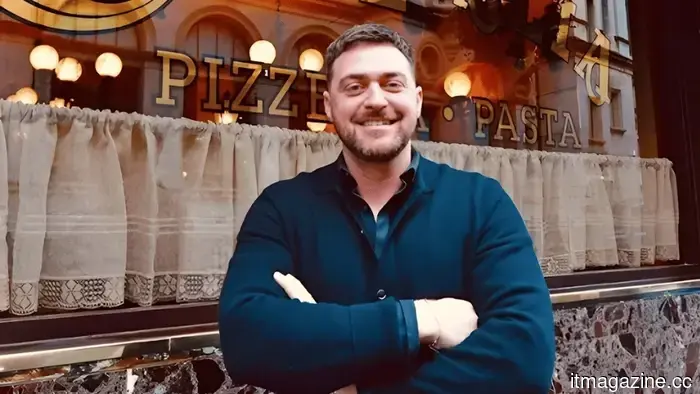
Hospitality has traditionally been characterized by human interaction, yet the systems that facilitate these interactions have consistently evolved. Arran Campolucci-Bordi, proprietor of Casa Italia established 50 years ago in Liverpool, UK, contextualizes this transformation through personal experience, mapping the journey from handwritten reservation logs to digital booking platforms, and now towards AI-enhanced operations. He believes that each shift signifies a larger transformation in how restaurants handle time, communication, and customer expectations.
He observes that earlier generations depended solely on manual methods. Reservations were recorded by hand, availability was verified manually, and customer inquiries were addressed individually. As digital tools advanced, many of these processes transitioned online, resulting in improved structure and consistency. Arran contends that the current phase introduces a new capability where systems can react dynamically to customer demands without human intervention.
From his standpoint, AI in the hospitality sector is best viewed as an operational support mechanism rather than a substitute for human workers. He describes Ayra as functioning similarly to a trained employee within certain contexts, especially regarding information management. When equipped with details such as menus, booking systems, and policies, it can respond to customer questions in a conversational manner. This encompasses tasks such as checking availability, managing bookings, and addressing common inquiries in real time. He suggests this approach enables businesses to manage external interactions seamlessly, allowing staff to concentrate on areas where their attention is most needed.
This operational change is becoming increasingly evident across various sectors. A report indicates that 58% of employees surveyed have already found that AI tools help them save time at work, with users reporting an average daily time savings of 52 minutes, translating to nearly five hours weekly. In hospitality, where considerable time is dedicated to responding to inquiries and overseeing bookings, these savings can quickly accumulate and positively impact team focus.
Arran stresses that such systems are intended to complement existing teams. He points out that many roles in hospitality involve repetitive administrative tasks that detract from direct customer interaction. He elaborates that redistributing this time can transform service delivery within the restaurant itself. “By relegating those tasks to an AI-powered interface, businesses enable staff to concentrate on providing service within the restaurant's environment,” he remarks. “This aligns personnel with the aspects of their roles that demand attention, awareness, and personal interaction.”
The practical outcomes of this change are closely aligned with how restaurants manage their time and resources. Arran notes that a significant portion of operational inefficiency arises from fragmented communication, especially when customers have similar questions or booking requests. “Although each interaction may be brief, collectively they represent a considerable time investment,” he explains. According to him, Ayra can manage these interactions 24/7, consequently increasing time spent with customers and capturing opportunities that might otherwise be overlooked.
This viewpoint also mirrors larger shifts in customer behavior. “With the rise of immediate digital communication, expectations regarding response times have evolved accordingly,” Arran comments. “Customers now anticipate quick and precise answers, whether they are making a reservation or inquiring about menu options. Systems that can reply instantaneously help fulfill those expectations while ensuring clarity and consistency in communication.”
A prevalent misconception is that hospitality is slow to embrace new technology due to its human-centered approach. Arran argues that the drastic implications of adopting so-called “robust” technology relate to the industry's failure to properly assess what they are implementing.
He underscores the necessity of simplicity in the adoption process. Based on his experience, a major hurdle for restaurant owners is not resistance to technology itself, but rather uncertainty about its practical application. Consequently, the platform he has developed is designed to be sturdy, accurate, and easy to adopt, requiring only a minimal amount of information to train the AI agent. Once this information is provided, the system can operate autonomously.
This strategy signifies a wider transformation in the integration of technology into traditional industries. Instead of compelling businesses to dramatically alter their operations, tools are being designed to fit within established frameworks. Arran suggests that this compatibility is crucial for long-term adoption, especially in sectors where consistency is paramount.
Looking forward, he envisions AI as part of a continual progression rather than a definitive endpoint. The shift from manual to digital systems has already transformed hospitality operations, and the advent of AI marks another phase in this evolution. Each stage, he notes, has introduced new efficiencies while upholding the essential goal of effectively serving customers.
“People visit restaurants for the experience, and that will always remain true,” Arran concludes. “If technology can manage the surrounding tasks, it frees staff to excel at what they do best, providing customers with the optimal experience.”

Other articles
 How AI is revolutionizing hospitality operations while maintaining the human touch.
Arran Campolucci-Bordi describes the way AI-powered systems are transforming hospitality operations by enhancing efficiency, all while maintaining human interaction as a central element.
How AI is revolutionizing hospitality operations while maintaining the human touch.
Arran Campolucci-Bordi describes the way AI-powered systems are transforming hospitality operations by enhancing efficiency, all while maintaining human interaction as a central element.
 Coinspaid collaborates with The Residency to enhance the stablecoin framework for startups.
Coinspaid has joined forces with The Residency to provide early-stage founders with access to stablecoin infrastructure, cross-border payment solutions, and fintech-level settlement features.
Coinspaid collaborates with The Residency to enhance the stablecoin framework for startups.
Coinspaid has joined forces with The Residency to provide early-stage founders with access to stablecoin infrastructure, cross-border payment solutions, and fintech-level settlement features.
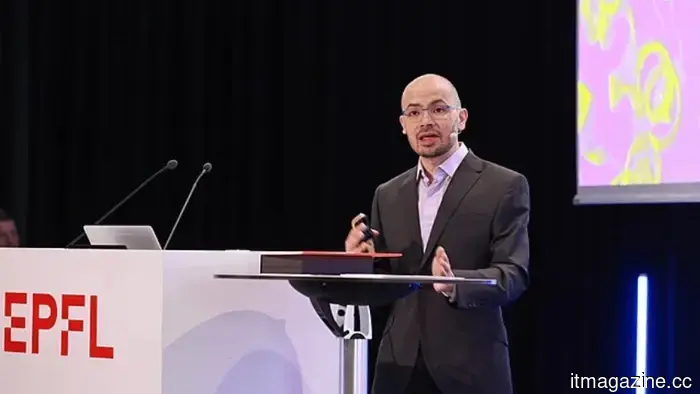 Demis Hassabis mentioned that Google DeepMind needed to revisit its startup origins following the Brain merger.
Hassabis mentions that Google DeepMind needed to revisit its startup origins and adopt a more resourceful approach following the Brain merger, managing Isomorphic Labs as his side job starting at 10 PM.
Demis Hassabis mentioned that Google DeepMind needed to revisit its startup origins following the Brain merger.
Hassabis mentions that Google DeepMind needed to revisit its startup origins and adopt a more resourceful approach following the Brain merger, managing Isomorphic Labs as his side job starting at 10 PM.
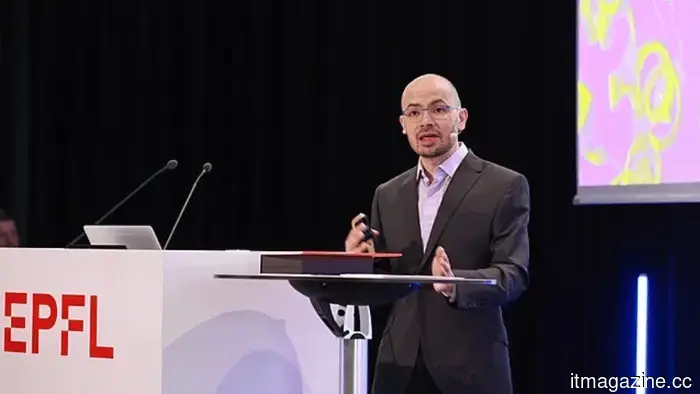 Demis Hassabis mentions that Google DeepMind needed to revisit its startup origins following the merger with Brain.
Hassabis mentions that after the merger with Brain, Google DeepMind needed to return to its startup origins and adopt a more resourceful approach, managing Isomorphic Labs as his second job starting at 10 PM.
Demis Hassabis mentions that Google DeepMind needed to revisit its startup origins following the merger with Brain.
Hassabis mentions that after the merger with Brain, Google DeepMind needed to return to its startup origins and adopt a more resourceful approach, managing Isomorphic Labs as his second job starting at 10 PM.
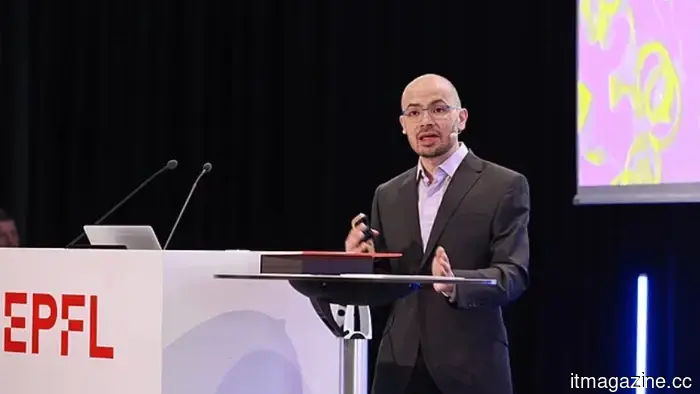 Demis Hassabis stated that Google DeepMind needed to revert to its startup origins following the merger with Brain.
Hassabis mentions that Google DeepMind needed to revert to its startup origins and adopt a more resourceful approach following the merger with Brain, managing Isomorphic Labs as a second job starting at 10 PM.
Demis Hassabis stated that Google DeepMind needed to revert to its startup origins following the merger with Brain.
Hassabis mentions that Google DeepMind needed to revert to its startup origins and adopt a more resourceful approach following the merger with Brain, managing Isomorphic Labs as a second job starting at 10 PM.
 Oracle has named Hilary Maxson as CFO to oversee its $50 billion investment in AI data centers.
Hilary Maxson, who previously served as group CFO at Schneider Electric, is joining Oracle as the company announces the reduction of 30,000 jobs and a $50 billion investment in AI data center development.
Oracle has named Hilary Maxson as CFO to oversee its $50 billion investment in AI data centers.
Hilary Maxson, who previously served as group CFO at Schneider Electric, is joining Oracle as the company announces the reduction of 30,000 jobs and a $50 billion investment in AI data center development.
How AI is changing hospitality operations while maintaining the human experience
Arran Campolucci-Bordi discusses how AI-powered systems are transforming hospitality operations, enhancing efficiency while maintaining a focus on human interaction.